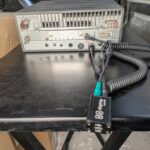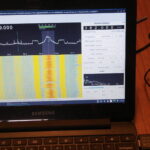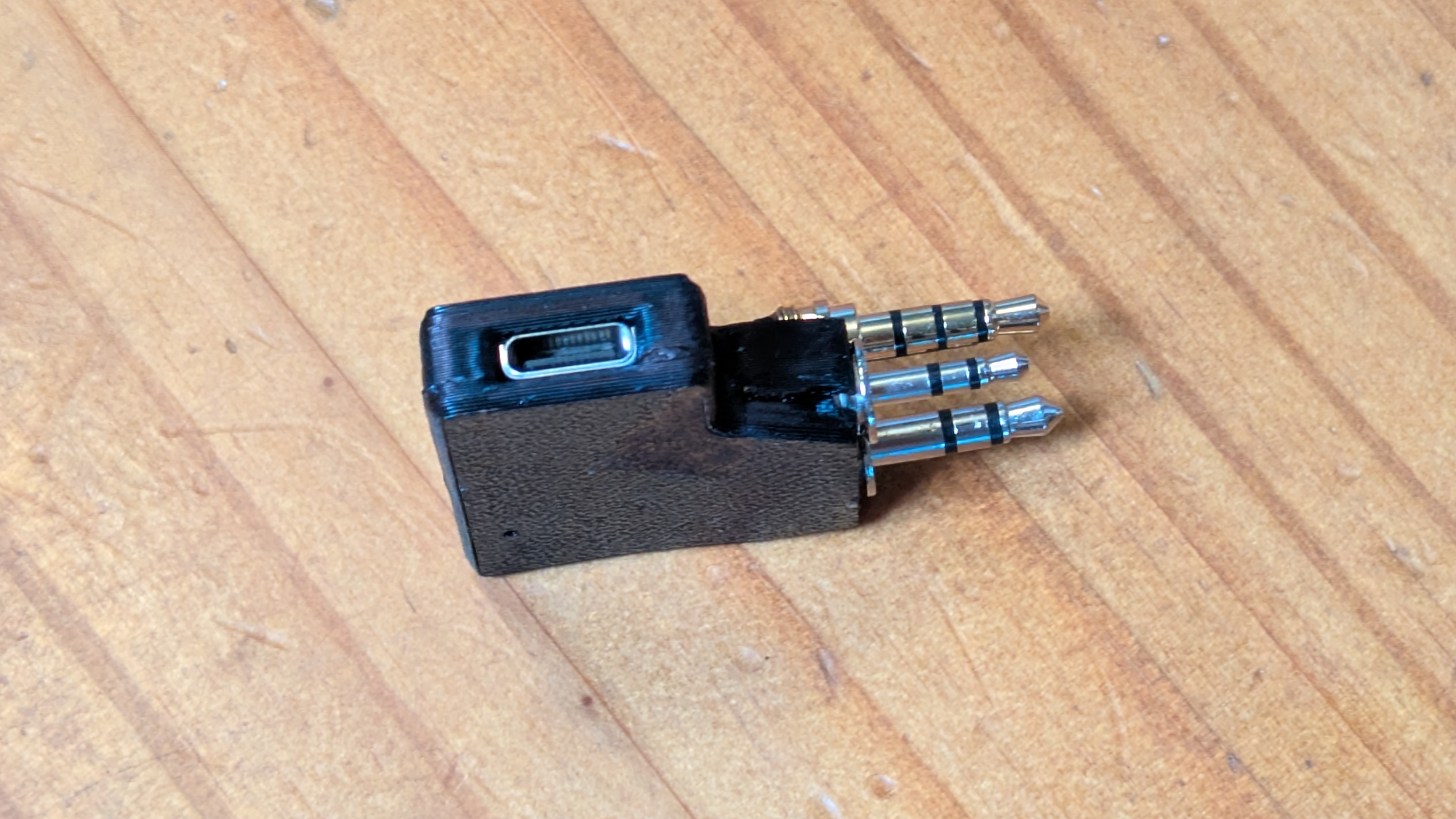
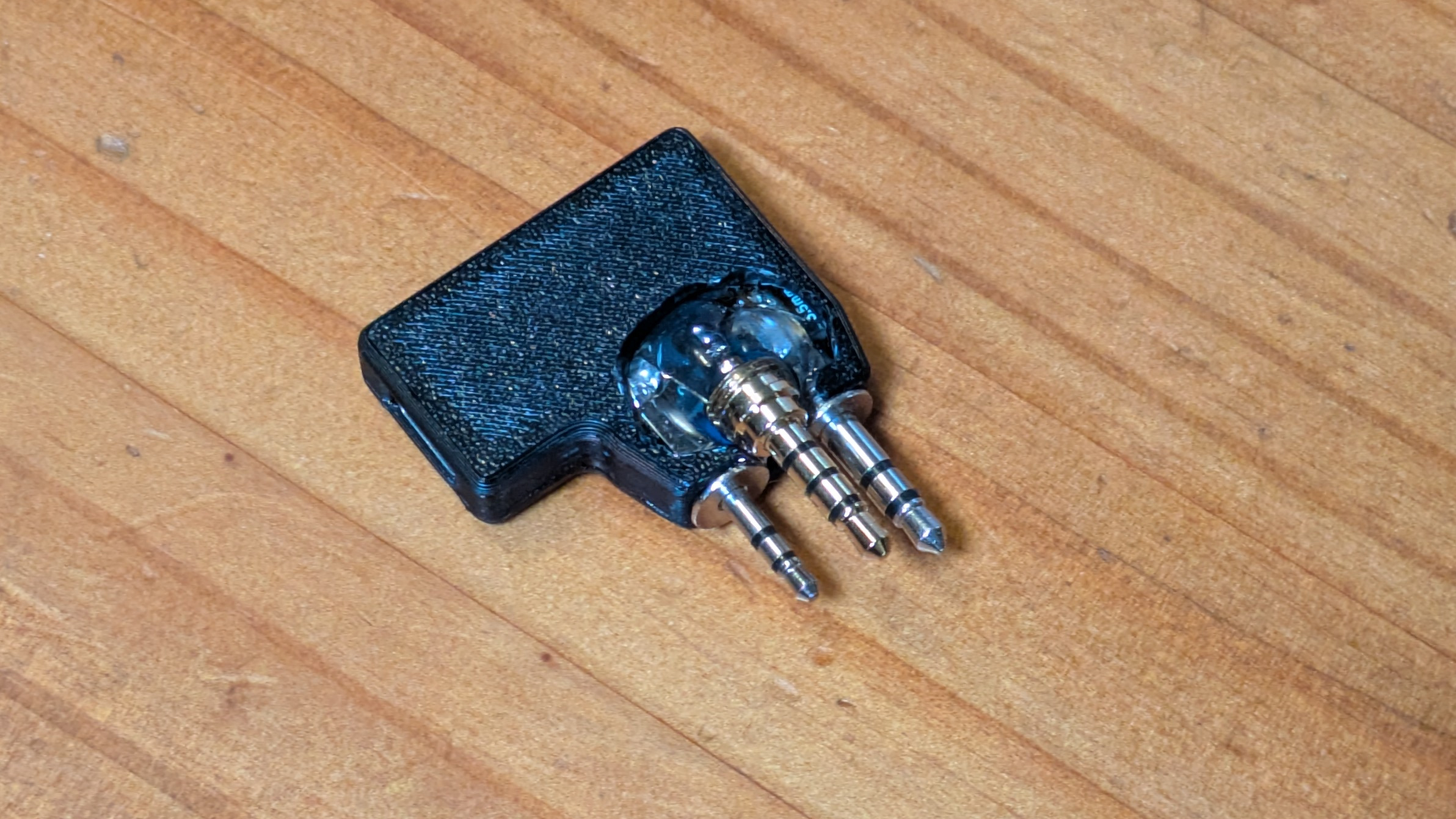
I added a 3rd 3.5mm plug to the open hardware AIOC sold by NA6D to send the serial data to the CAT port on my uSDX+ SDR radio.
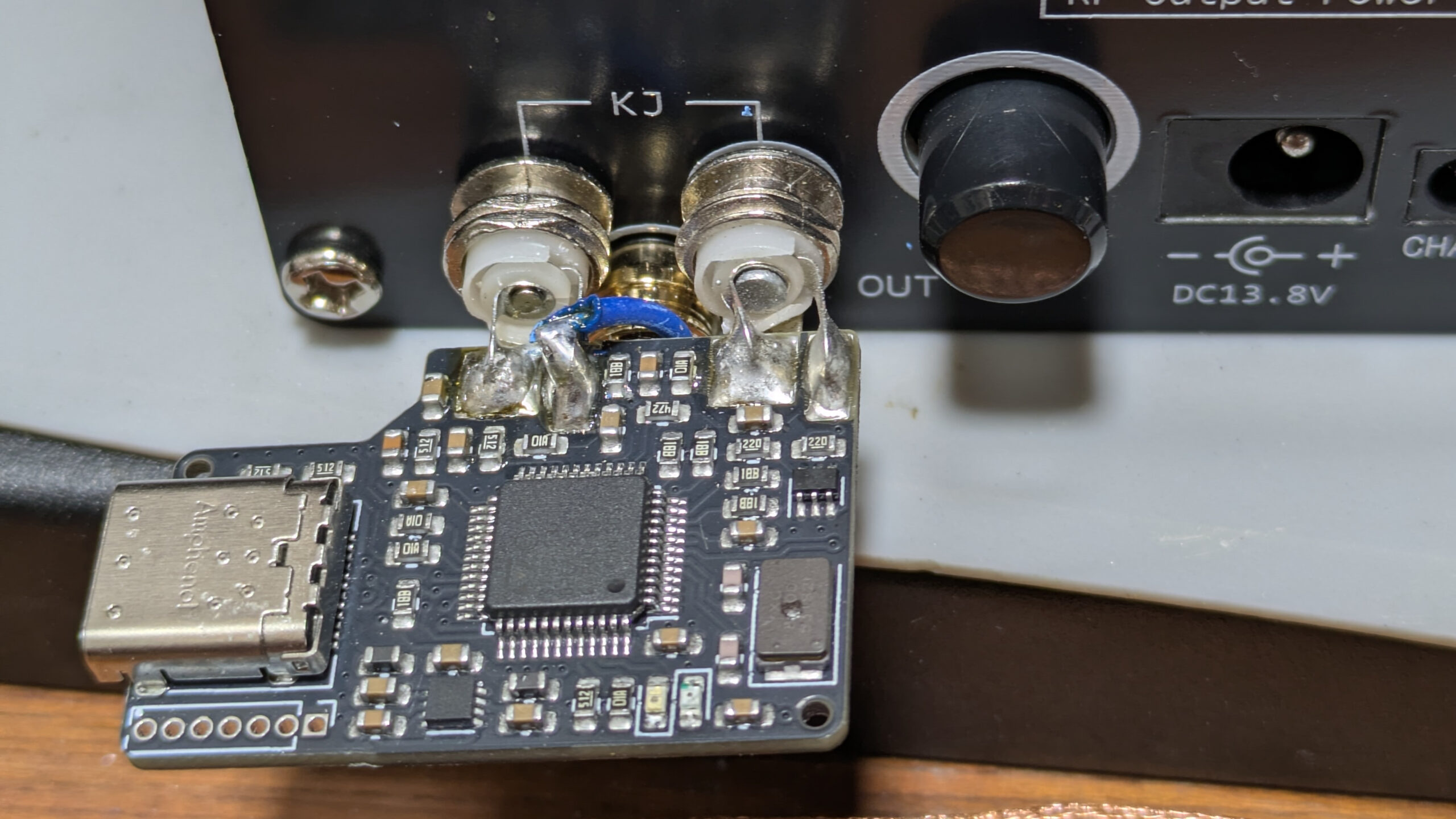
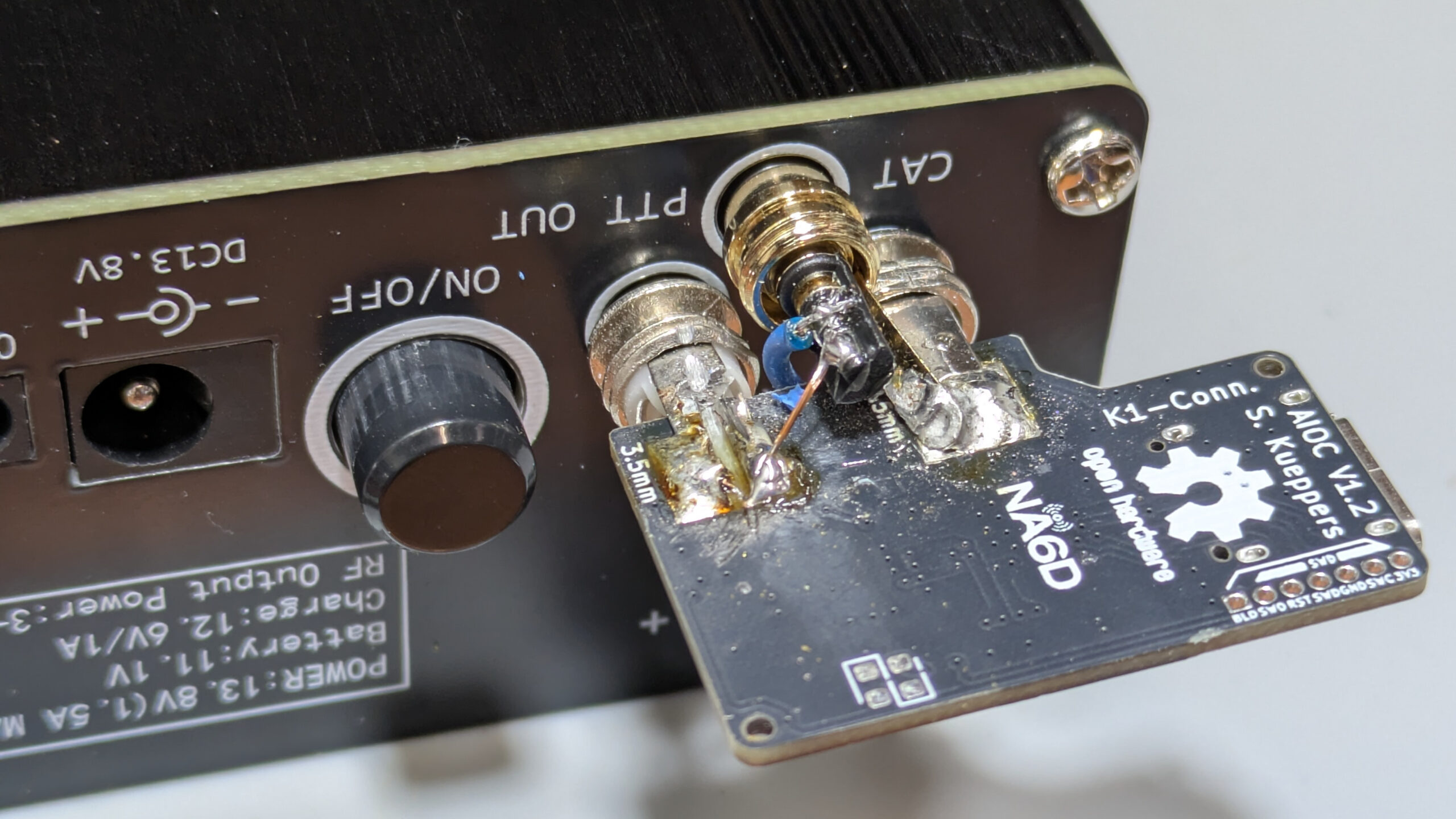
The stock AIOC works fine for Audio In/Out and Push To Talk (via DTR line on the serial port). So you can use it for FT8 or other digital modes on the uSDX+ radio (or anything else that uses a Kenwood style 2.5mm & 3.5mm dual jack). However, without CAT control, you have to manually set the frequency (which isn’t difficult, but on the uSDX+ with the minimal UI elements, it’s also not easy).
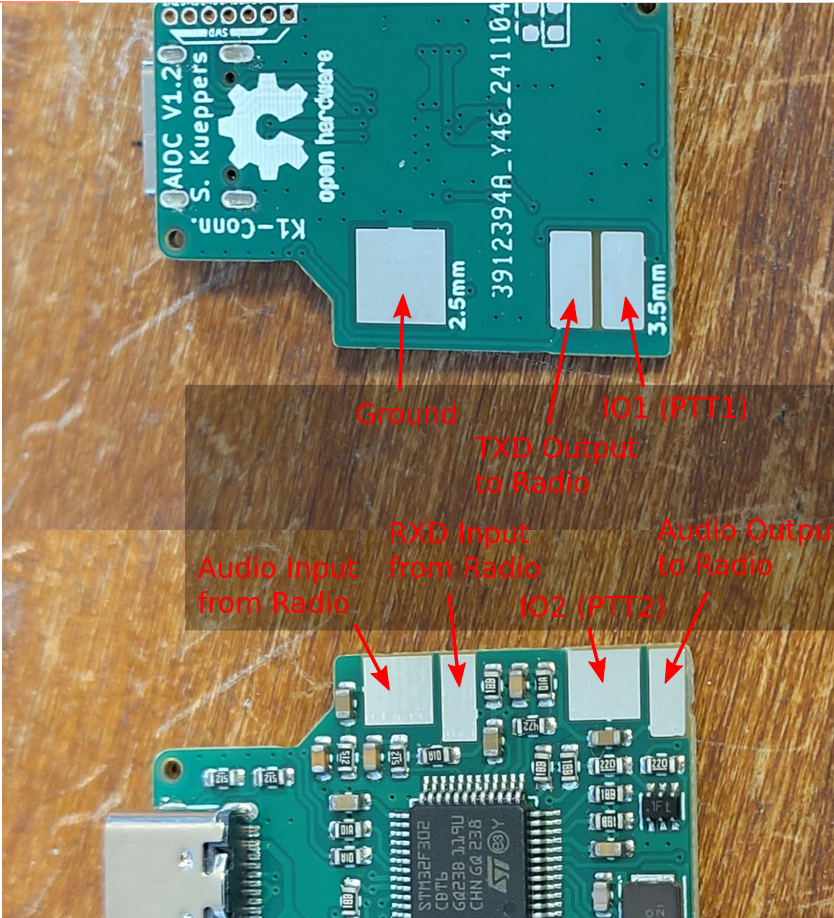
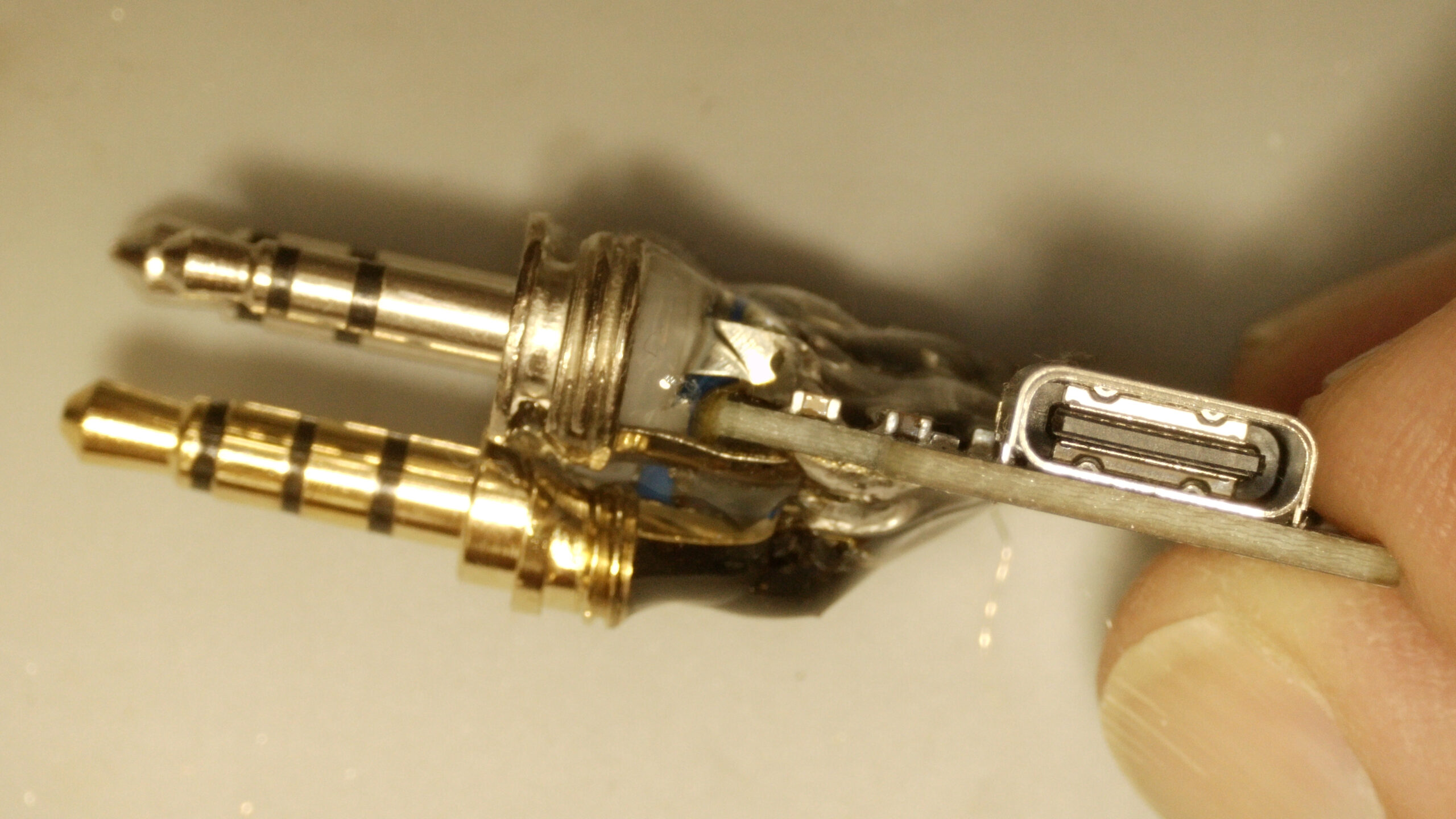
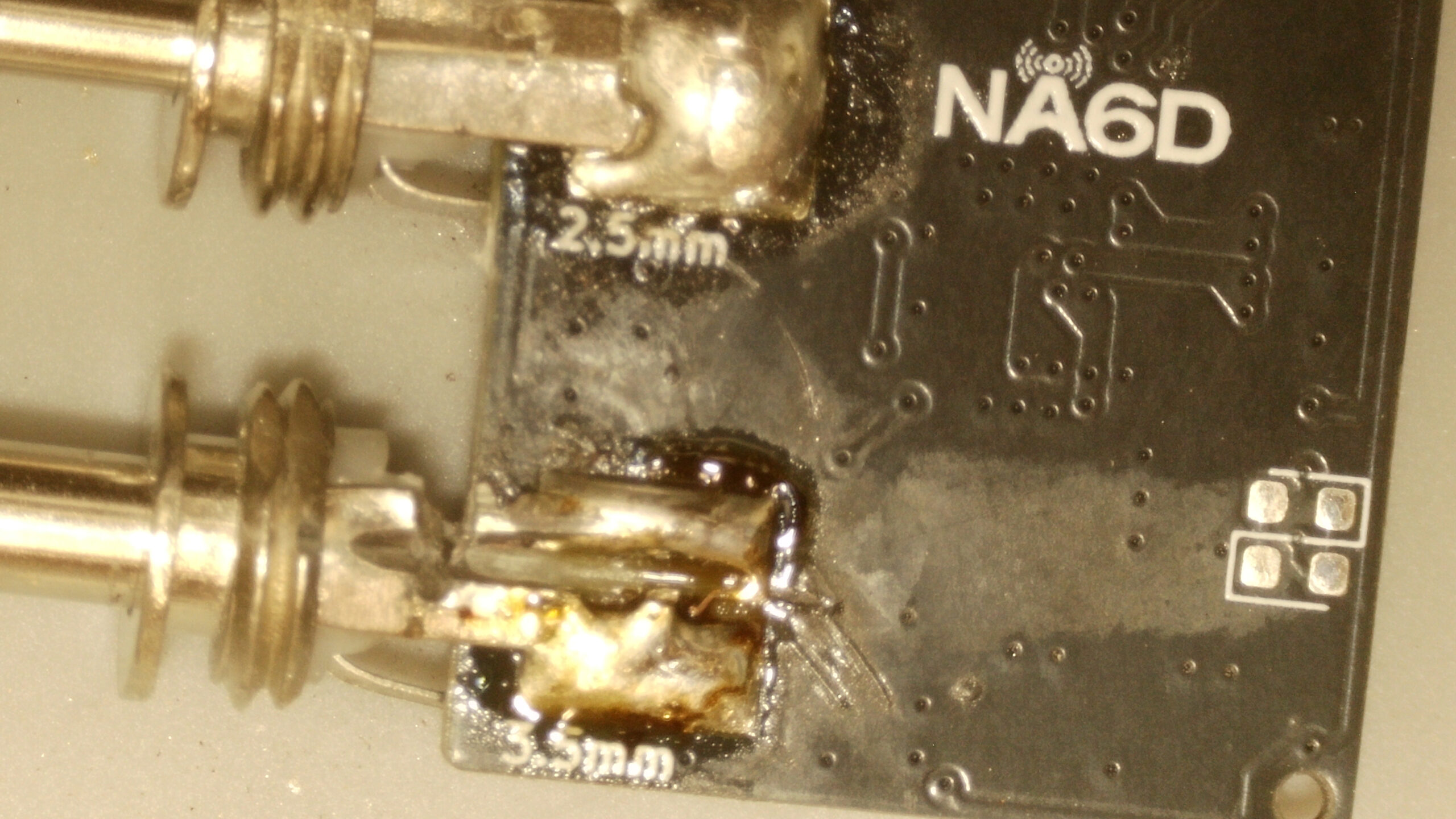
The main difficulty with this addition is that the stock AIOC from NA6D has the PTT and TXD pads “merged”, which works fine for programing a Baofeng HT before you use it, but results in the uSDX+ changing into transmit mode every time the CAT control tries to do anything such as read the current frequency every second. So I had to use a dremel tool with a cutting wheel to split the ground connection from the 3.5mm plug so that I could separate the PTT side of things (which I wanted to keep attached there) from the TXD pin (which I want on my own new 3.5mm plug for the CAT port).
I was able to simply wire up a direct connection to the RXD pad without having to edit anything on the main circuit, as the uSDX+ doesn’t mess with that particular ring on the 2.5mm plug.
Because the AIOC doesn’t have pads to physically solder a 3rd plug in the right spot for the uSDX+ CAT jack, I used UV Cured Resin to hold the new plug physically in place, and then cut the original 3D printed plastic case around the new addition.
The uSDX+ radio (a Chinese clone of an early (tr) uSDX radio, performs relatively well, but I’ve found that the firmware support for CAT control isn’t 100%. Simple things like reading and setting the frequency work fine, as does RX/TX control via CAT. But at least with WSJTX, I found that the “fake it” frequency shifting didn’t work correctly (in that it would move up to a new frequency when transmitting, but not move back down when it finished transmitting, leading to your frequency creeping out of band entirely over several 15-second cycles).
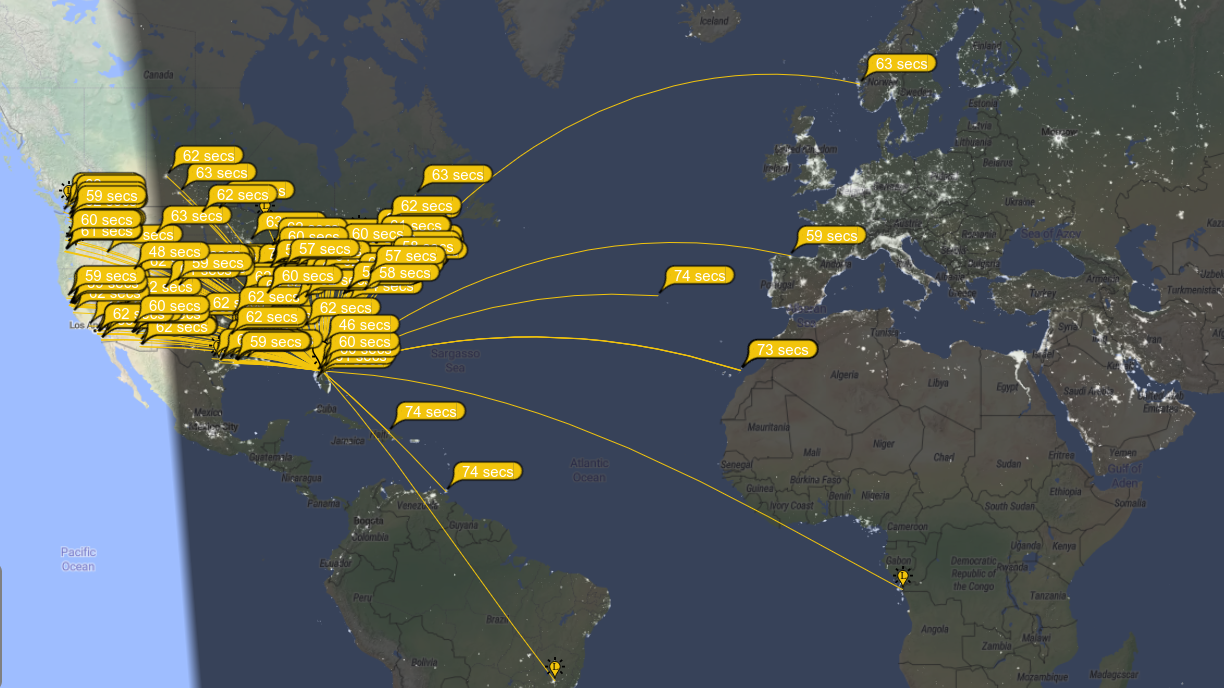
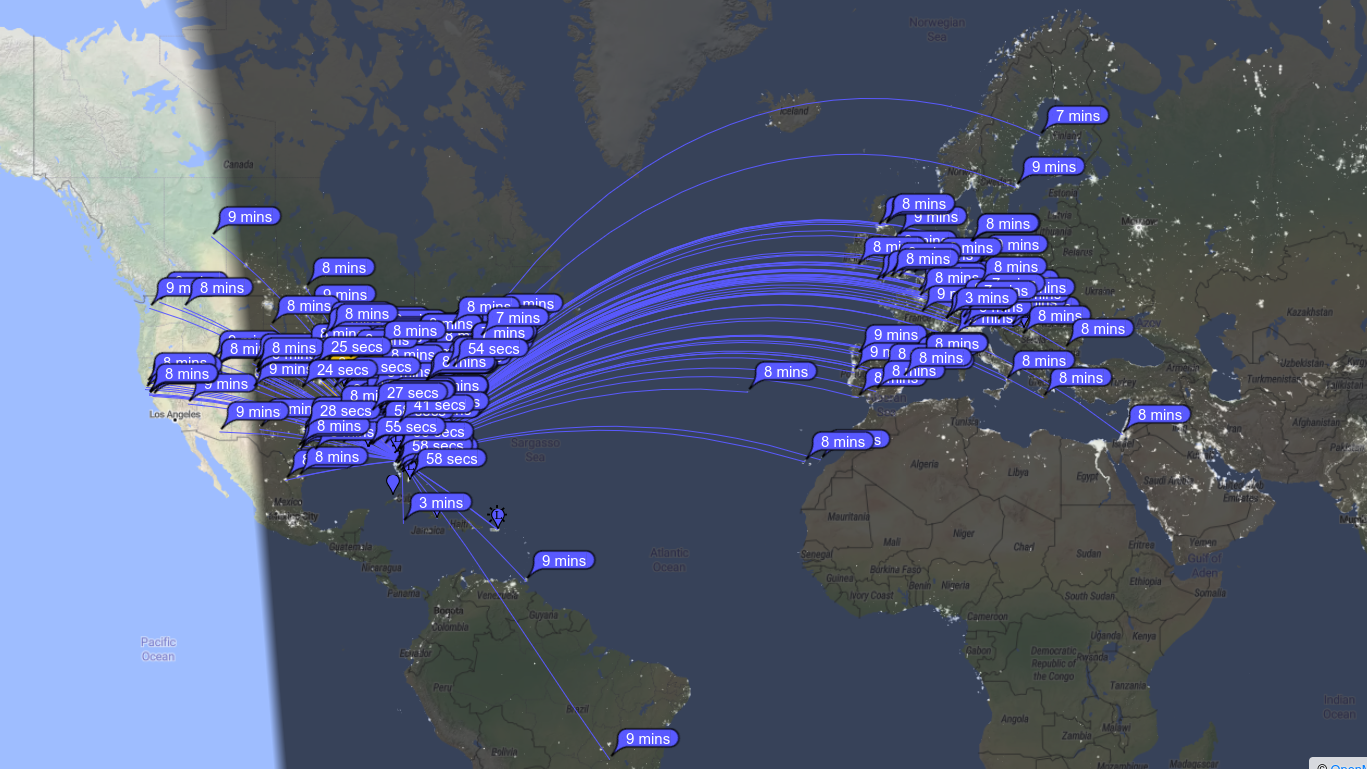
However, the range achievable with only 4-5 watts in FT8 Digital mode with a good antenna is still impressive.
If you are looking to replicate this project, I’d strongly suggest starting with a AIOC kit that doesn’t have the plugs already soldered on, as at least half of my effort was splitting out the PTT and TXD pads.