Finding hosts in new known_hosts files which are hashed

Older versions of SSH kept a ~/.ssh/known_hosts file which contained the name of each server you had connected to, along with it's public key. If you ever wanted to erase a public key, you simply edited the file with your favorite text editor, found the name of the server, and then deleted that line. (You might do this for example if the server admin had changed the public key of the server, and you wanted to tell SSH that it was ok to grab the new key and use it instead of the old key.)

 New versions of SSH store the server name in a hashed form, so you can't visually identify it (it's not human readable). This is a security feature so that somebody with access to you known_hosts file can't figure out what other machines you have connected to (and that they should try to hack next, etc). But it makes your job harder when you want to delete a single host's key.

The inelegant solution is to just delete the whole file and then accept new keys from everybody, but this is a security risk. To find out which hashed entry matches the server whose key you are trying to replace, simply run the following command:

ssh-keygen -F servername.com
 

Or, even better, to simply remove the server from your known_hosts file all in one command, use:

ssh-keygen -R servername.com

Adding custom headers (such as Approved:) to Thunderbird mail

Sometimes you want to send email or newsgroup posts with custom headers. For example, the Approved: header can be used to post to a restricted "Announce" newsgroup for a class, or you may want to mark your email with an "X-No-Arc: yes" header to prevent a mailing list archive from saving a copy. 

The easy way to add a custom header to the Thunderbird email/newsgroup compose window is by adding a user.js file to your configuration directory ( .thunderbird/default//user.js ) with the following line in it:

user_pref("mail.compose.other.header", "Approved");
 

Motorola Razr V3xx SIM Lock problem

Apparently, many (but not all) Motorola V3xx phones from Cingular have a problem where they will not work with a locked SIM card. If you change your SIM code it will apply the changes, but as soon as it turns on the “SIM Lock” feature, the phone will not be able to access the Cingular network. If you call Cingular, they will insist you have “locked up” your SIM and that they must send you a new one. A thread on the Cingular forum about this topic appears here.

If you have access to a different GSM phone however, you can fix the problem yourself by moving your SIM card to the other phone, typing in your SIM card number, and then turning off the “SIM Lock” feature. When you move the SIM card back to your V3xx phone, it will work again. Just remember, don’t turn on the “SIM Lock” feature on a V3xx until Motorola/Cingular issue a fix unless you have another GSM phone around to correct things if you have one of the broken v3xx’s.

I verified that my V3xx has this problem and notified Cingular.

Changing the outside display logo on a Razr V3XX

Electronics My RAZR V3xx has two screens, a small one on the "outside" and a larger one inside. During normal phone usage, the outside screen shows the Cingular logo. (Or the Motorola Logo if you have a non-branded phone.)

I decided to replace the Cingular logo with one of my own, so I used P2kCommander-v4.9.9 to replace the cl.gif file in a/mobile/ with my own. (I'm currently using the picture of electronics, which makes the outer screen look like a window into the phone, but I've included a few others you might want to use instead.) Remember to back up your original cl.gif if you ever want to go back!

Other hacks for the v3xx are here and here and my review is here. Continue reading

Review: Motorola RAZR V3xx

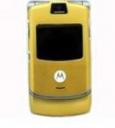
V3 Gold The Motorola RAZR V3xx  is one of Cingular's new non-smart 3G phones, and can be purchased relatively inexpensively with a contract. (Amazon sells them for 0.01 with a 2 year contract, cingular charged $79 the last time I checked.) Although it doesn't have a mini-qwerty keyboard and good email support like the Blackjack, 8525, or Treo 750, it also costs $200-400 less. The Motorola RAZR V3xx is in the same class as the Samsung A707 SYNC and the LG CU500 Phone in that it supports 3G, playing music, and Cingular videos, but it's 3G chipset is twice as fast (3.6 vs 1.8). Continue reading

Best J2ME mobile applications

j2me logoThis is a list of the J2ME applications that I use and like. To make the list they have to be free to use and not have annoying advertising (open source is also a plus).
NOTE:
If I do not list a URL Link, but instead just have a number in parenthesis such as (7223) the number is a "quick download" link at wap.getjar.com. 

Continue reading

LG CU-500 Mobile Phone Review (Cingular)

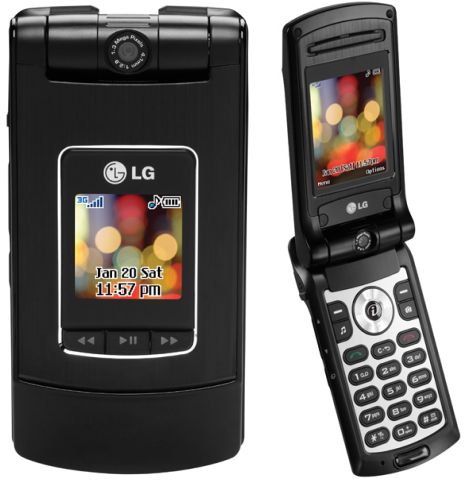
LG CU500 cell phone The LG CU500 Phone is one of Cingular's new non-smart 3G phones, and can be purchased relatively inexpensively with a contract. (Amazon sells them for 0.01 with a 2 year contract, cingular charged $50 the last time I checked.) Although it doesn't have a mini-qwerty keyboard and good email support like the Blackjack, 8525, or Treo 750, it also costs $200-400 less. The LG CU500 is in the same class as the Samsung A707 SYNC and the Motorola RAZR V3xx in that it supports 3G, playing music, and Cingular videos.

Continue reading

Enabling the IMAP4/POP3/SSL email client (and other goodies) on a Motorola v3xx phone via SEEM editing

Cell Phone Tower

My new Motorola RAZR V3xx phone is Cingular branded, which means that Cingular has added many money making links to it ("Shop Cingular!") and have hidden some of the nicer features that Motorola originally built into the phone. For example, Cingular has hidden the IMAP4/POP3/SSL email client that is built into the phone. Luckily for me, by changing a few bits in the phone's memory I can re-enable the features I want. I have already fixed Java on my phone so that Google Maps doesn't ask for permission to access the network every time I zoom or scroll, which is another hack I recommend you do to your V3XX phone. Now I will describe the SEEM edit I made.

Continue reading

Creating udev rules to name your devices in Mandriva

I have a Motorola cell phone, and when it is plugged into my linux laptop via a USB cable it appears as a /dev/ttyACM0 device. (Unless I already have an ACM device plugged in, then it appears as /dev/ttyACM1).  BUT, it's much nicer to be able to point my phone programs (such as kmobiletools and moto4lin) at a logical device, such as /dev/mobile where the number won't change than to point it at the kernel device name.

Continue reading