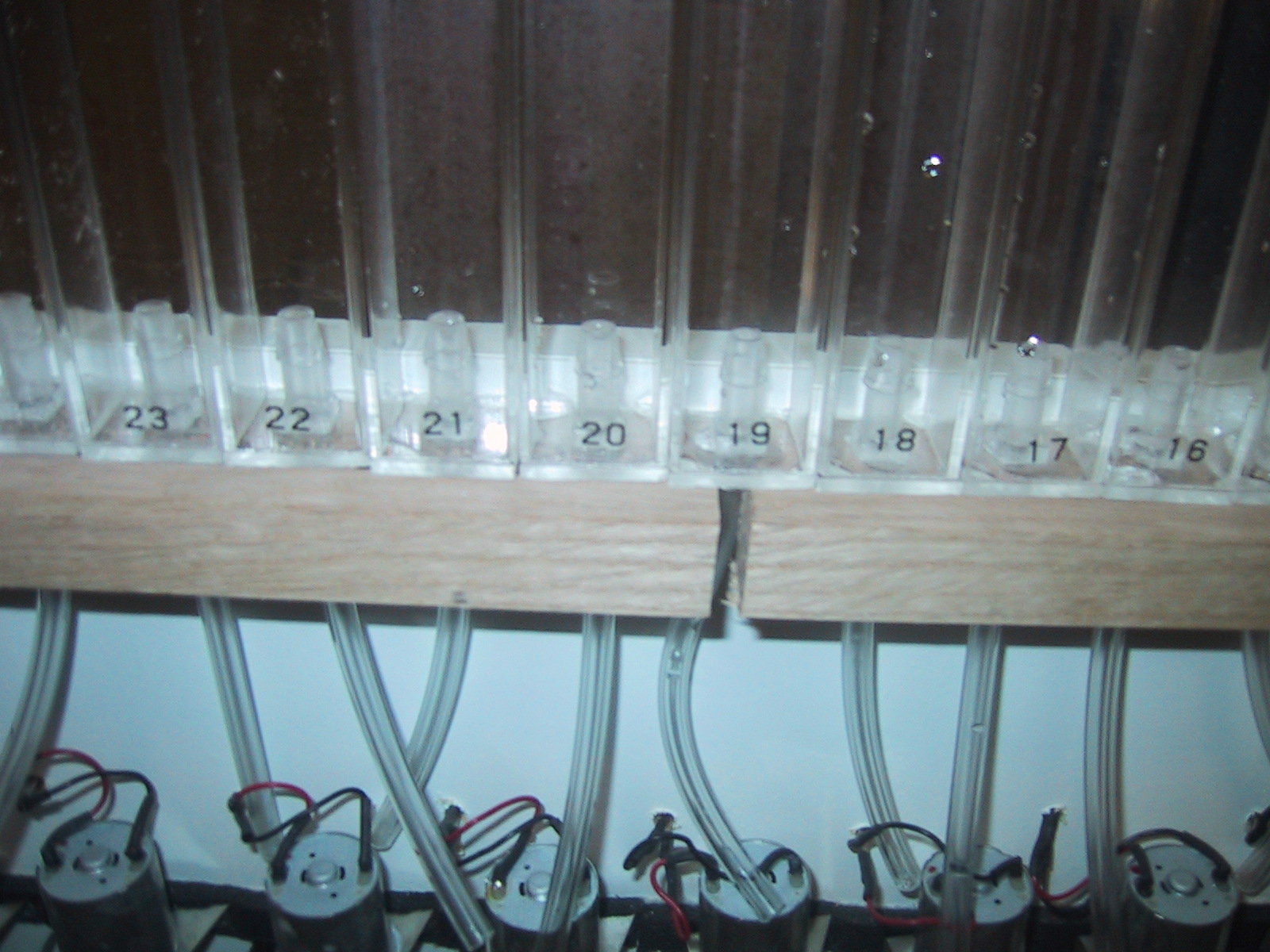
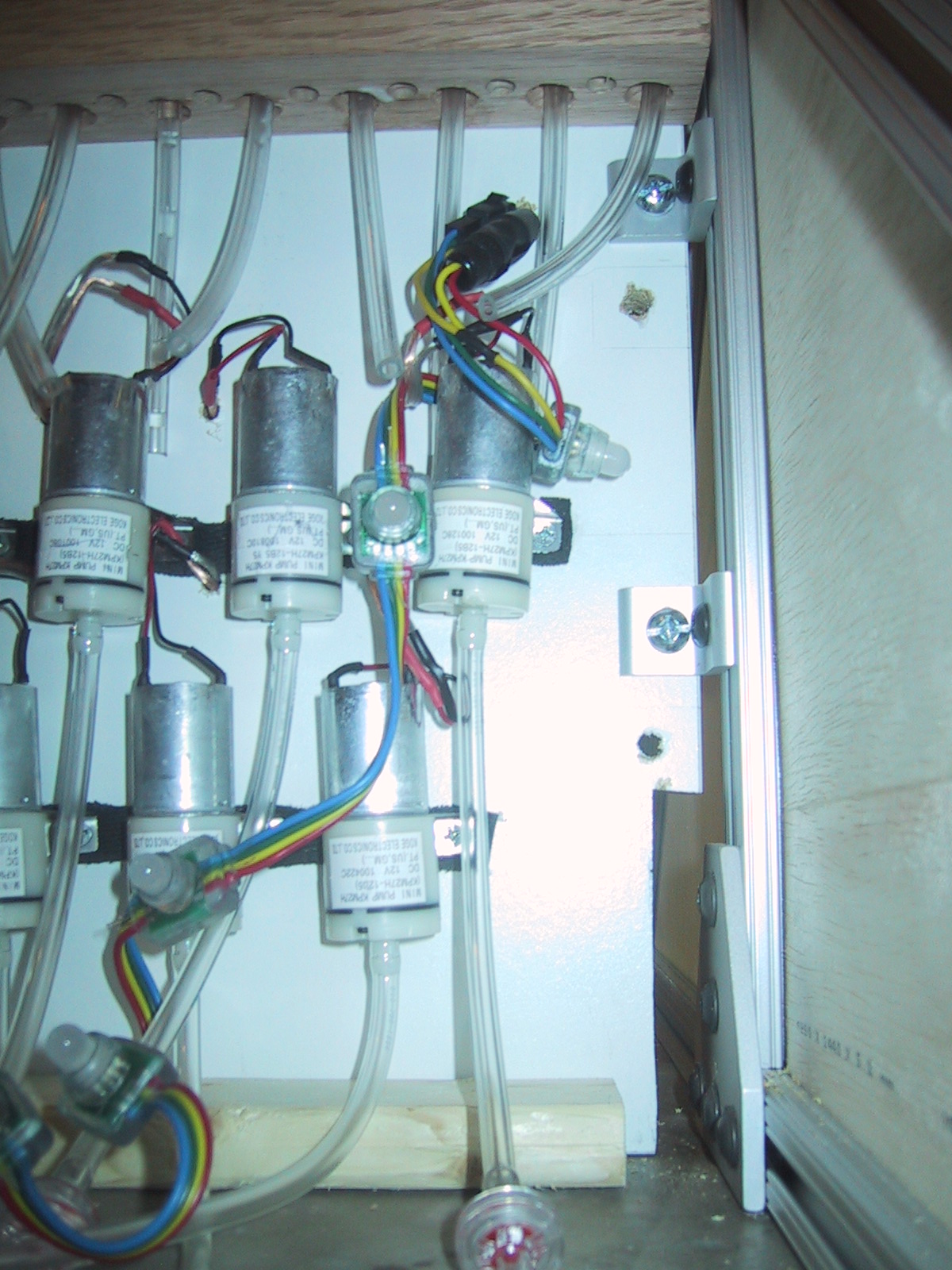
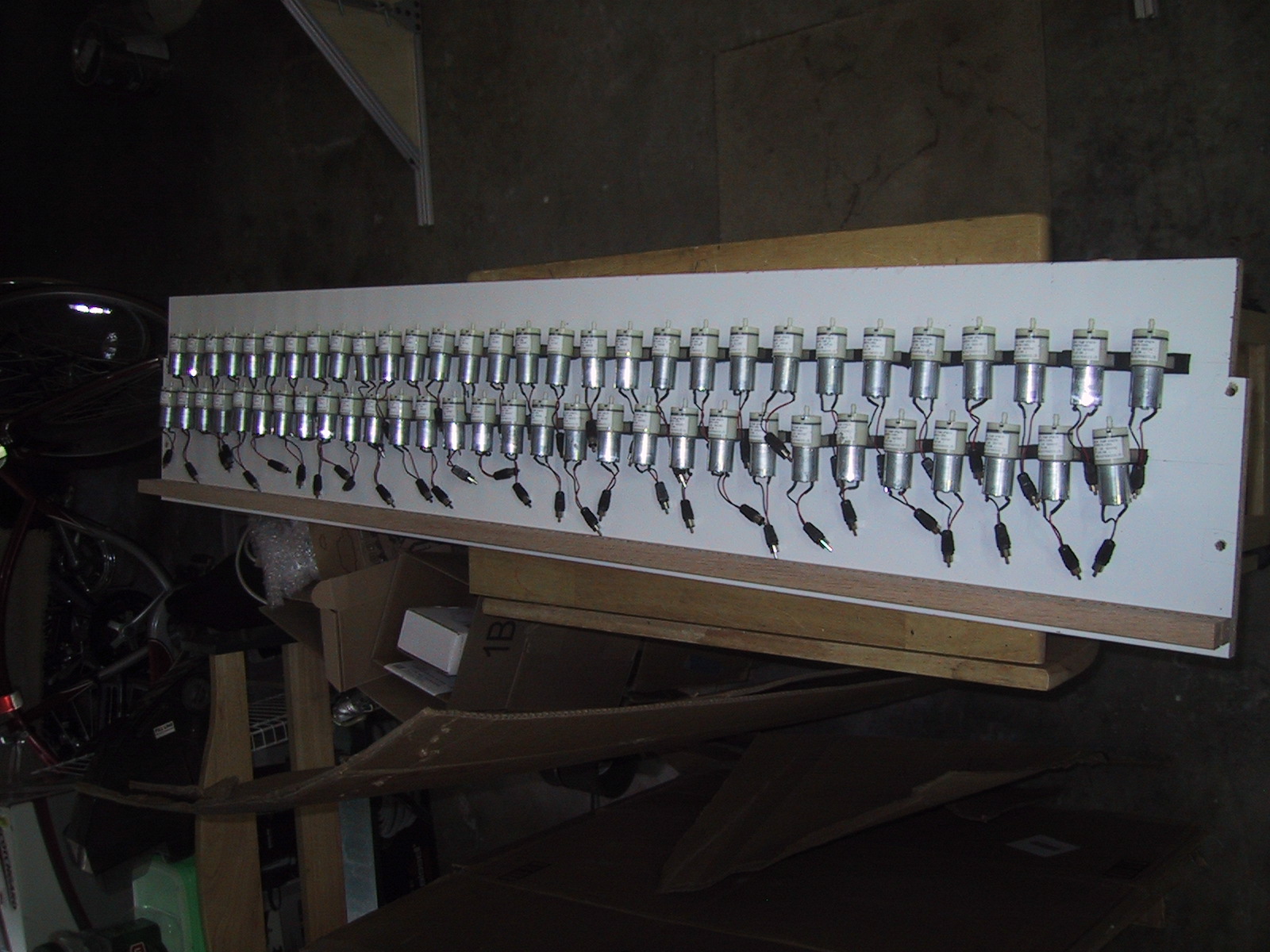
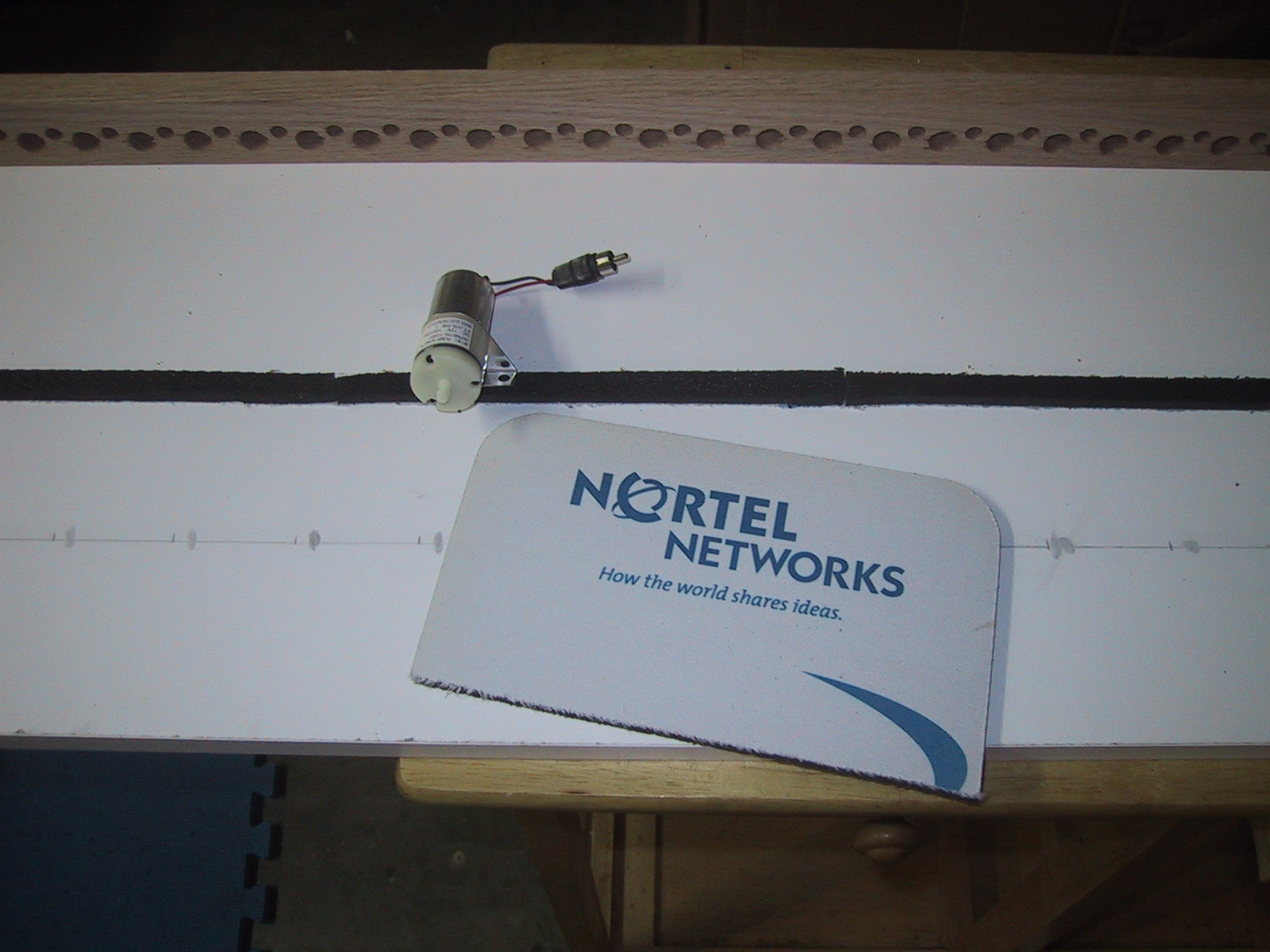
How do you make sixty bubble display tubes?
One. By. One. Well, actually, you do sixty duplicates of each individual step. The steps are:
Continue reading
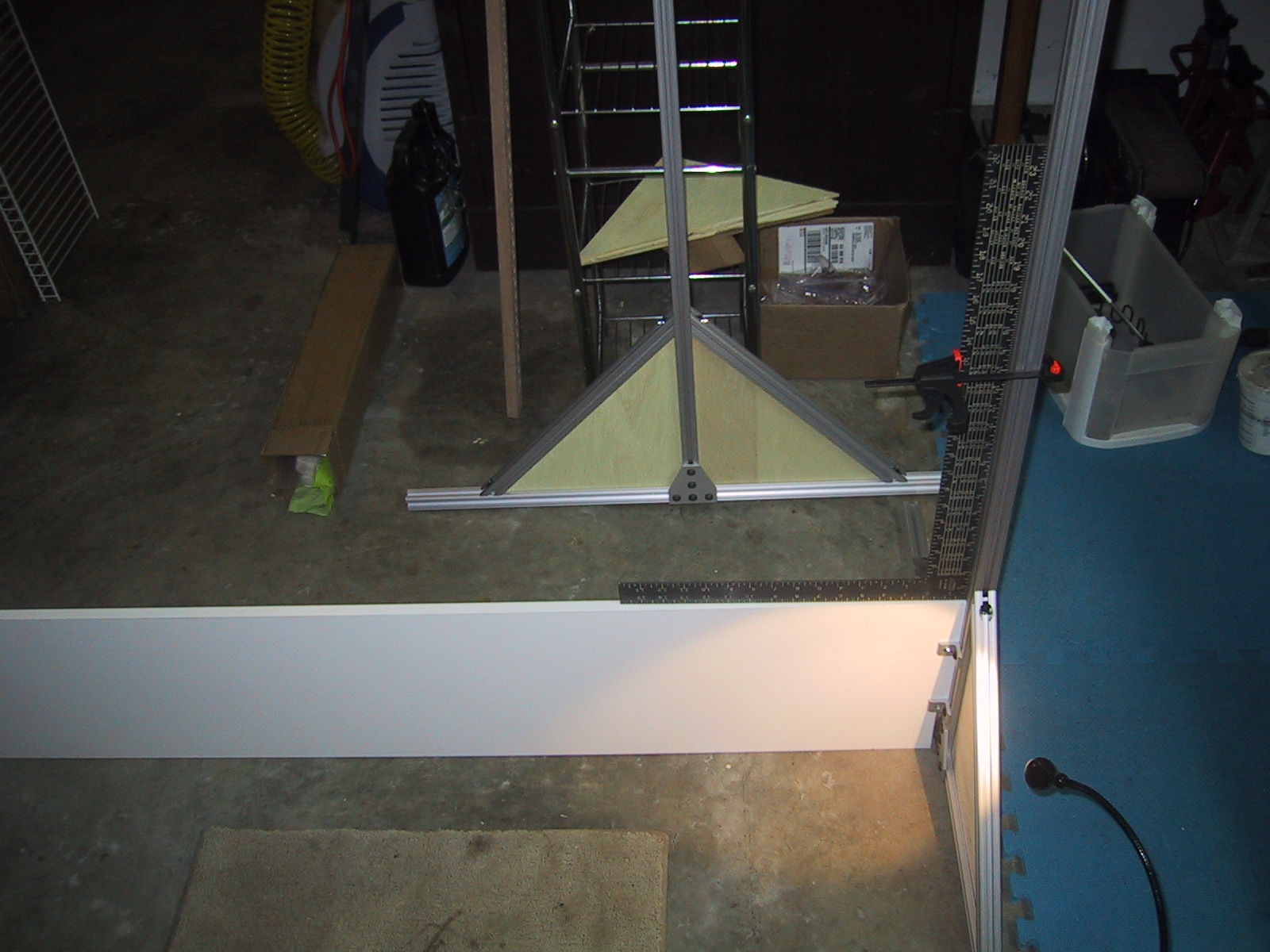
Bubble Display Frame – Test Assembly
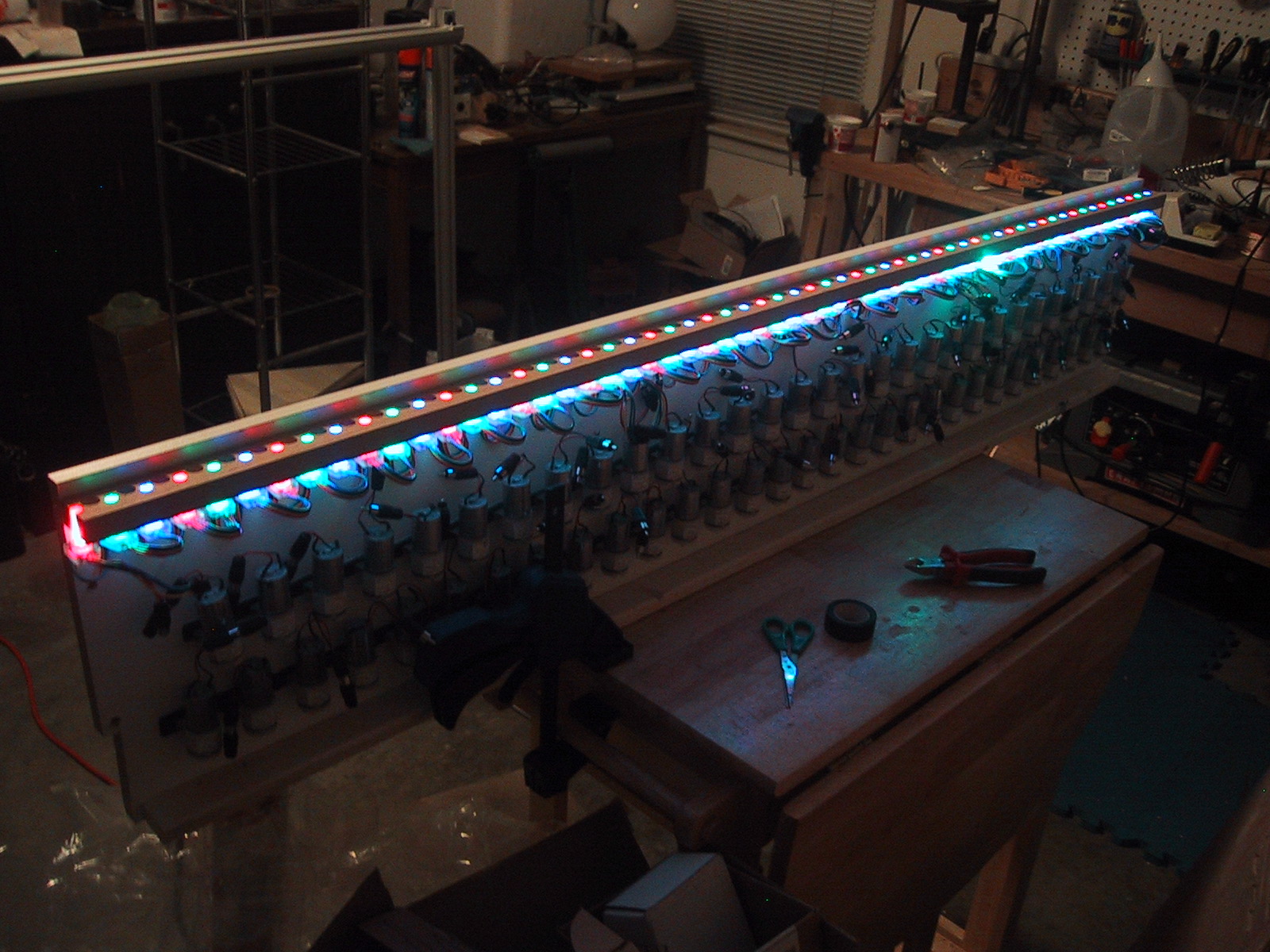
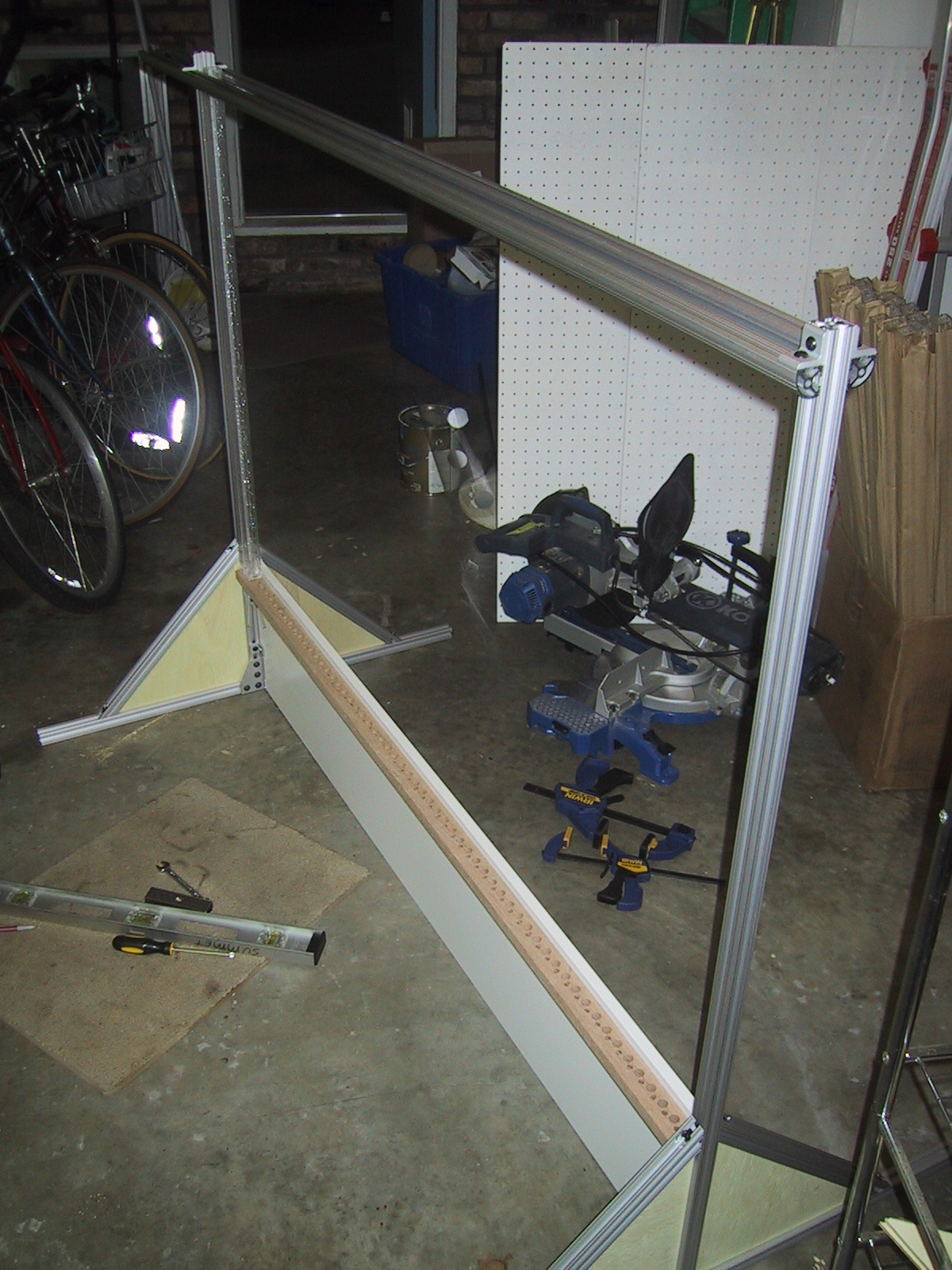
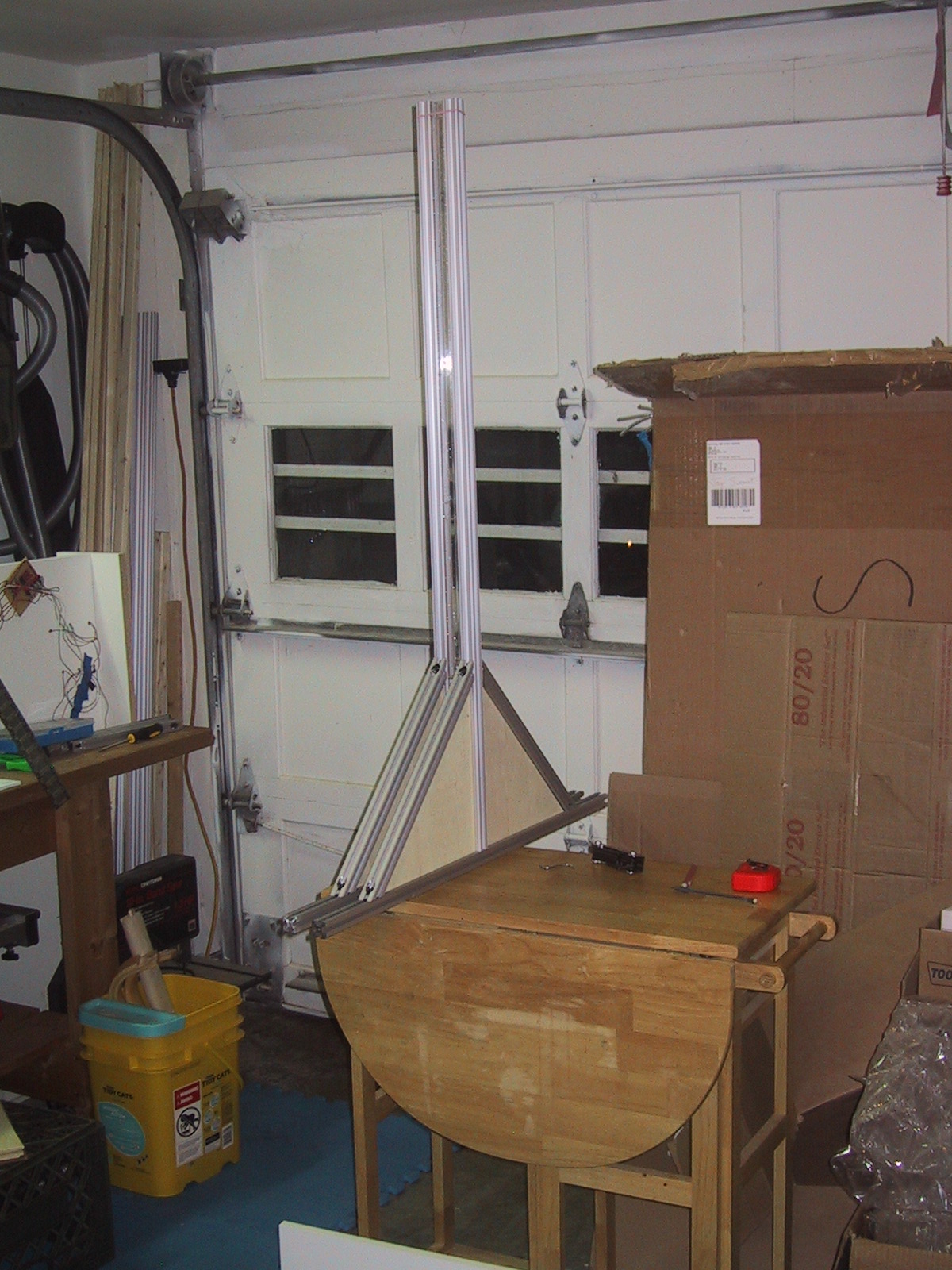
I am using T-Slot aluminum extrusions for the frame of the full sized bubble display. After I made the CAD plan, the decision was made to shorten the display to 36″ tall tubes (The width will be 60 tubes / inches). This allowed me to shorten up the support legs as the center of gravity of the frame will be much lower. I haven’t actually cut any of the aluminum stock to size yet, so the photos below show pieces of aluminum extending out the back and top, and it is 72″ wide instead of 62″ wide. You can see a single tube mounted with a rubber band on the far left. The piece of cardboard on top of it is taking the place of a metal mesh that will eventually mount over the top of the tubes, running the entire width. (The bottom cross support is simply to hold the frame up, and will probably not be visible in the final assembly either.) The triangular prism at the bottom of the frame will be covered with panels of plastic or wood, and contain the electronics, LED’s and pumps.
A progression of DSL modems
Over the years I’ve used a lot of modems to connect to the Internet, starting with a 300 baud cartridge modem for a Commodore 64! In fact, I think hit all the major speed upgrades (300, 1200, 2400 9600, 14.4K, 28.8k, 33.6K, 56.2K) for analog POTS modems excluding the original 110 and a random 4800 bps in the middle. (I mean really, who didn’t wait for the 9600 baud modem?) The most impressive speed upgrade was from 300 baud to 1200 baud (four times faster! Now text would appear faster than I could read it!)
However, this post is about my more “modern” networking equipment over the last eleven years. Primarily DSL modems, with this one oddball thrown in: Continue reading
Serial Shift Register MOSFET driver (version 1.1)
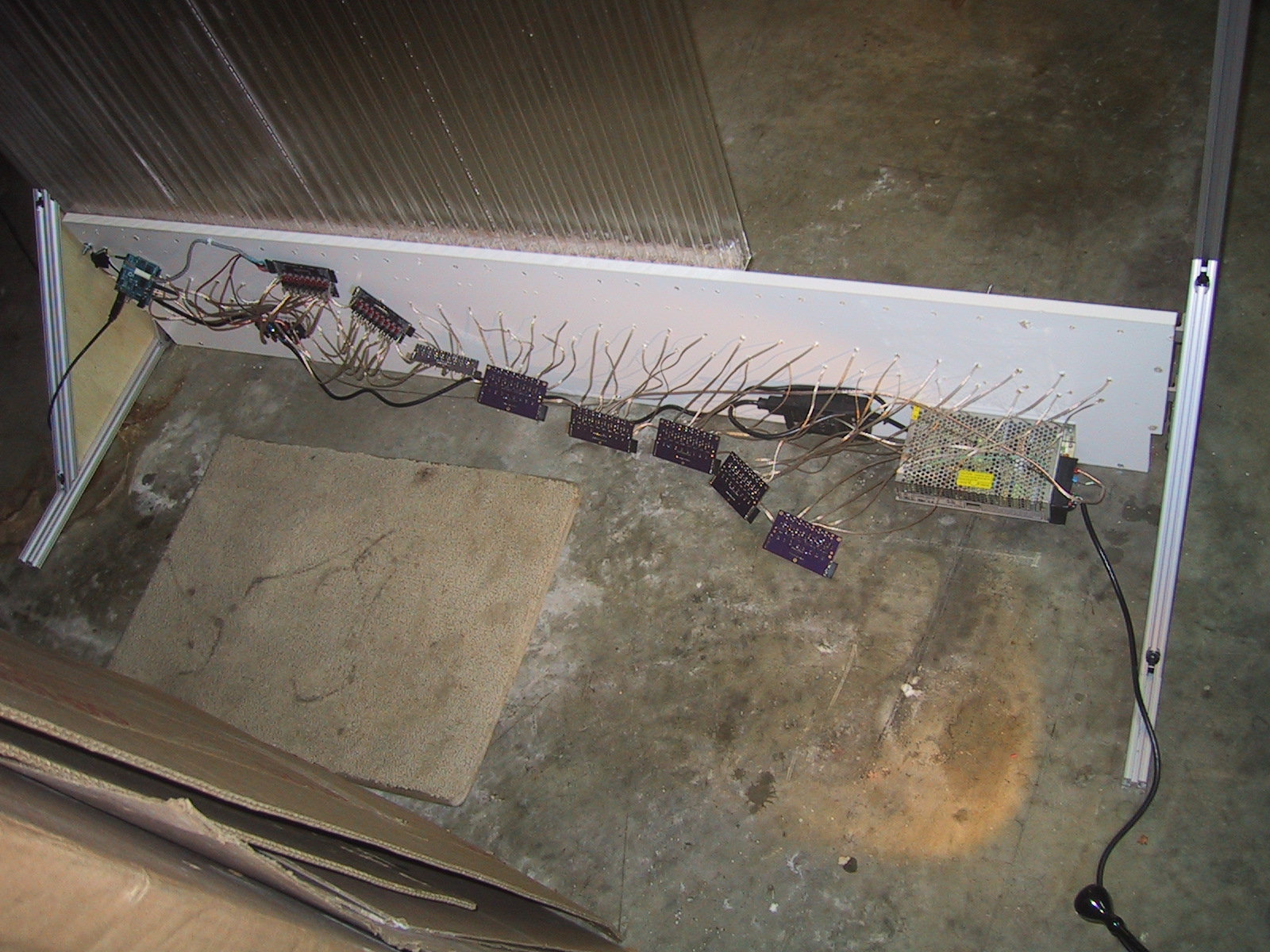
My BubbleDisplay project needed to control sixty DC motors or solenoids to control air injection into individual columns of liquid. Due to the large number of outputs needed, I am using a chain of (74HC595) serial shift registers so that three I/O pins can control all sixty outputs. As each serial shift register has 8 outputs, this requires eight chips (for a total of 64 outputs, four are unused). The 74HC595 can not source/sync enough current to drive the motors/solenoids directly, so I am using a TO-220 N-Channel MOSFET rated at 60 volts and 32 amps (digikey: FQP30N06L-ND) to drive the load, with an 1N4001 rectifier diode to handle current spikes. Because I had to make 8 (9 for a hot spare) copies of this circuit, I decided that fabricating a printed circuit board was the only way to go.
It only took me two tries (Moving from Version 1.0 to 1.1) before I was happy with the design, which you can see (populated for testing) above. Looks a lot nicer than the prototype, right?

Continue reading
Shill bidding on Ebay? You be the judge…
Shill bidding is when somebody places a bid on an auction solely to drive up the price of the item, without intending to purchase the item. Typically shill bids are placed by the seller or a confederate of the seller to increase the profit from the auction.
In an effort to combat shill bidding, online auction sites such as Ebay typically disallow anonymous bidding, but it can still happen. To combat shill bidding on a personal level, it helps to make your bid at the last minute (so shill bidders can’t react to your bid) and to never increase your initial bid. (You should always bid the maximum you are willing to pay.)
Posted below is the complete bidding history for a laptop computer which I believe exhibits shill bidding. The shill bidding appeared to use two different accounts (one with zero feedback, and another account that was more established) in an attempt to disguise what was going on. Continue reading
Filling a Pool using Rain Water: Fiskers Rain Barrel Diverter Pro to Hose Attachment
This is a Fiskers Rain Barrel Diverter that you attach to a gutter downspout to fill a rain barrel.
You can buy them on Amazon. They include a flexible plastic pipe and rain Barrel adapter and are designed to be mounted on your downspout at the water line of your barrel so that they fill the barrel but do not over-fill it.
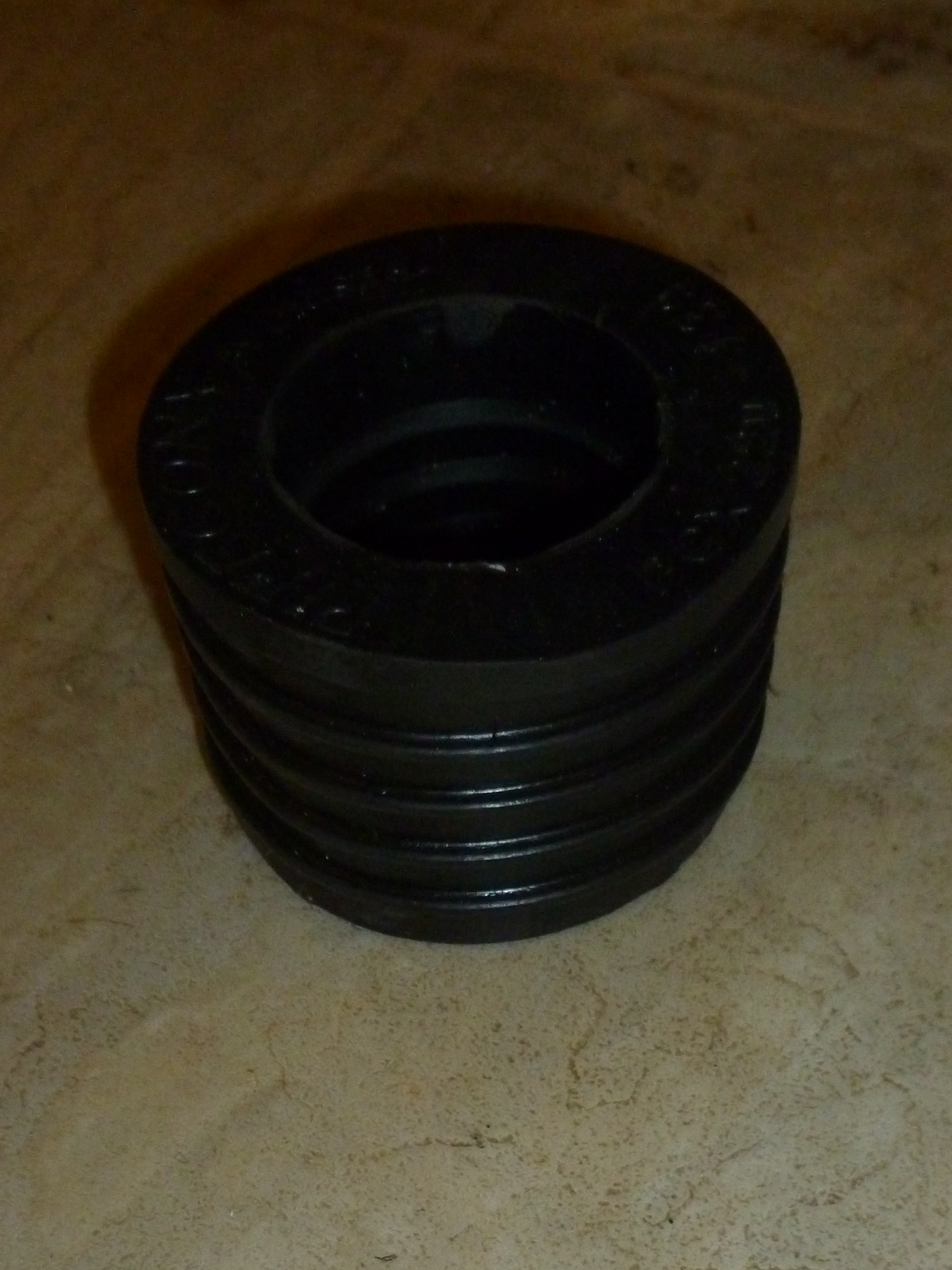
However, I wanted to use it to top off my swimming pool with (free) rain water, as opposed to (expensive) city water. To do this, I needed to run a hose from the corner of my house where the downspout is over to my pool. As I already had several standard 3/4″ garden hoses, and they are relatively inexpensive, I decided to adapt the Fiskars provided hose (which is around 1″ in diameter) so that I could connect a regular garden hose to it.
I purchased a male hose repair kit from Ace hardware that had a barb that would fit inside the hose and multiple metal “teeth” that you would bend down over the hose to hold it on.
Because the Fiskars flex hose is larger than a standard garden hose, I also purchased a tube of silicon sealant, which I used to make the connection water tight. (This only works for low pressure connections, such as that near the rain diverter). I widened up the teeth so that they would fit over the fiskars hose and surrounded the bottom with silicon sealant.
The fiskar’s house has ridges. I recommend getting the teeth of the male hose end over THREE ridges, which will hold the end of the flex hose into the silicon seal very tightly. Getting it over TWO ridges is easy, but you will have to squeeze the flex hose, latch one side under the teeth, then use a screwdriver to push the third ridge under the teeth on the other side, while tightening the teeth using a pipe wrench or vise.
Because I wanted to get as much water as possible into the pool, I mounted the Fiskars Diverter Pro about seven feet high on the downspout. This way I would have several feet of “head” to drive the water down the hose and along the ground to my pool.
Insects: subtle Bubble Display problem number 2
One morning I came back to my prototype bubble display to find this:

Obviously my final bubble display will need to have a screened mesh at the tops of the tubes to allow air to escape, but keep insects out. (But I will also need a way to re-fill the tubes, so it can’t be a permanent screen…so acrylic welded solutions are not on the table….)
Evaporation: subtle Bubble Display problem number 1
After leaving a prototype bubble display running for a week (in 80-100 degree weather) I returned to find the following clear case of evaporation:
The two tubes on the outside have glycerin, while the two tubes in the center (which are several inches lower) contain water. I didn’t leave a marker of what level the tubes were filled to at the beginning of the week, but the water tubes have obviously lost several inches due to evaporation. (The continuous bubbling action helps evaporation along quite a bit…) It looks like the glycerin suffers less from evaporation, but I expect that even a glycerin filled bubble display will need periodic refills. Note that the 80-100 degree (and dry) weather may have made this problem more pronounced.
IKEA Atlanta no longer recycling batteries
IKEA has long been my go to place for recycling used alkaline batteries and eating cheap hot dogs. (Lowes & Home Depot will accept LiIon batteries, but not alkaline).
On my last trip to IKEA Atlanta, I was disappointed to find the following sign covering the hole that used to be the battery recycling station.

Of course, whoever is in charge of their website hasn’t yet gotten the memo yet:

I really doubt that the U.S. Department of Transportation has issued a regulation that says IKEA can’t recycle batteries. Perhaps just that they can’t recycle them to a 3rd world country….and IKEA is very good at reducing costs.
Drawing letters with a bubble display
Once I had five six foot tall tubes, I wrote some code that would attempt to render text using a 5×7 font. If you can read the three letters I scroll (vertically) in the movie below I have been successful: