Electrifying Franken-Trike

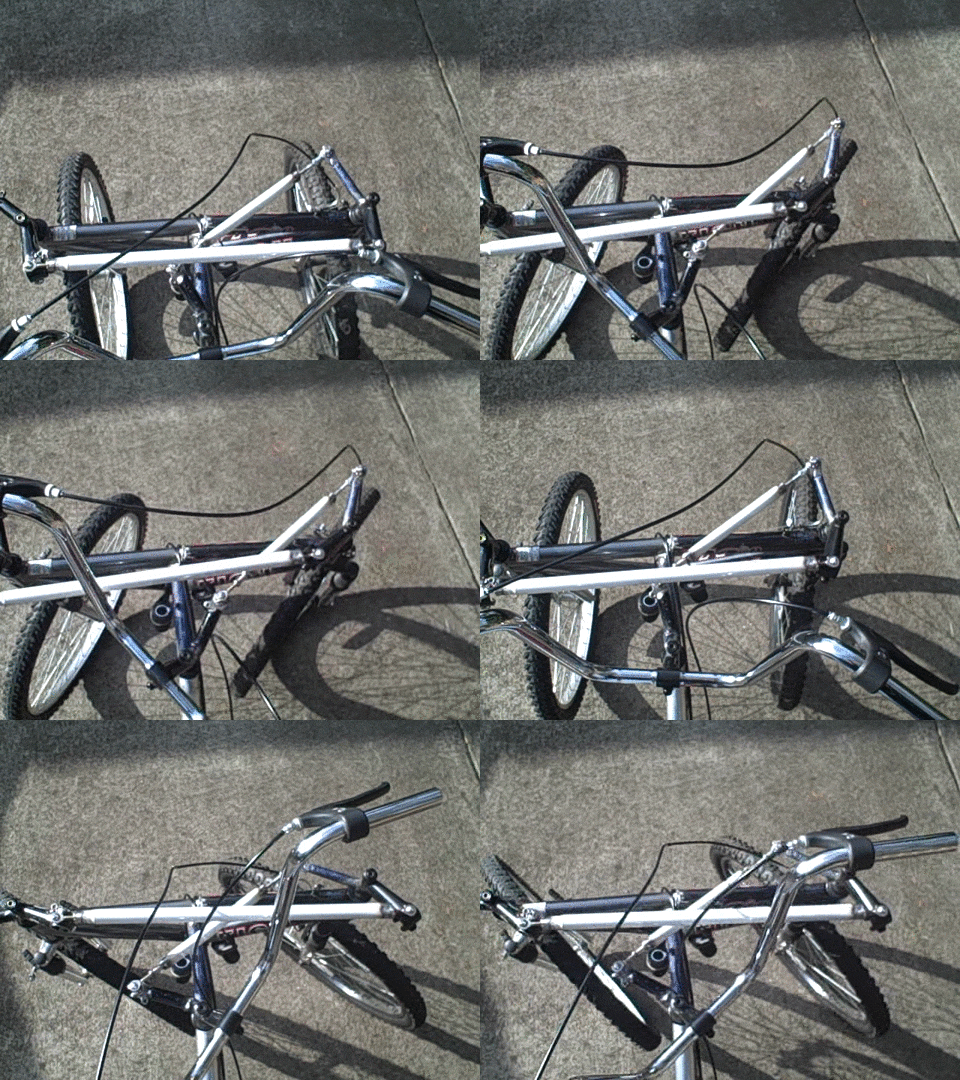
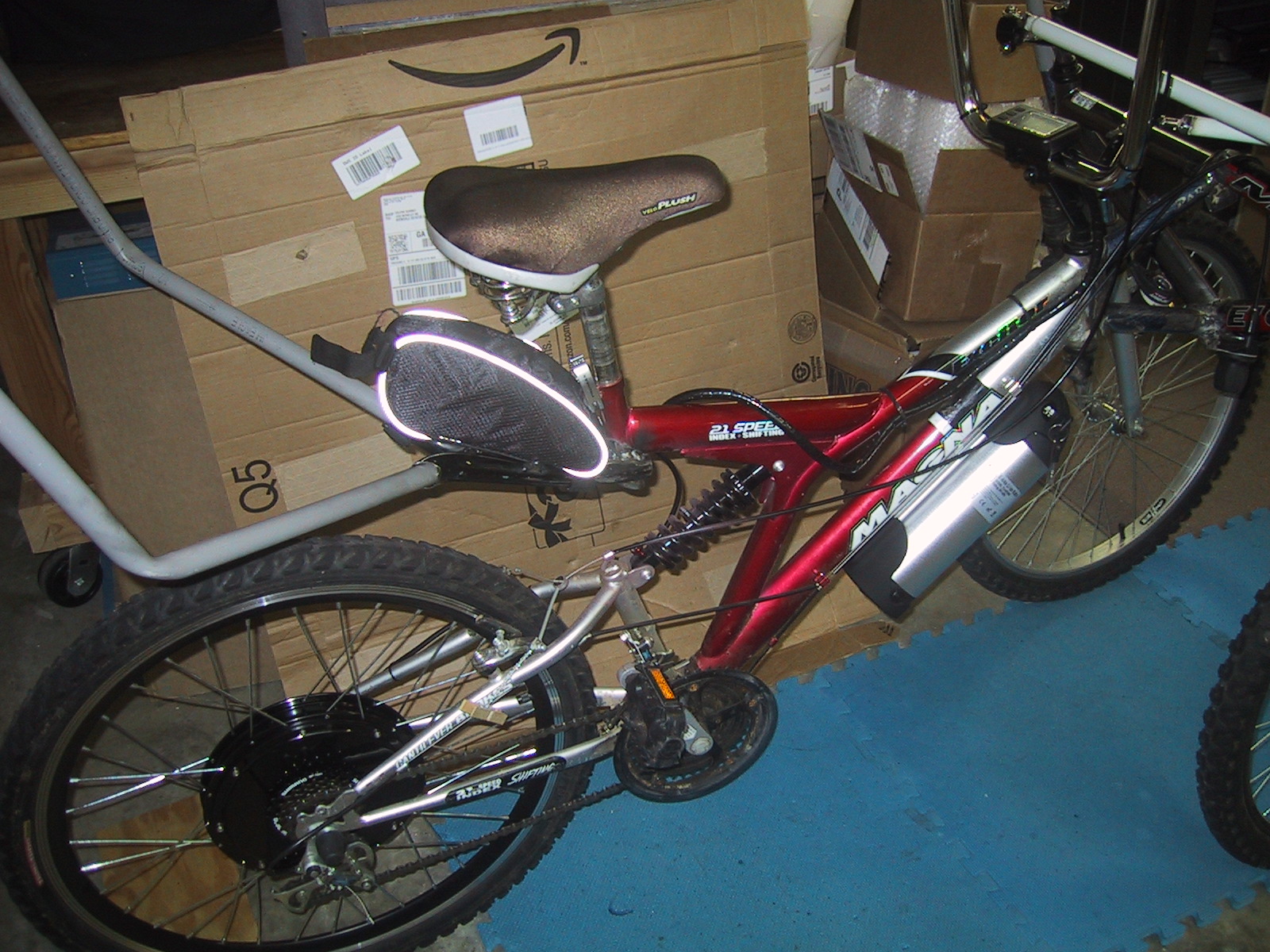
Franken-Trike is big and heavy. And it’s only going to get bigger and heavier once I finish the rain cover. So I added an electric motor to it… Weight with motor and battery is now 80 pounds.
ebike_parts

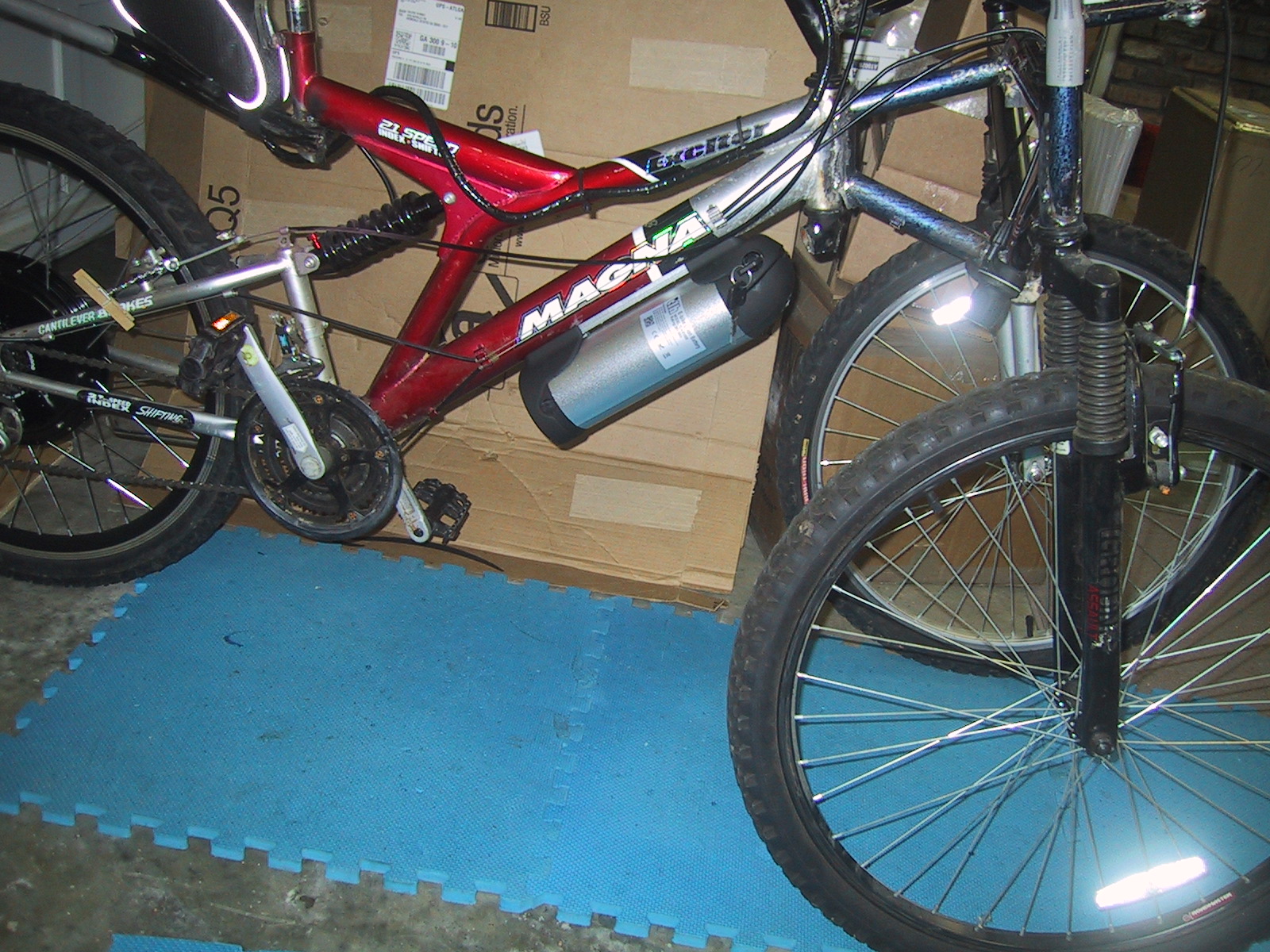
This is a Chinese generic hub motor, controller, LCD display that includes speedometer and odometer, along with a “water bottle” style 36v 10aH Li-Ion battery pack. The motor claims to be 500 watts, and the battery claims to be able to provide 540 watts (15 amps * 36 volts), but on steep hills I have to petal a bit myself to maintain speed. On level ground it can get the bike up to a scary enough 10 mph by itself, and I expect it will fulfill its purpose of making my commute into less of a taxing workout of lugging the monster bike up the big hill…
water_bottle_battery

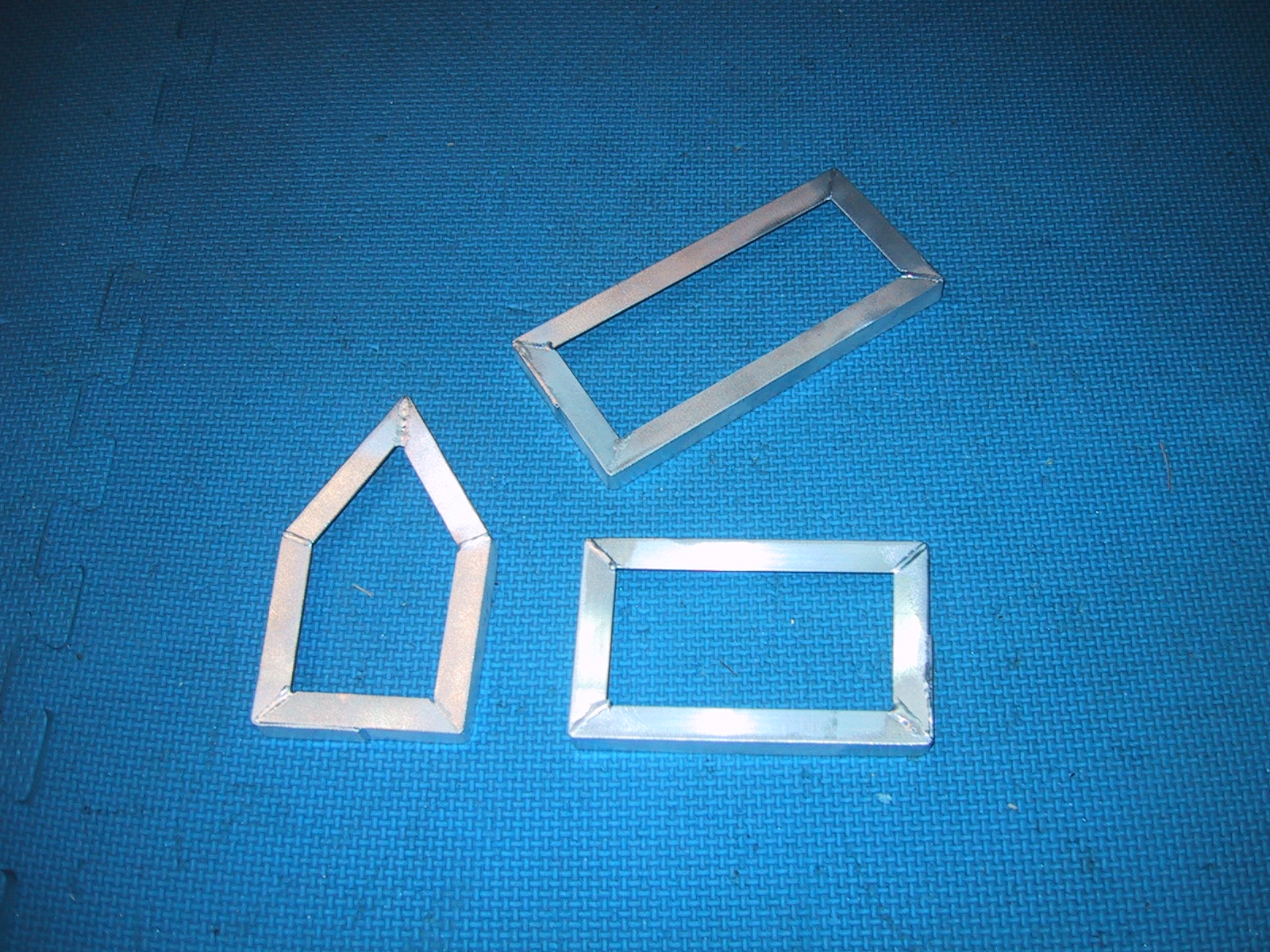
Fabricating Gingerbread House Cookie Cutters

three_cutters_done

One of my relatives makes a large number of gingerbread houses for all the kids (and me!) to decorate for the holidays. They have been cutting the house panels out of rolled gingerbread dough using a knife and paper templates. I volunteered to make them some custom cookie cutters, as the three panels (2x roof, 2x wall, 2x end pieces) are geometrically very simple (two rectangles, and a triangle sitting on top of a rectangle.)

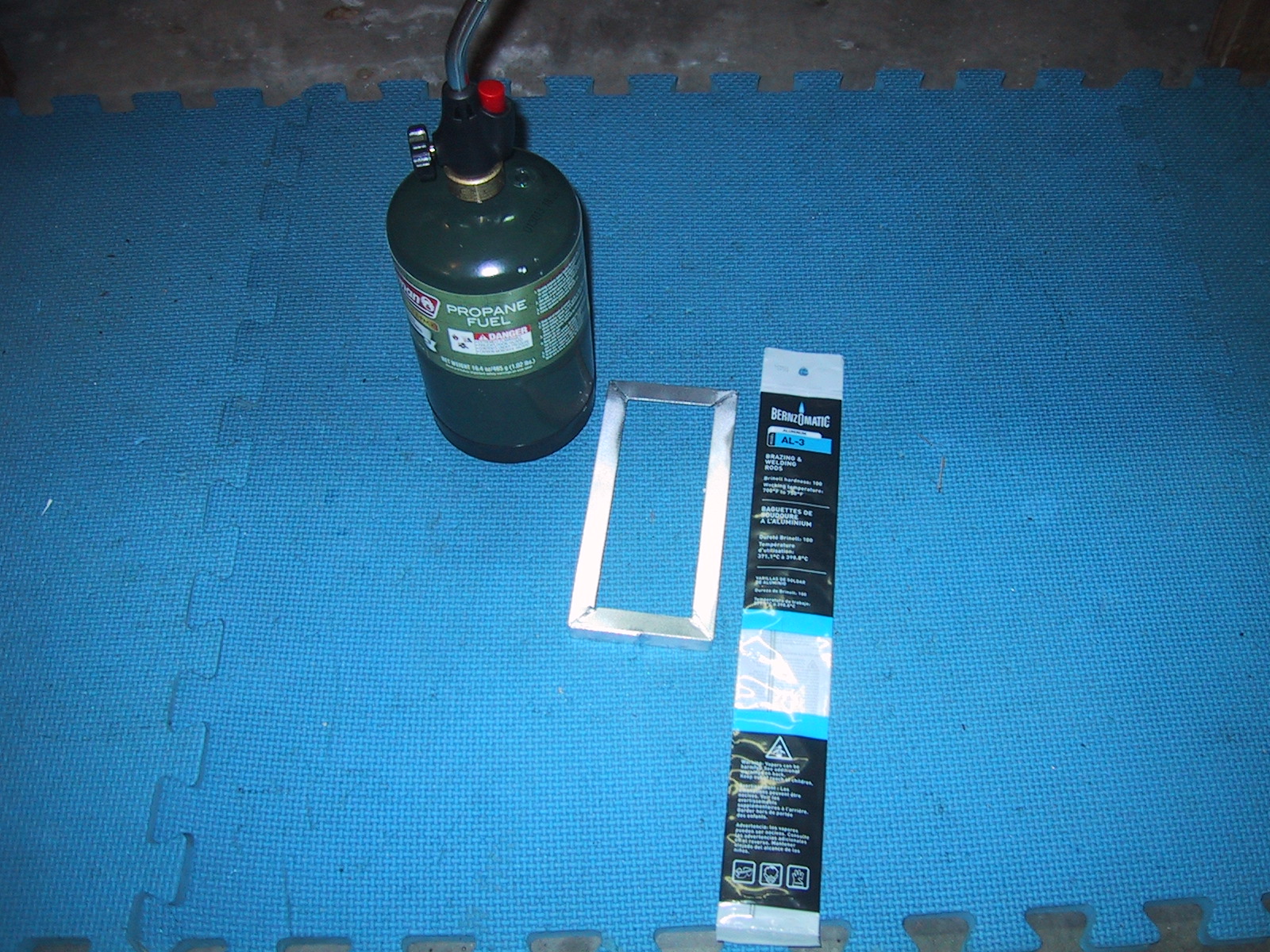
alunimum_soldering_tools
I bought some 1/2″ angle aluminum at the the big box (I would have preferred 3/4″…but they didn’t stock it…), along with some aluminum “welding rod” which is really a Continue reading

OneTesla O-scope traces

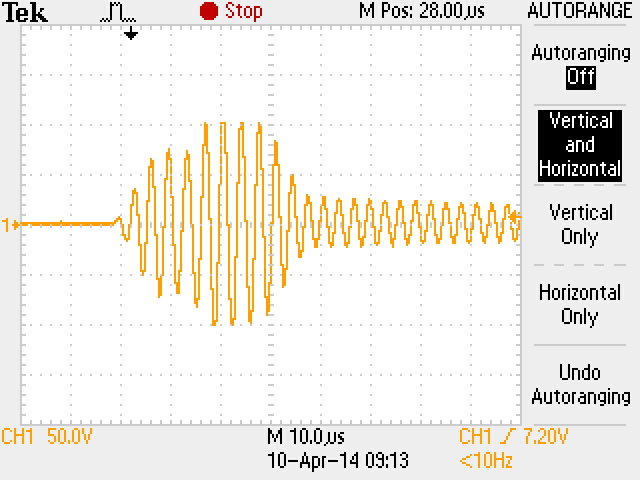
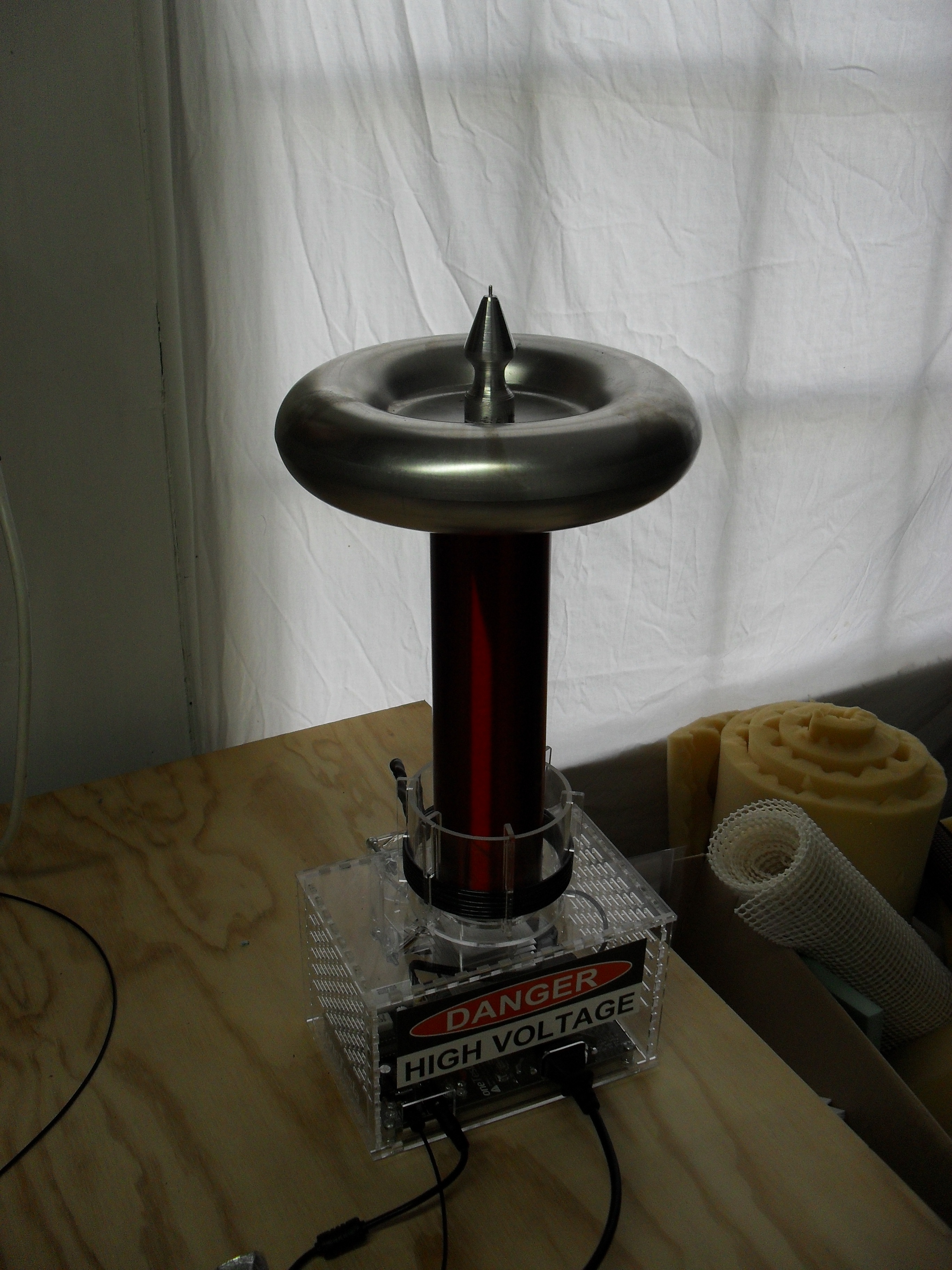
I have reduced my primary to 5 turns, and using the standard 0.068 MFD tank cap, this is the general shape of my oneTesla output waveform (as captured by a scope probe hanging in the air about 3 feet away from the coil):
Screen Capture

As you can see, the primary rings up and then the secondary oscillates for quite a while afterwards.

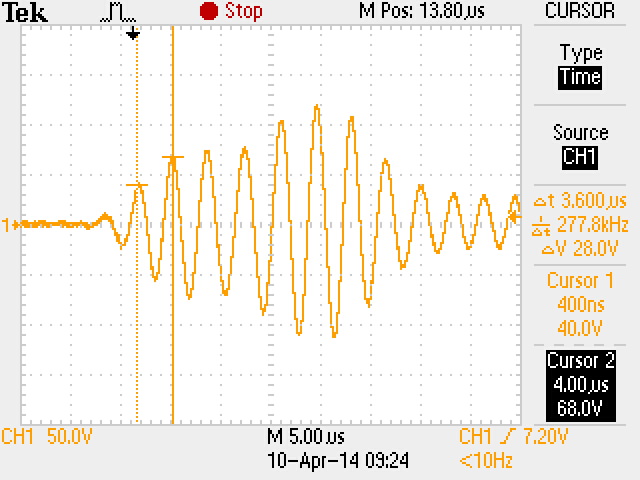
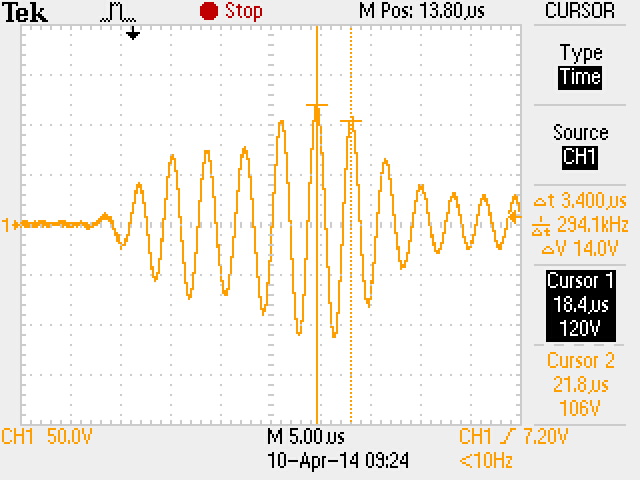
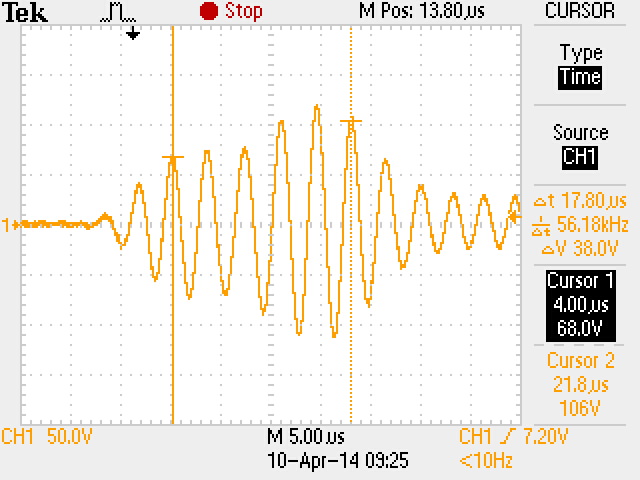
The next three traces are running the coil at a very low power level. Depending upon where I measure between peaks on the trace, I get different frequencies:

Screen Capture
277 kHz

Screen Capture
294 kHz

Screen Capture

17.80 uS between five peaks, or 1 / (3.56 / 1000000) = 280 kHz

As the 280 is between the 277 and the 294, we’ll just say that my primary has a resonant frequency of 280 kHz, when at low power.

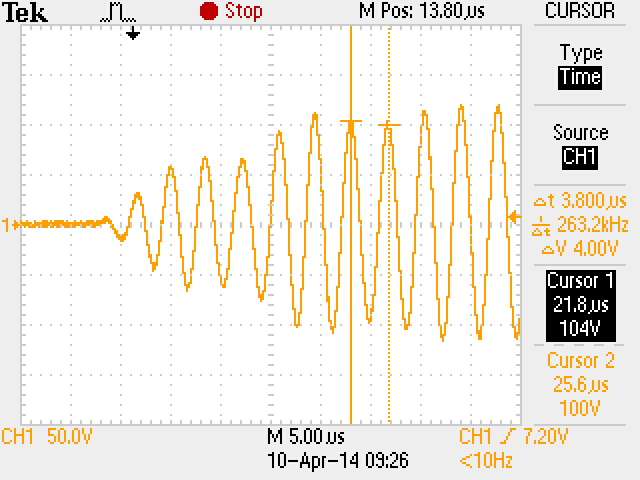
Next, I turned the power up a bit (around 1/3 of the way up) and got the following two measurements:

Screen Capture
263 kHz

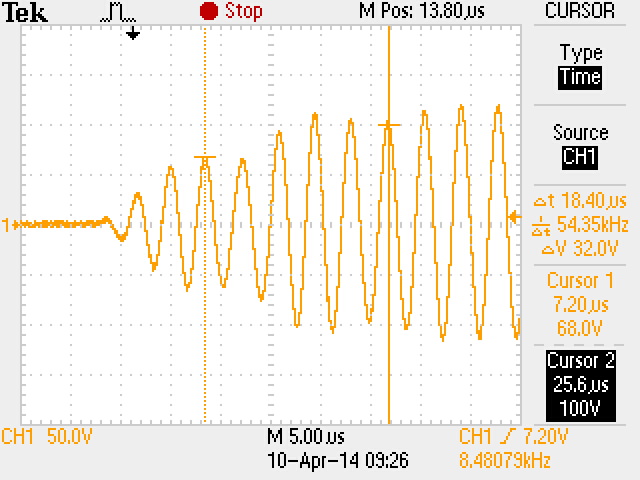
Screen Capture
18.40 uS for 5 peaks, or 1 / (3.68 / 1000000) = 272 kHz

So my primary resonance is somewhere between 263 and 294 depending upon how I measure it, with a value of 272-280 looking to be a reasonable average.

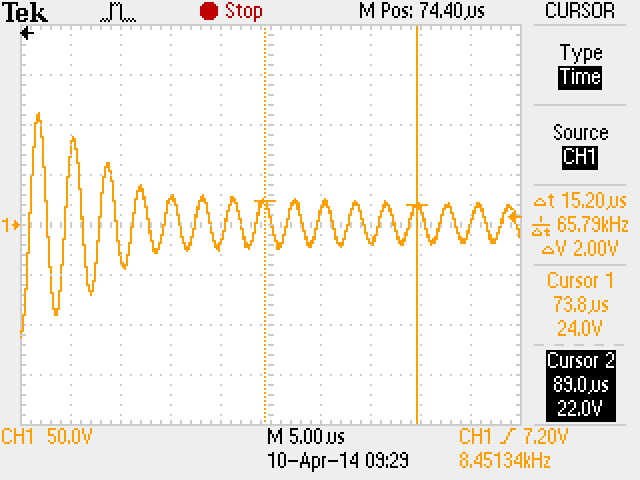
Surprisingly, my secondary resonance measurements agreed with themselves a bit better. Here is the low power trace:
Screen Capture

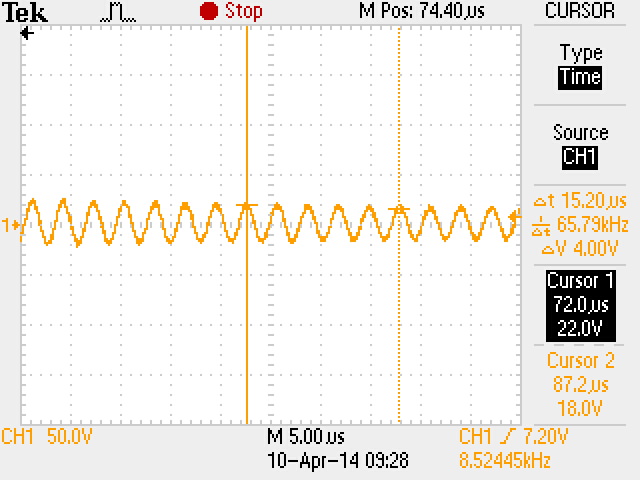
And the “Mid Power” trace.
Screen Capture
(You can see the primary ringing extending out so that it becomes visible in the trace…)

In both cases, I measured 15.20 uS between 5 peaks or
1 / (3.04 / 1000000) = 329 kHz

So my ratio is currently 329 / 280 or 1.175 ( Secondary 17-18% higher than my primary).

oneTesla top breakout point for my musical Tesla coil

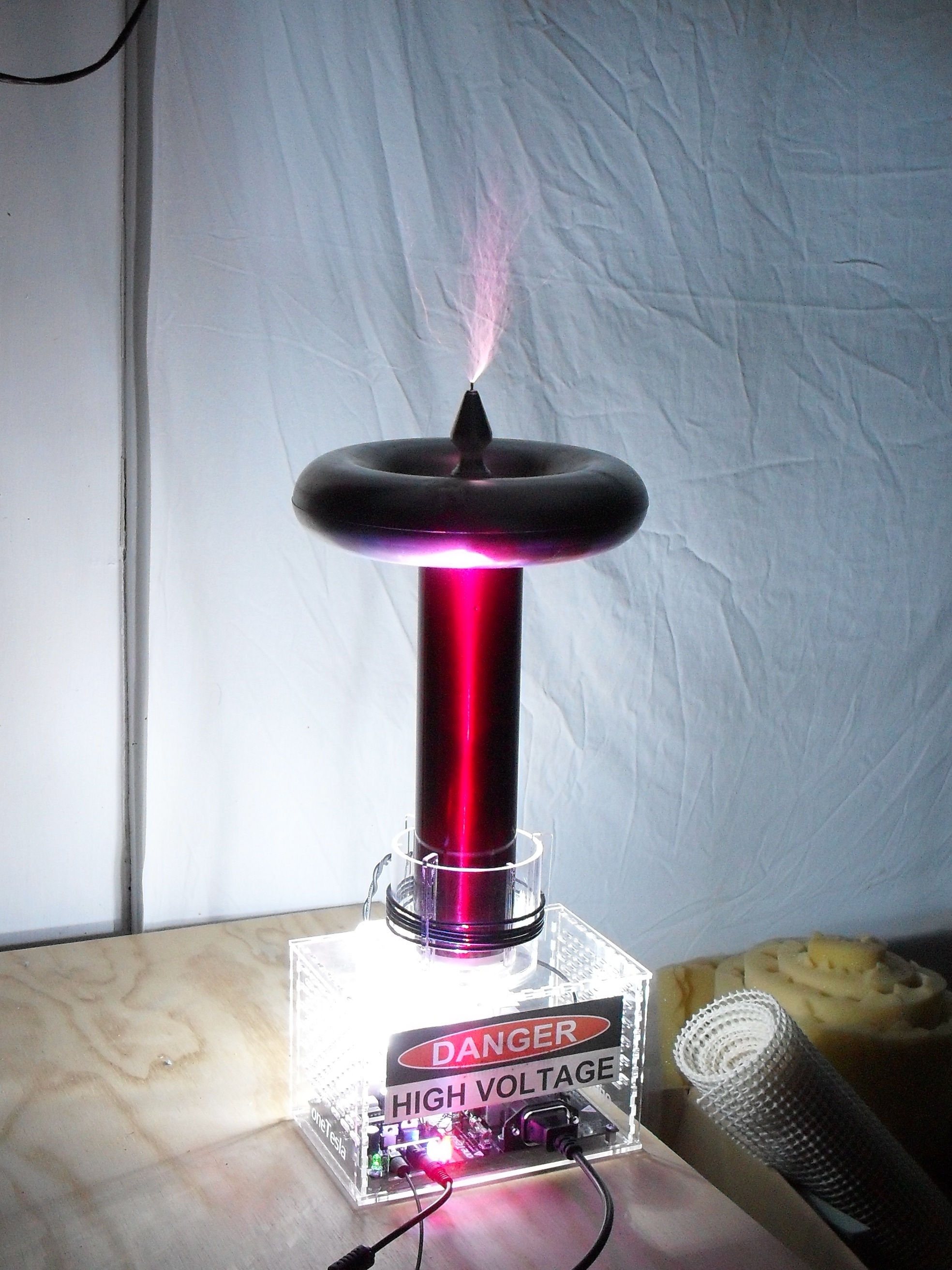
Since I’ll be primarily using my oneTesla to play music, I wanted a top facing breakout (so the sparks will shoot up, instead of out to the side). Also, I wanted something more professional looking than a stick of metal taped to the top of the toroid. Here is the final product on the top of my toroid:

You can visit [ this post ] to see a video of it in action.
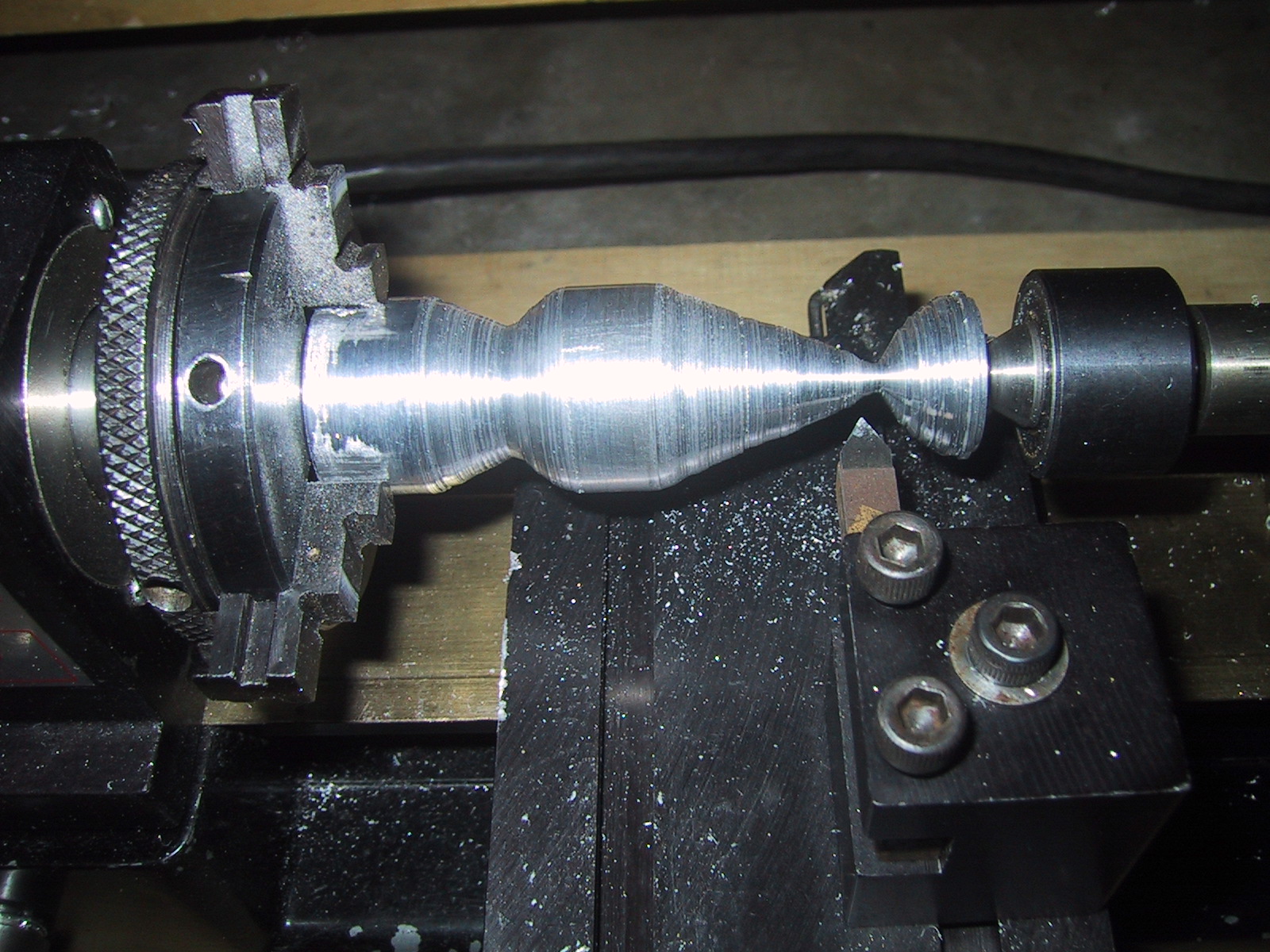
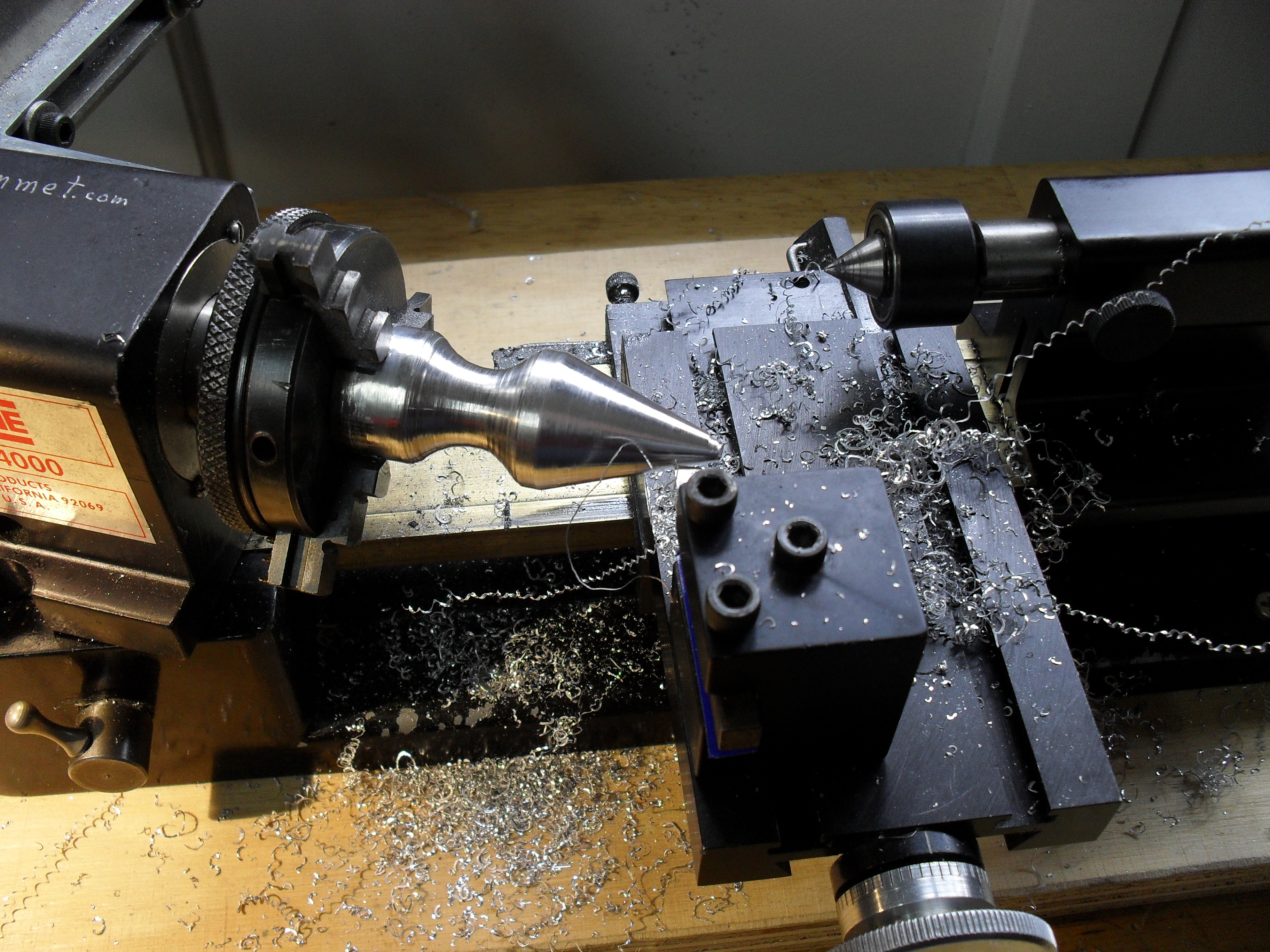
I used the lathe to get the general shape I wanted:
on_lathe

Then turned it to even up the 15 degree angle:

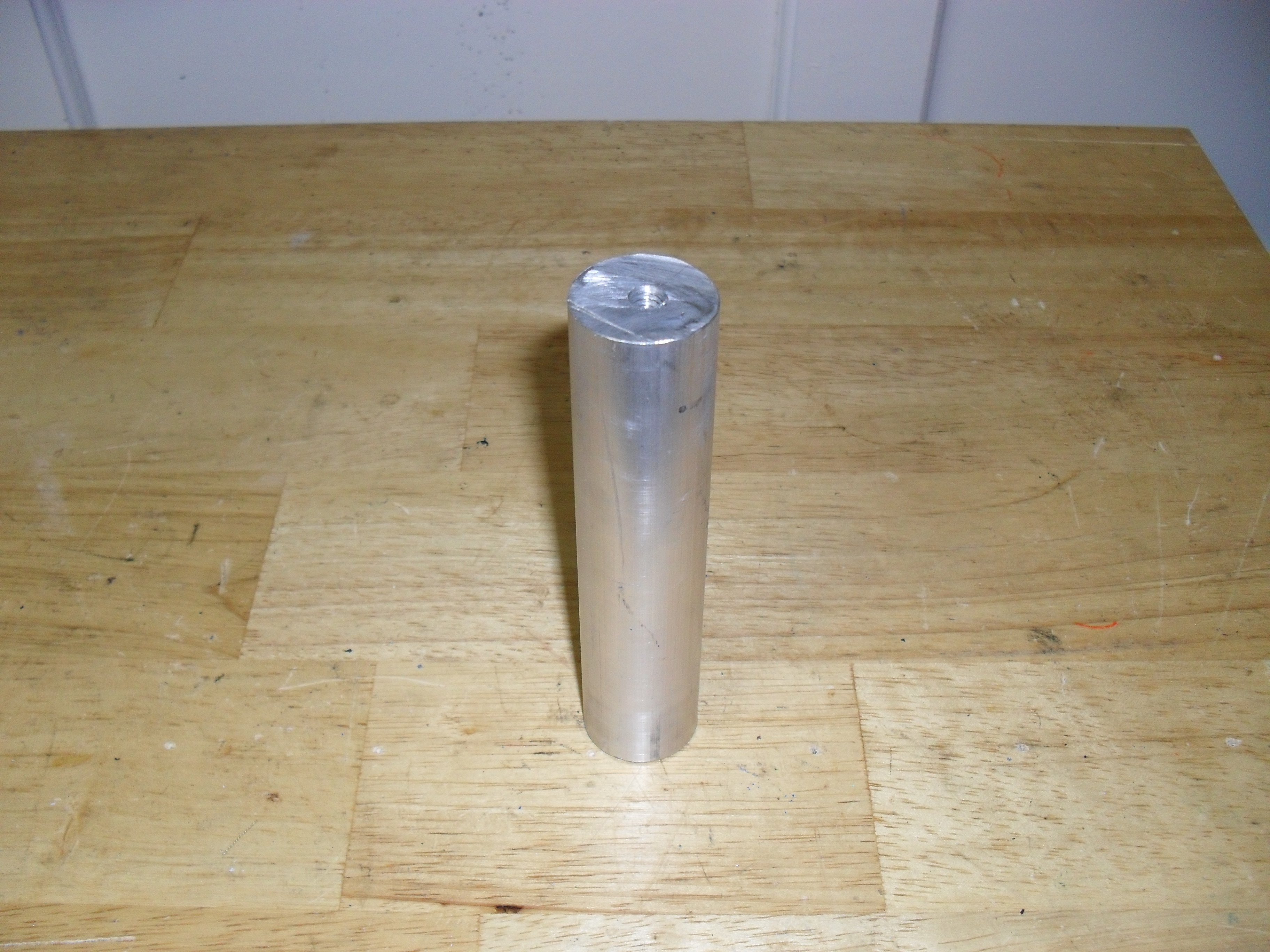
And this is my original 1″ diameter aluminum stock. I tapped it for the 14-20 bolt on the top of my Tesla coil that normally has a wing nut to hold the stamped toroid together, so the whole thing just screws onto the top.

Turning custom extruder parts

finished_heatsinc
jays_parts_in_front

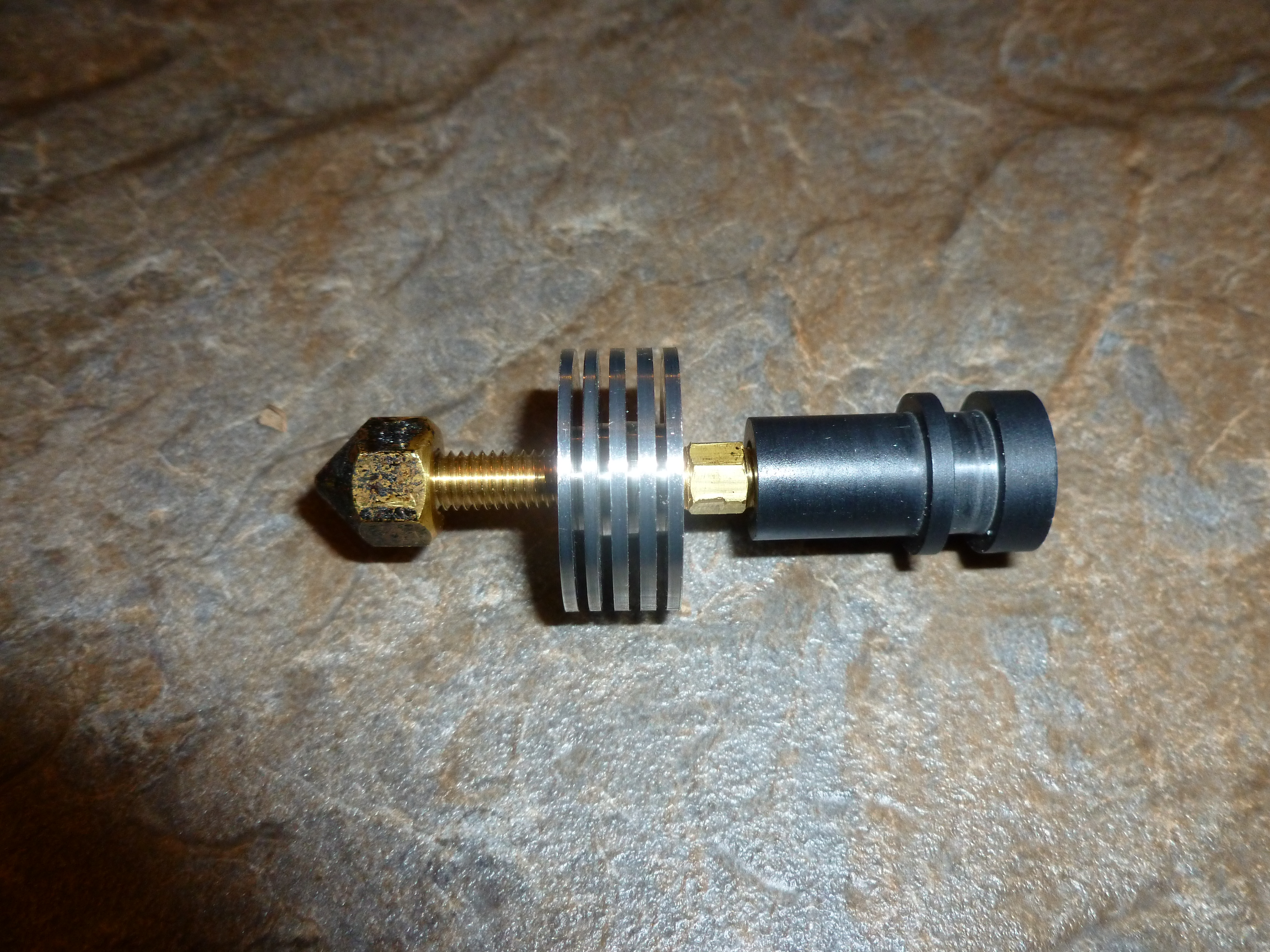
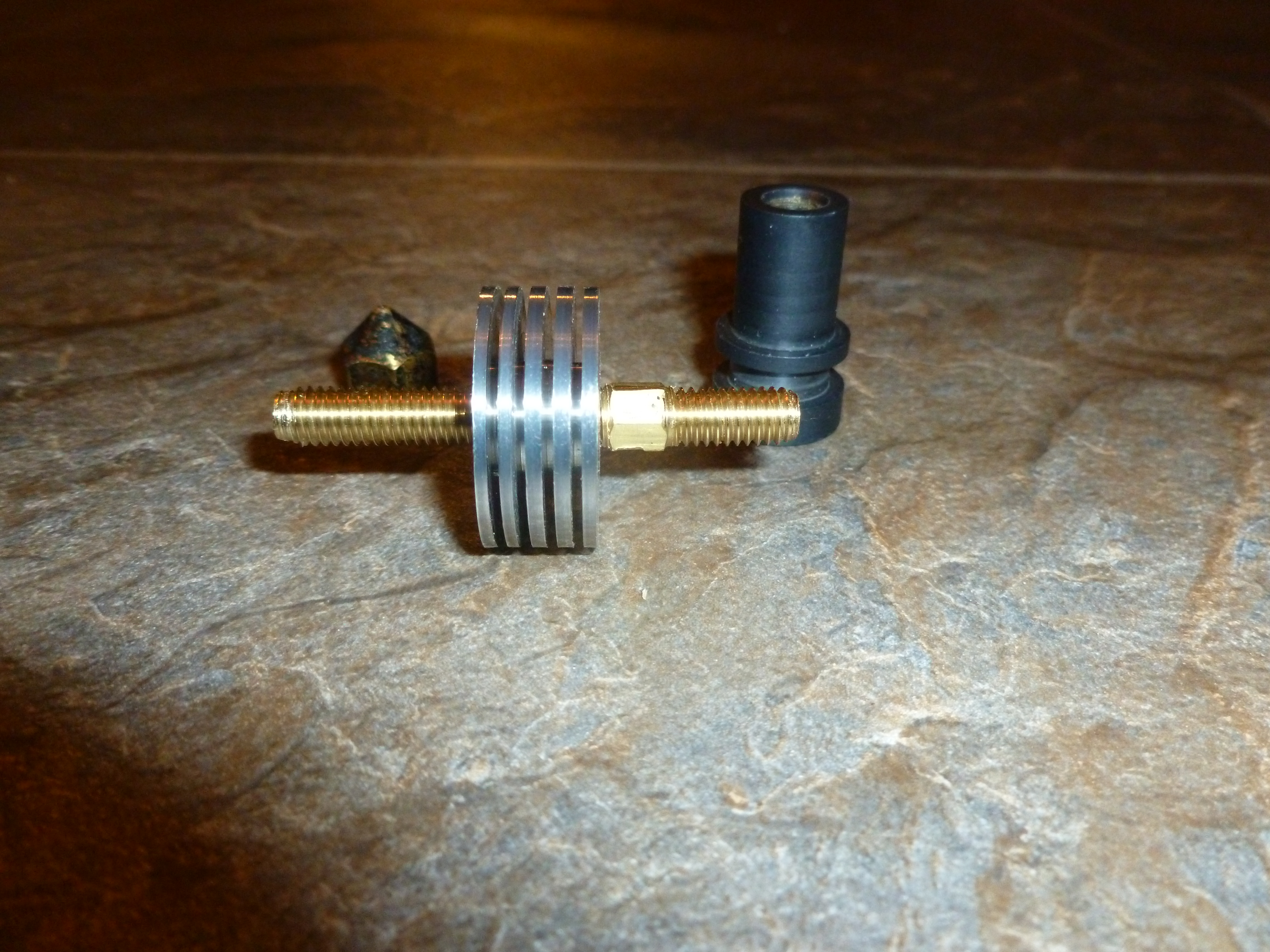
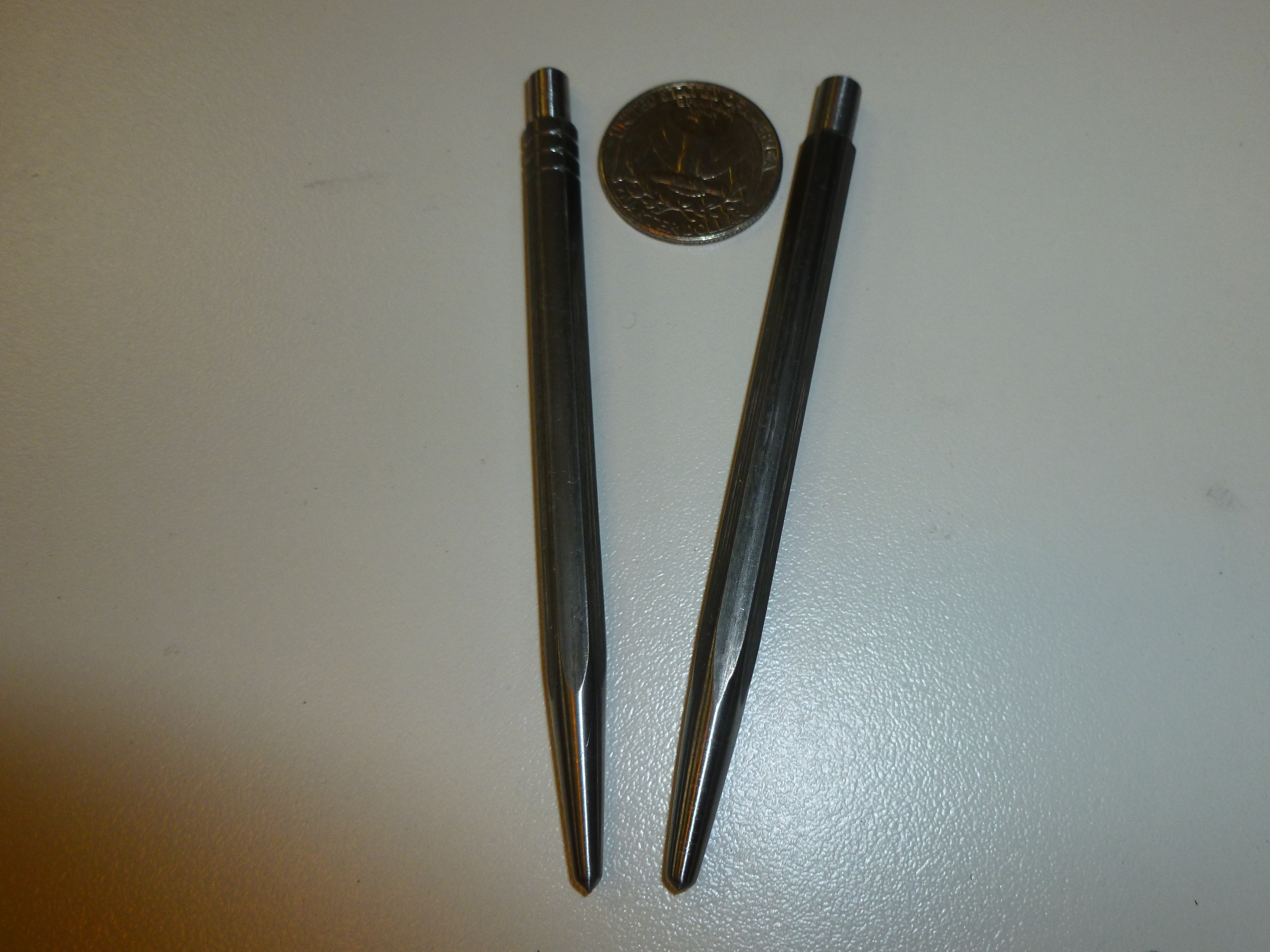
This is my new extruder hot end. After enclosing my printer with an insulated box, I decided that I needed to drop more heat before the plastic entry side of the end of the barrel. I accomplished this by turning an extra long barrel out of brass, and a small heatsink out of aluminum to go between the heater and the Groove Mount.

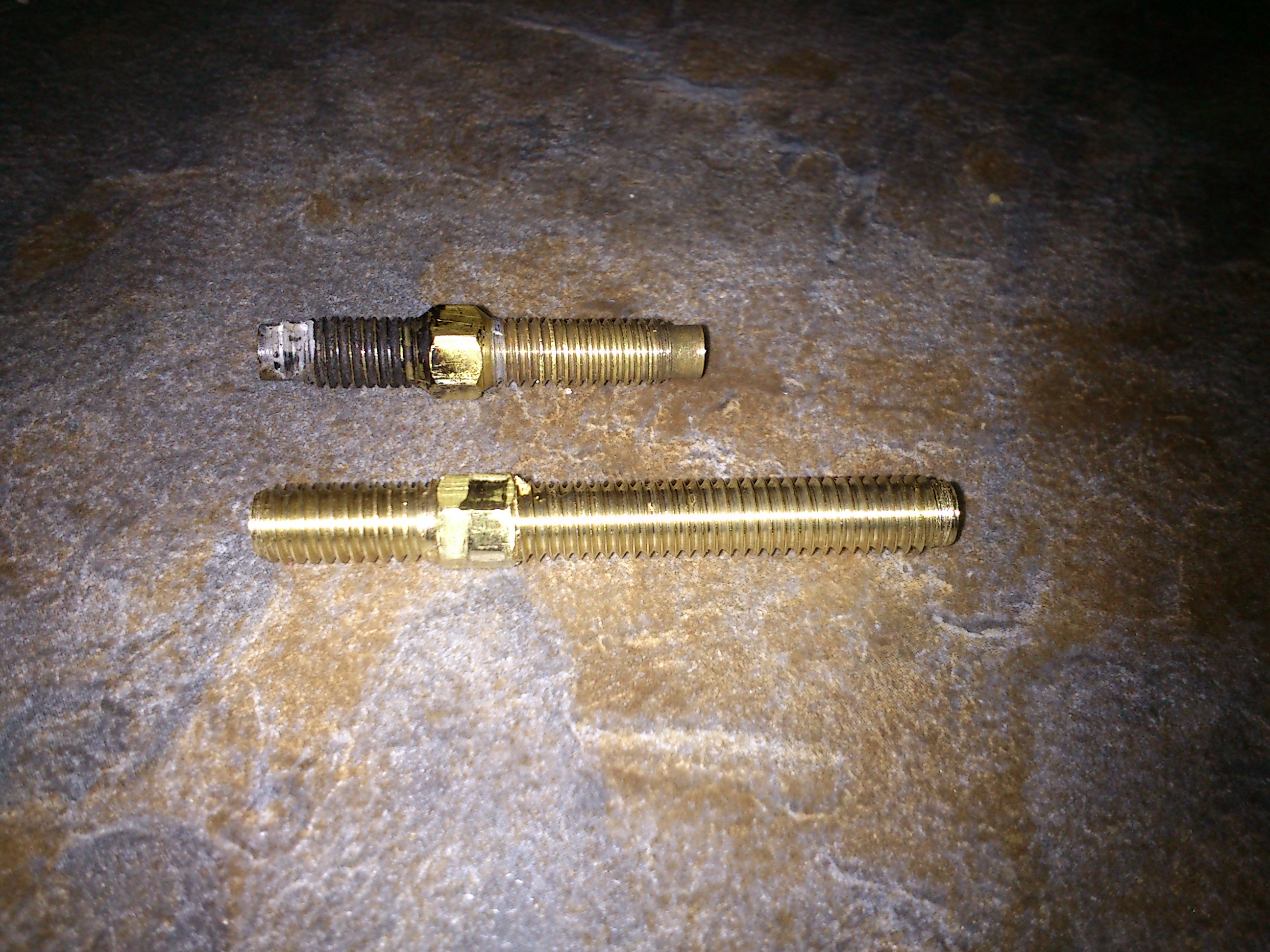
You can see the barrel compared to the original part here:
original_and_replacement_part

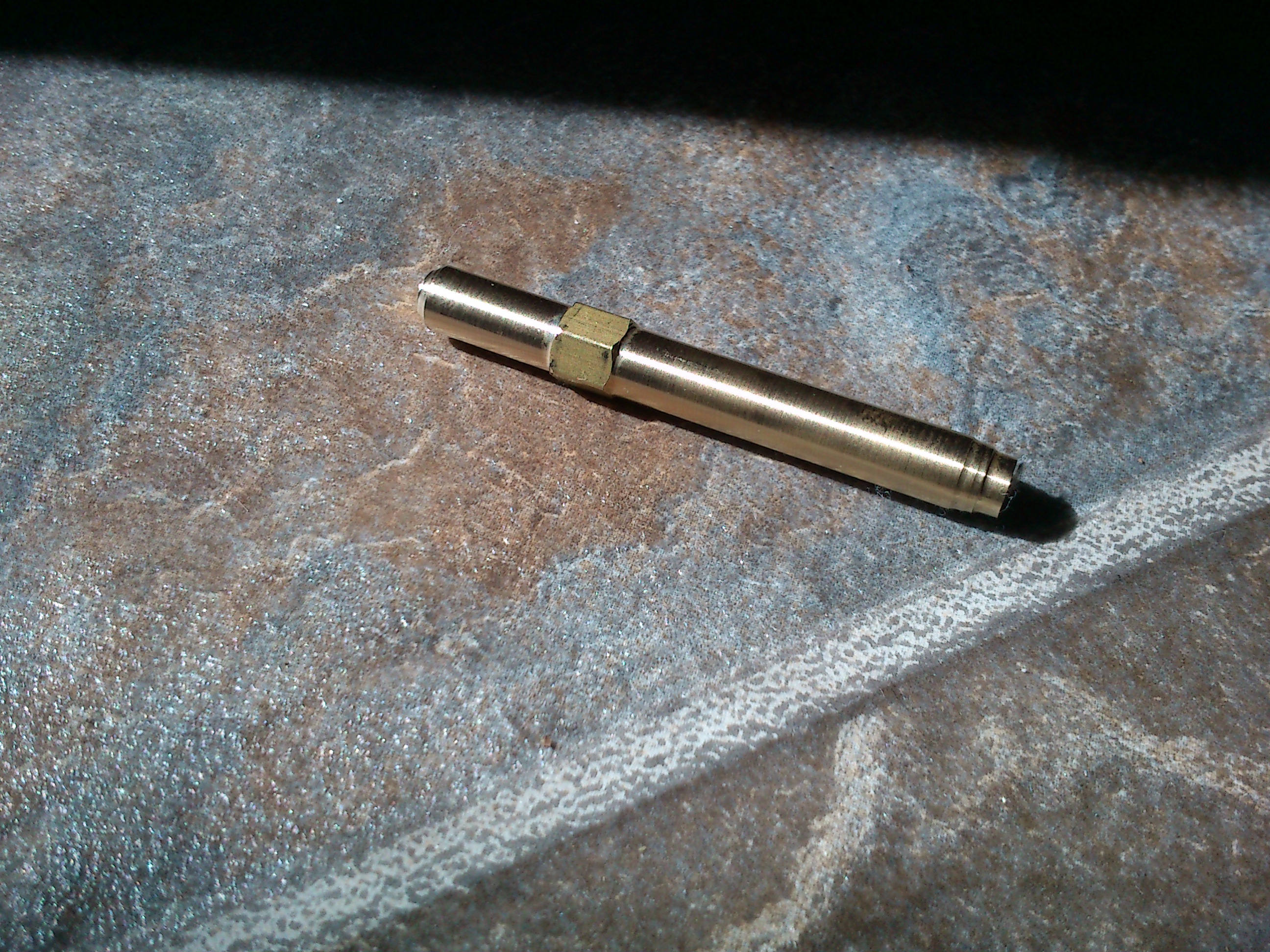
The barrel was straightforward to turn out of a piece of 1/4″ hex stock. I put the threads on with a metric M6x1 die.
turned_hex

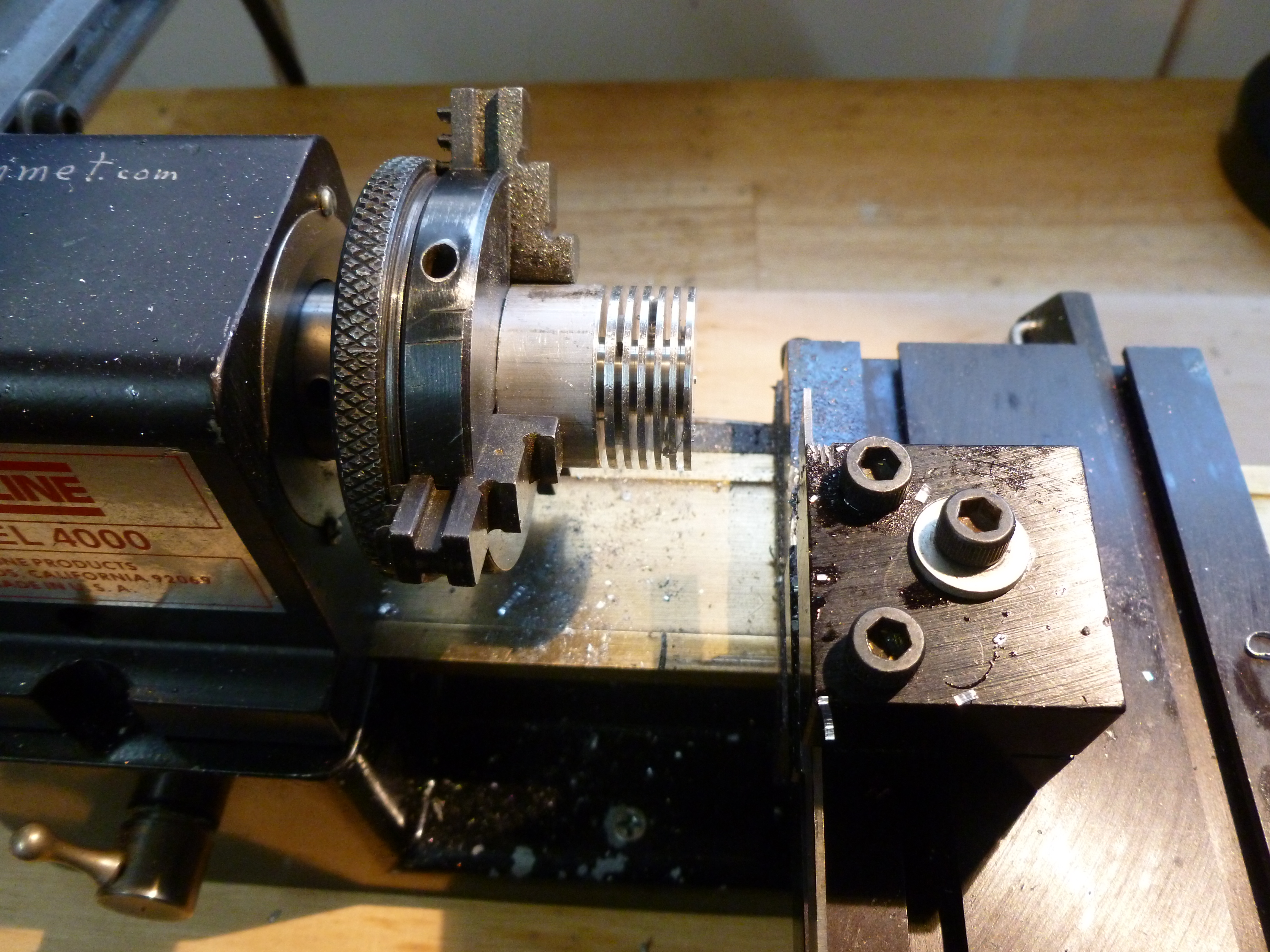
The HeatSink took more time, mostly because I had to cut the fins out of a 1″ diameter rod quite deeply with a cut-off tool.
inLathe1

I compressed the several hours of work on the heatsink down into a six minute video below:

CaseModding my 3D printer’s insulated cover

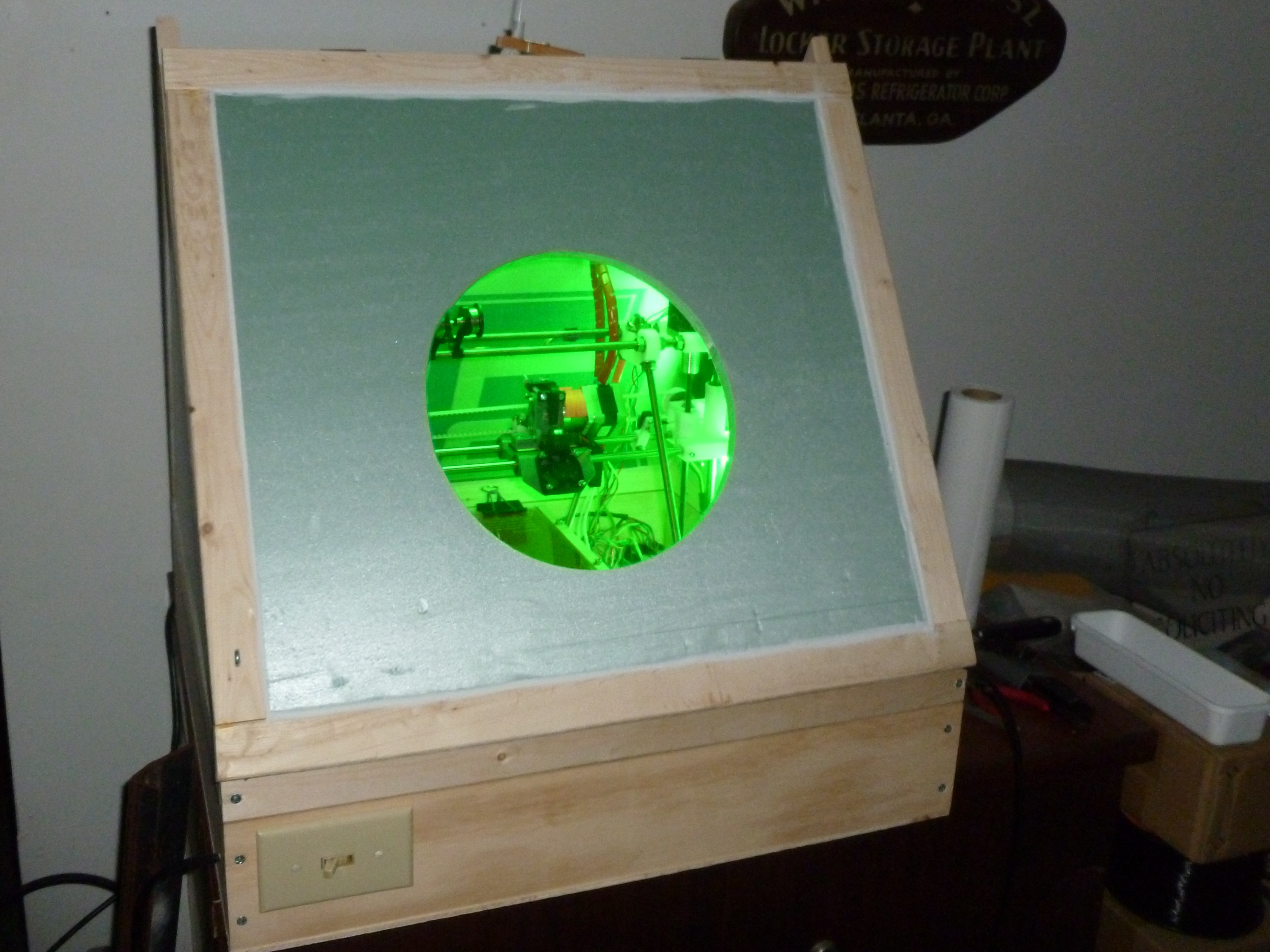
After building an insulated cover for my 3D printer, I decided that I needed to put some lights inside. This allows me to see how the print job is progressing, both via the porthole, and via the interior webcam. Because green surplus neon tubes for computer cases are inexpensive and take 12 volts, I riced up the cover with two green neon tubes. The color complements the light teal of the foam insulation nicely, and gives my Garage Laboratory an evil green glow at night.
riced_cover_neon_lights