Garage Door Insulation part 3 – Window Openings

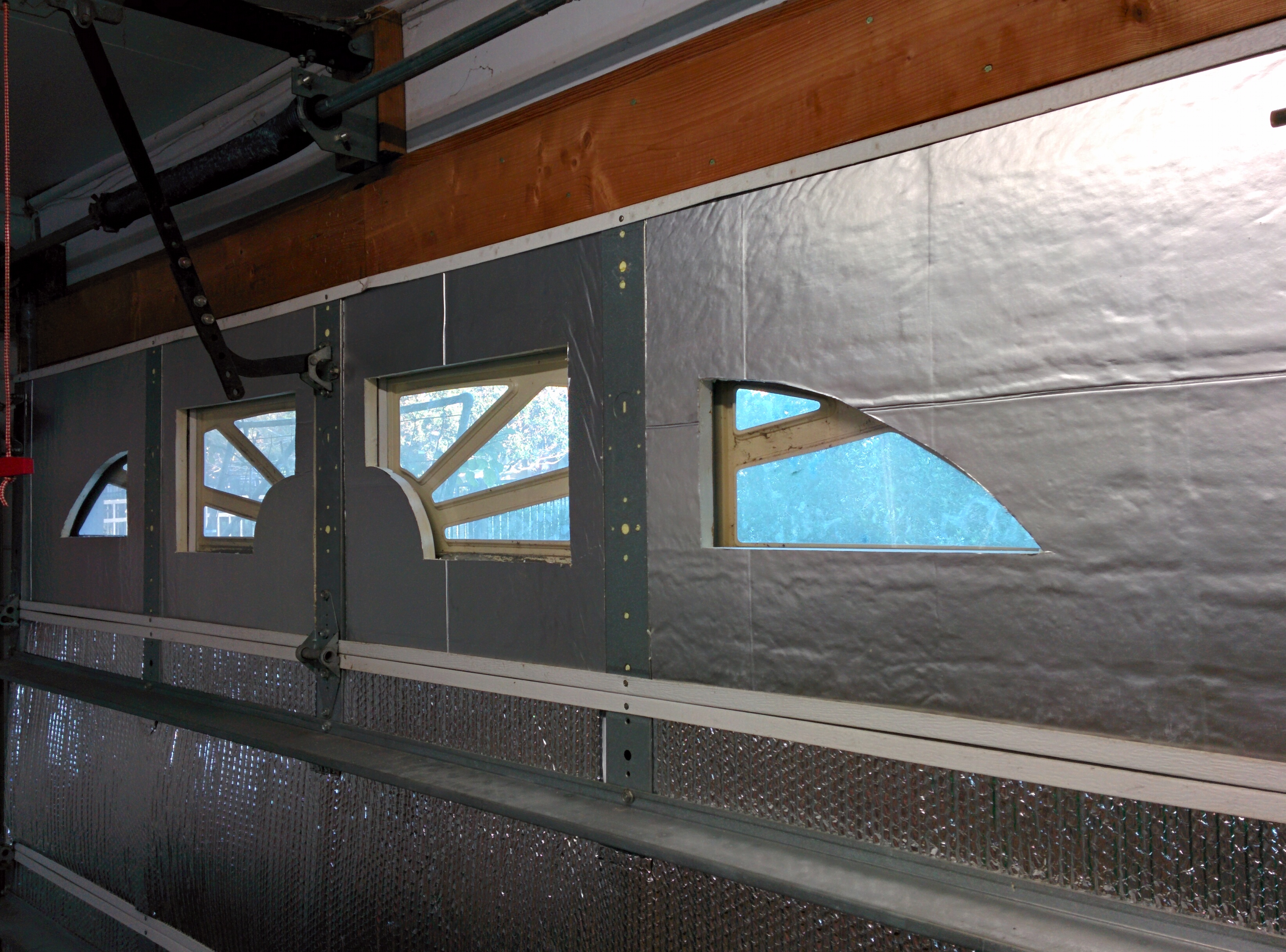
I used fiberglass batt and reflectix to insulate the non-window panels of my garage doors, and the process was relatively quick and easy.I decided to use two layers of 3/4″ PolyIso insulation boards with aluminum facing to insulate the window opening panels. The process of cutting out two panels to fit around each window opening was labor intensive.


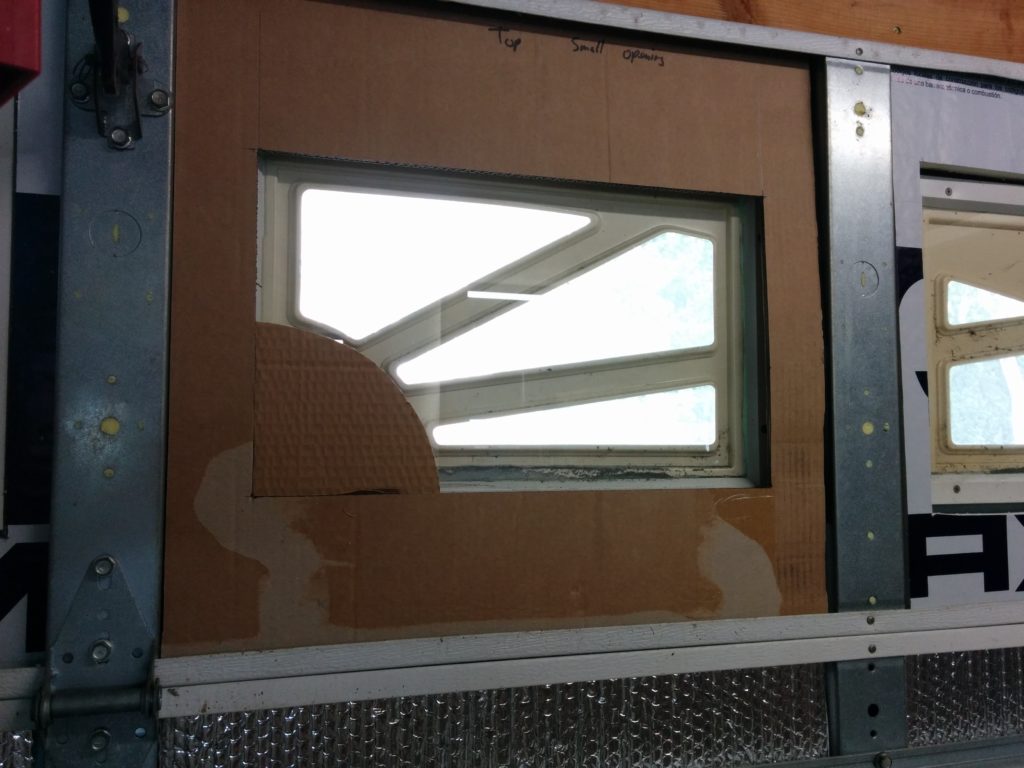
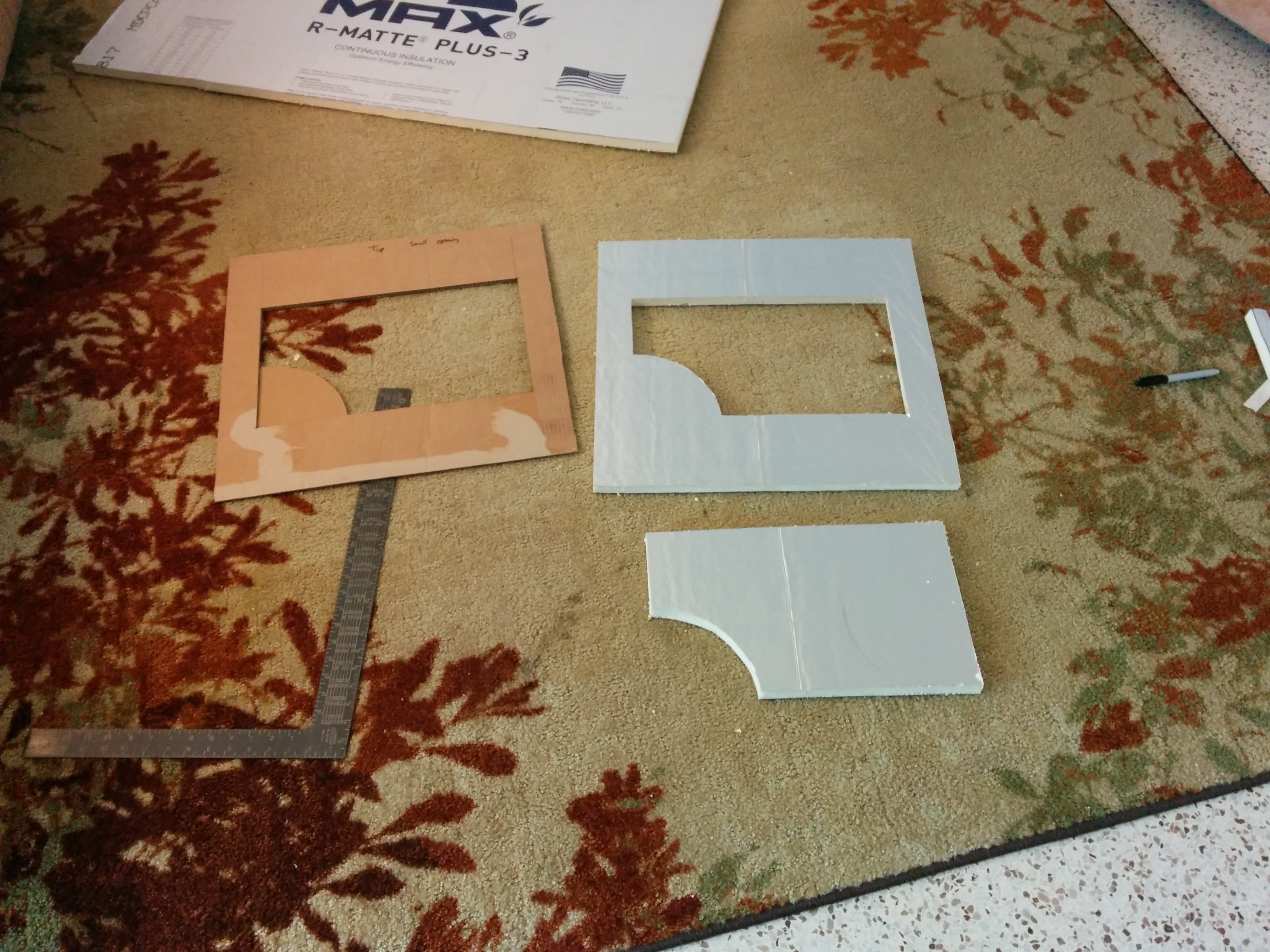
First, I made cardboard templates sized to fit around the windows and cut out my first layer of insulation. On the first layer, I placed the reflective layer “outwards” facing the door, as there is a small air gap between the panel and most of the steel door material due to a decorative “indent”. This first layer goes around the window frame. I would mark each piece of foam with a template, then use a carpenters square to cut straight (and mostly perpendicular) lines.

In the case of the 2nd layer, I had to freehand trace the curves with my razer knife. To keep the reflective side looking nice on the 2nd layer, I would mark and cut from the back, and then finish off the corners of the cuts from the reflective side.

The second layer fits over the window frame, so the openings are cut smaller, allowing light to enter, but covering up any opaque portions of the window or frame.This comes into play more on the front of my garage, which has decorative coverings over part of the square windows.

I faced the reflective side inward to reduce radiant heat transfer to the interior, and to match the reflectix aesthetically.

Two layers of this PolyIso 3/4″ insulation has an R value of 10, although there are some gaps between the layers, along with large openings cut out for the windows, but I prefer the natural light over thermal benefits of covering the windows entirely.

The take-away message here is if you have the choice, always pay extra to buy the insulated garage doors from the factory, as retro-fitting insulation takes time and money.

Easy 4″ exhaust vent outlet

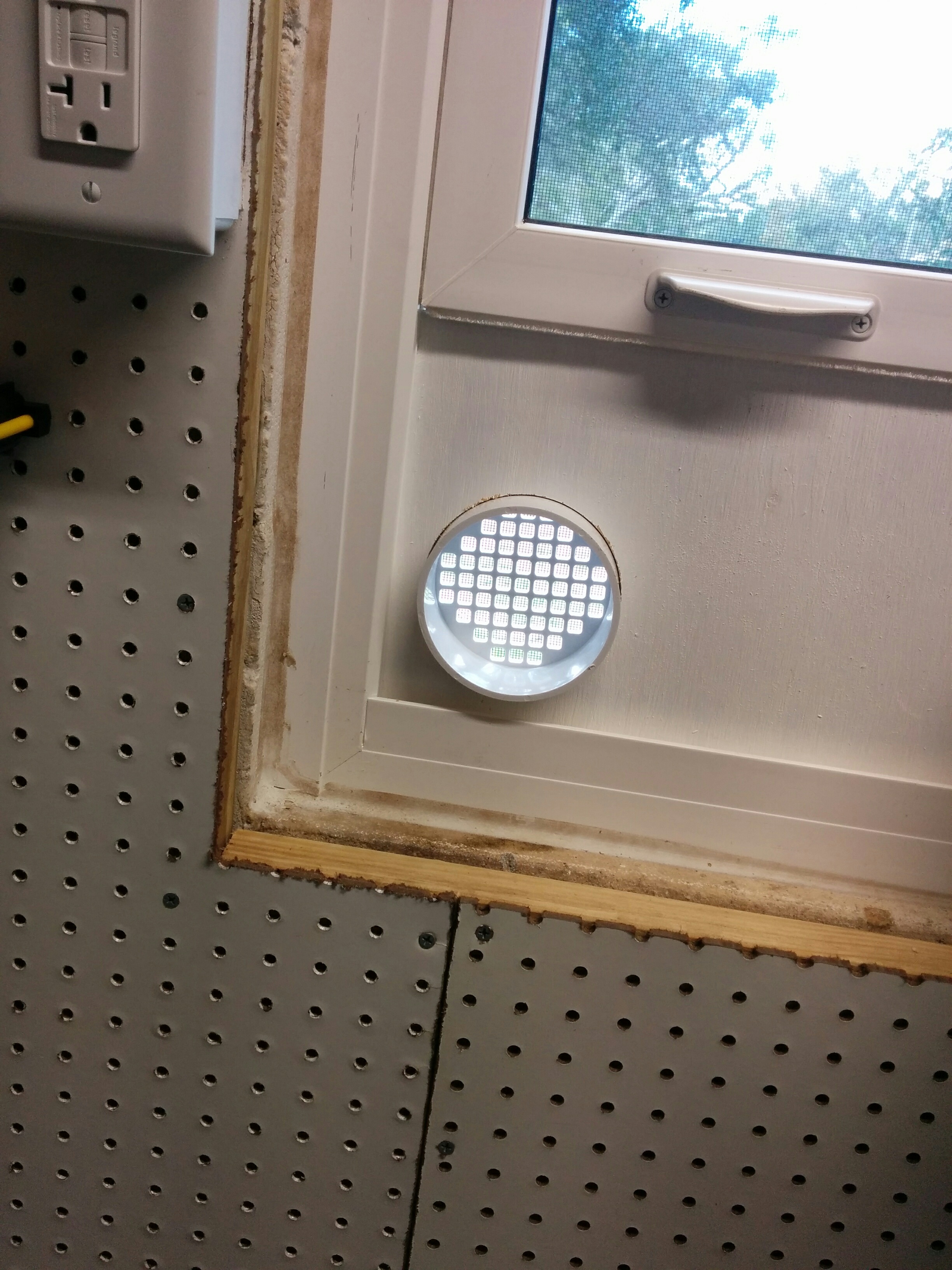
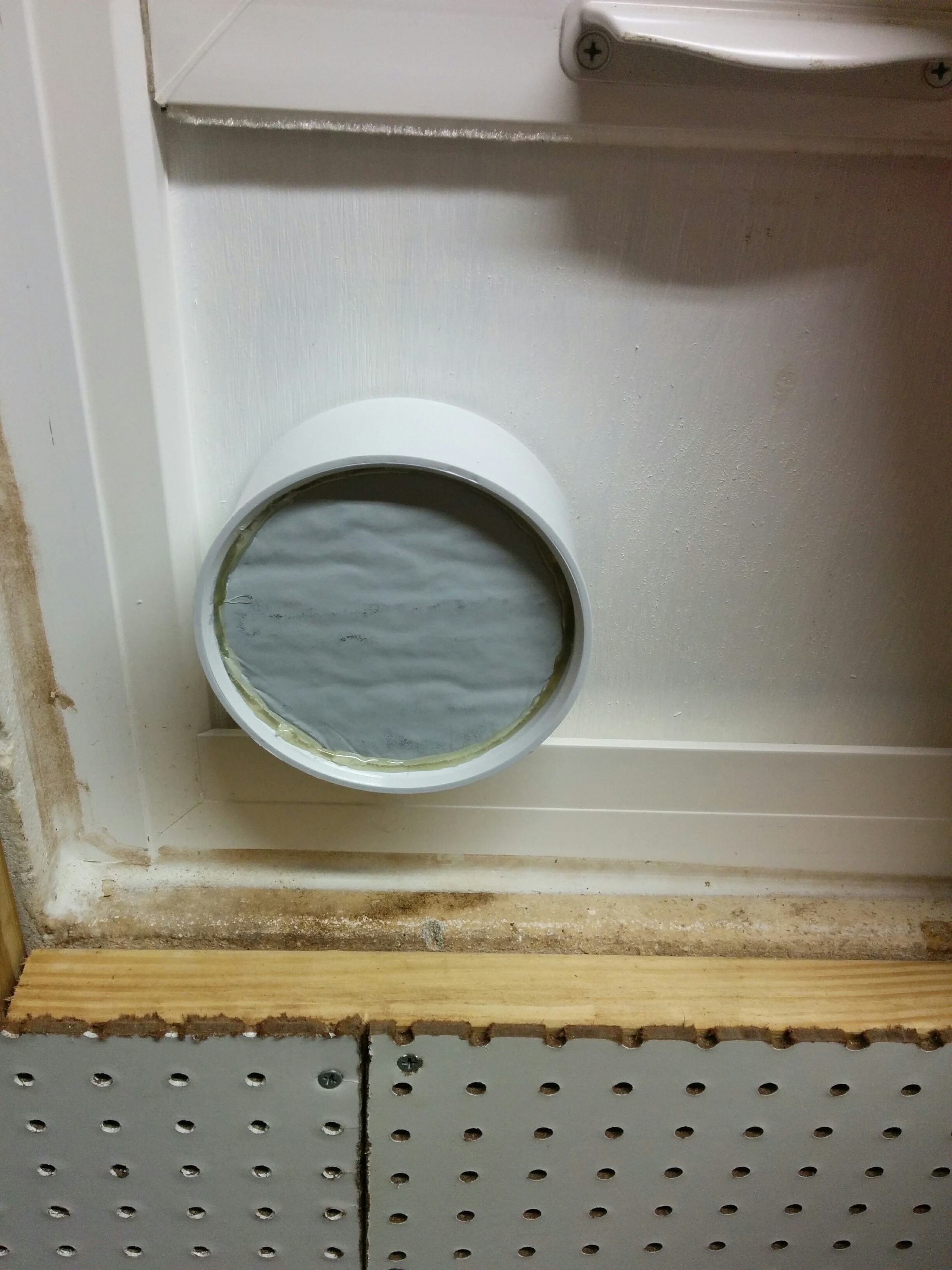
I needed to add an exhaust vent to my workshop that would allow me to quickly attach and detach a 4″ exhaust hose. I decided to use an inexpensive   ($3.18) PVC 4″ snap in drain to go through the board I had in my window for the portable AC unit.   The nice thing about these 4″ snap in drains is that they will tightly fit inside of a 4″ hole, or a 4″ exhaust hose.


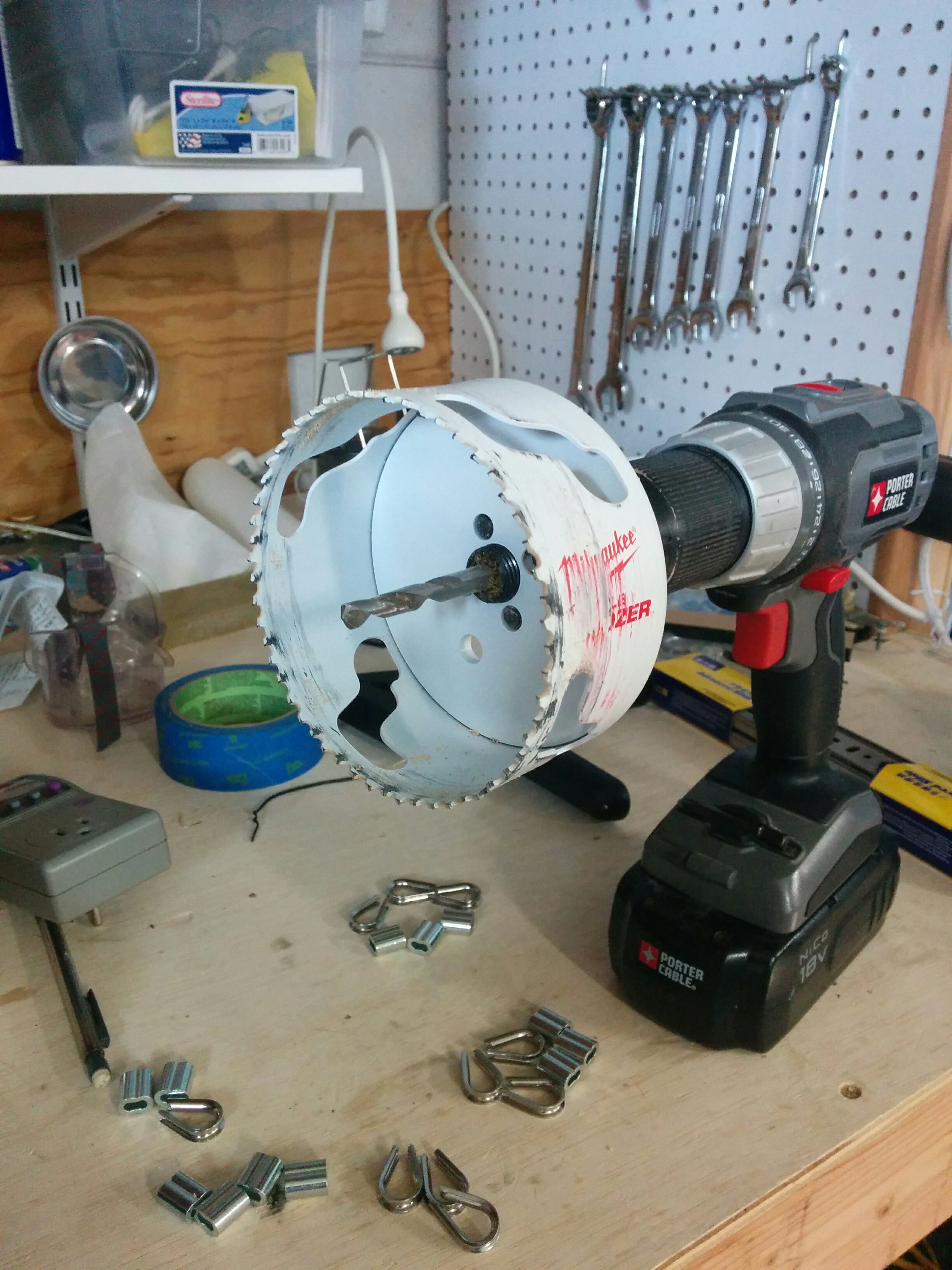
Plus, I already had the 4″ hole saw from using the same hardware to vent my truck’s battery chargers.

One hole and a bit of epoxy later, I had a way to vent a 4″ hose out my window.

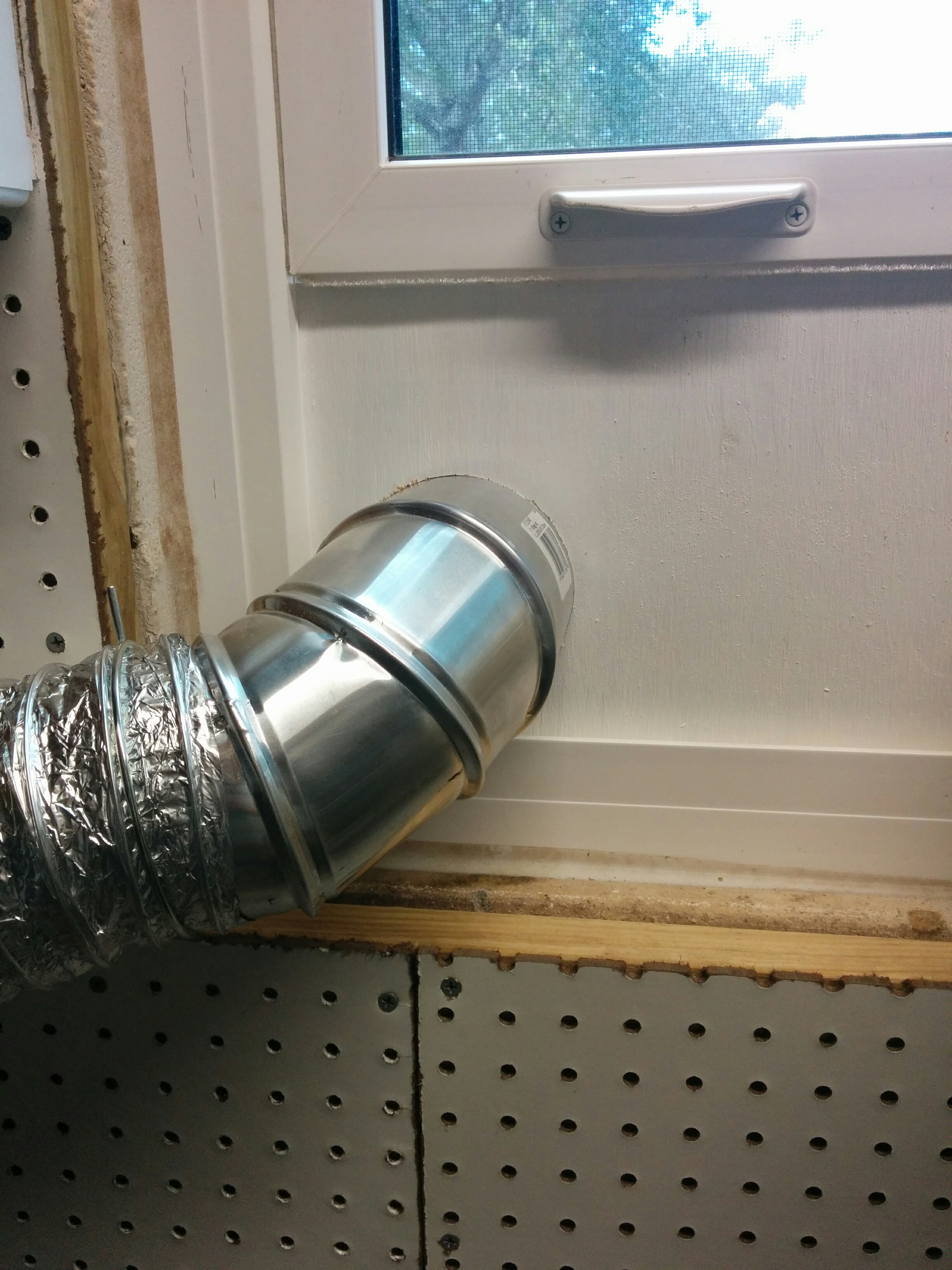
The drain has a large plastic “grid” to keep out larger creatures, and in this particular application, I have the board mounted inside the normal window screen, so I don’t have to worry too much about bugs.   I also purchased a 90 degree aluminum elbow for $4.28 which makes it very easy for me to plug the flexible dryer hose over the plastic drain piece, and makes the 90 degree turn to go out the window.

It currently sits over the plastic with a friction fit just fine, although I may buy another spring clip to make the connection a bit tighter.   NOTE: This 90 degree elbow is “adjustable” in that you can rotate the different sections around to change the amount of bending. Unfortunately, this let some smoke smell escape into the room from the elbow until I covered all of the seams with aluminum foil duct tape.

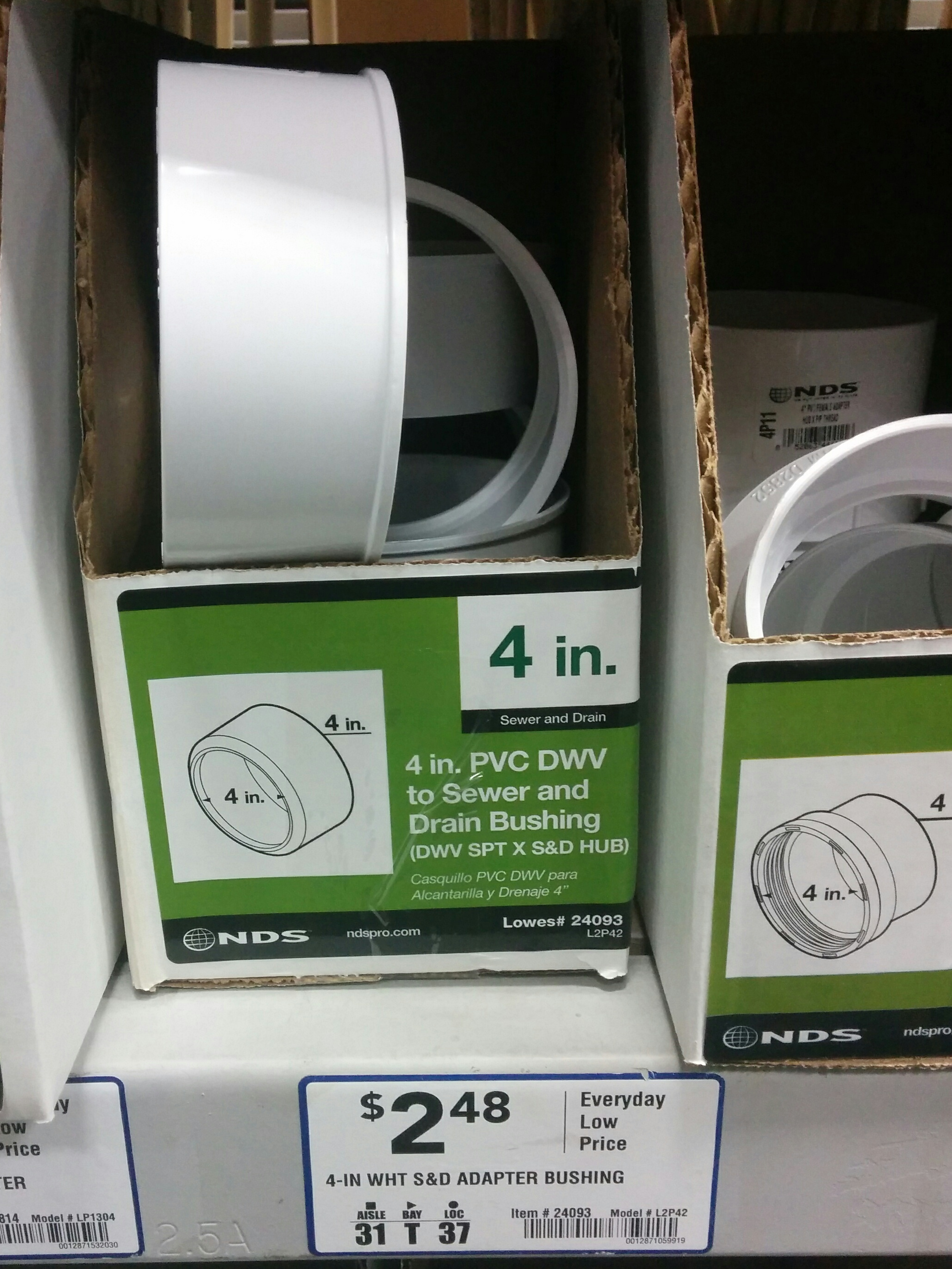
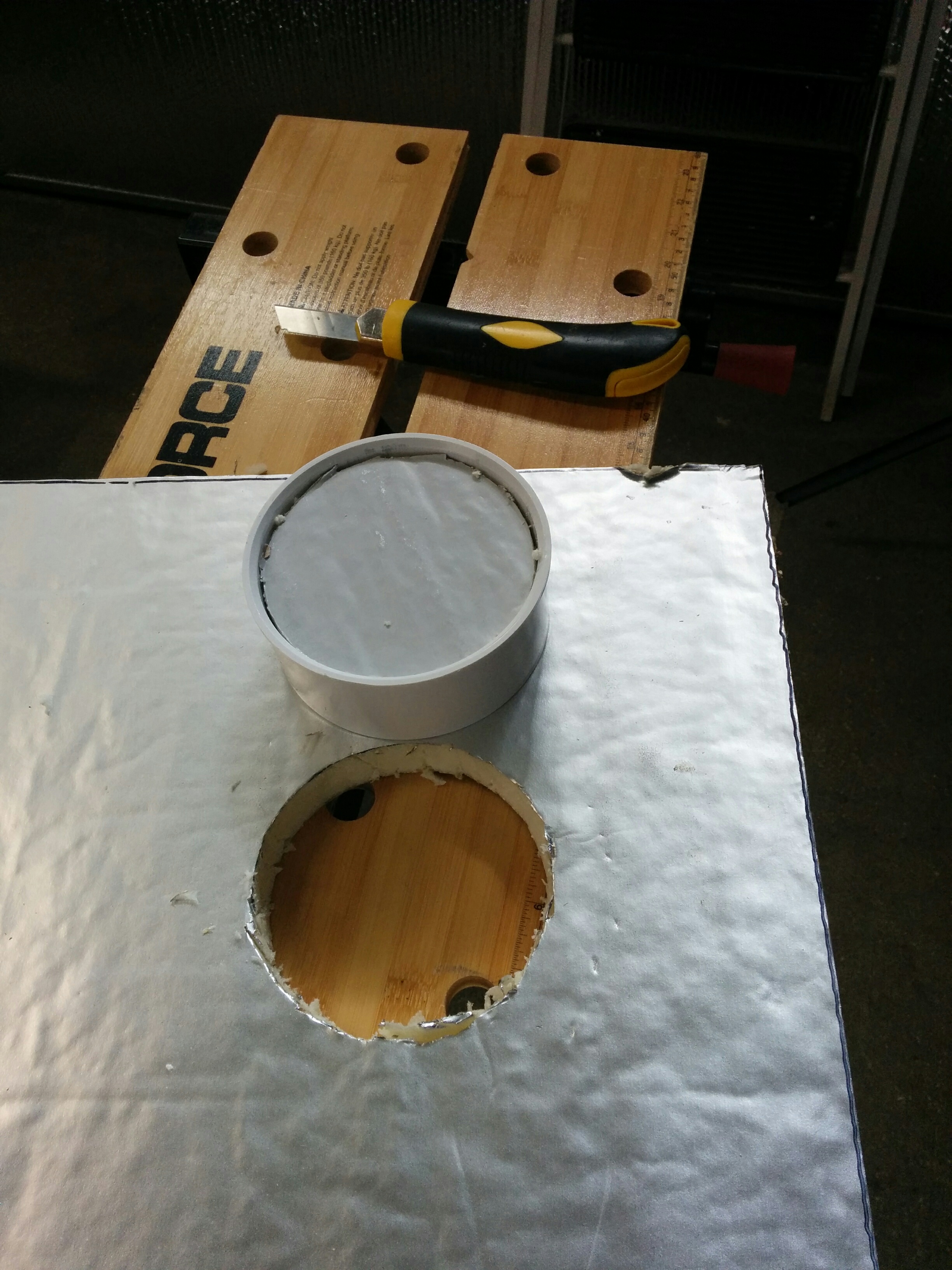
Because I only leave the hose attached while venting, I also needed a way to plug the hole when I wasn’t using it. Again, the plumbing section provided the perfect fit with this 4″ PVC DWV to Sewer and Drain Bushing ($2.48), which fits over the outside of the snap in drain very tightly.

I cut a circle of 3/4″ poly iso insulation I had left over from insulating my garage doors to seal the inside of the bushing, and affixed it with hot glue.

Now, whenever I’m not using the Exhaust vent port, I just slip the bushing over the snap in drain and it blocks drafts and provides more insulation value than the plywood board I have mounted in my window for the AC unit in the first place.


My total cost for this solution was under $10 (assuming you have 2 part epoxy and poly-iso insulation just laying around…).


FB1-4001A motor brush photos

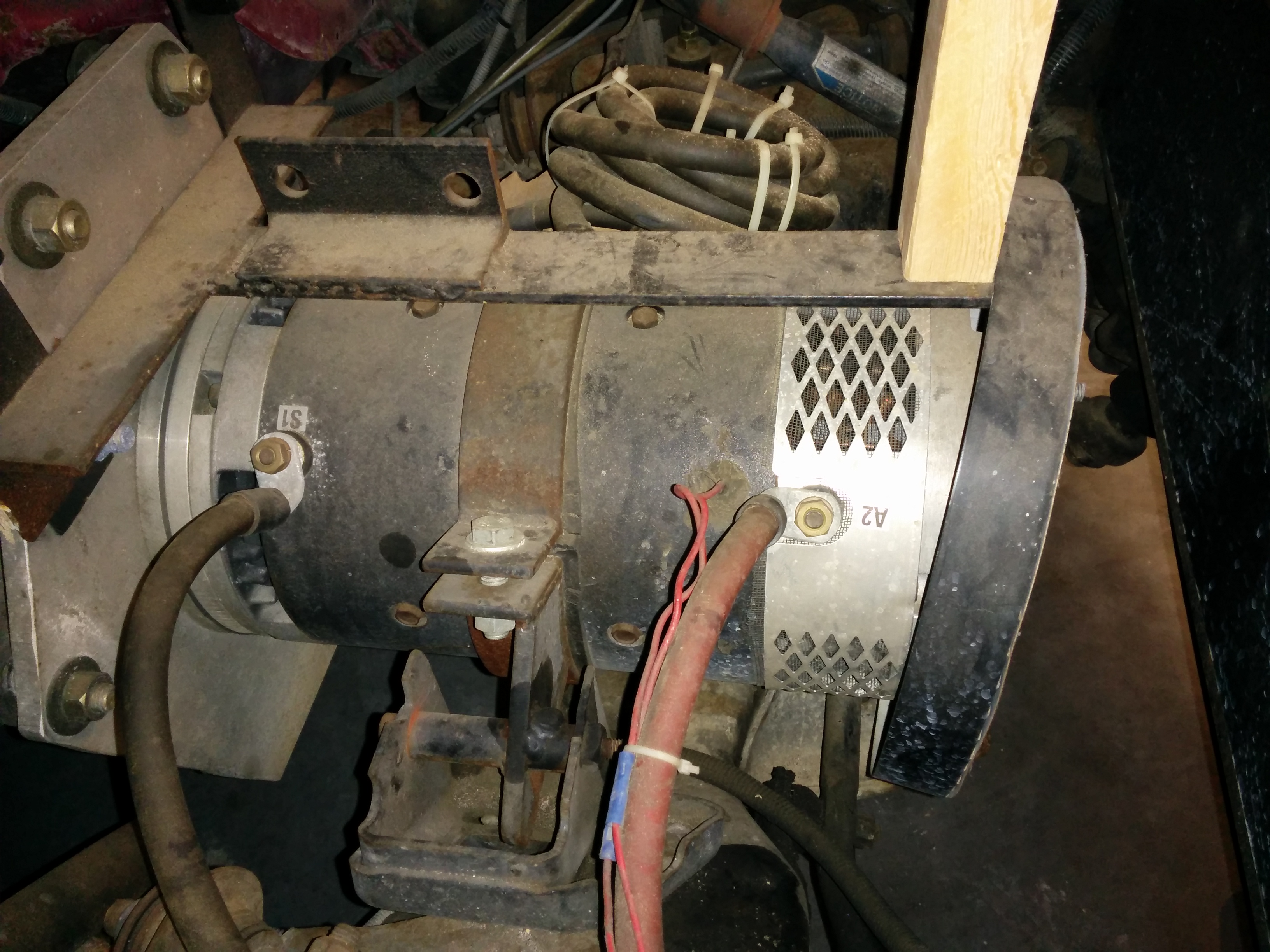
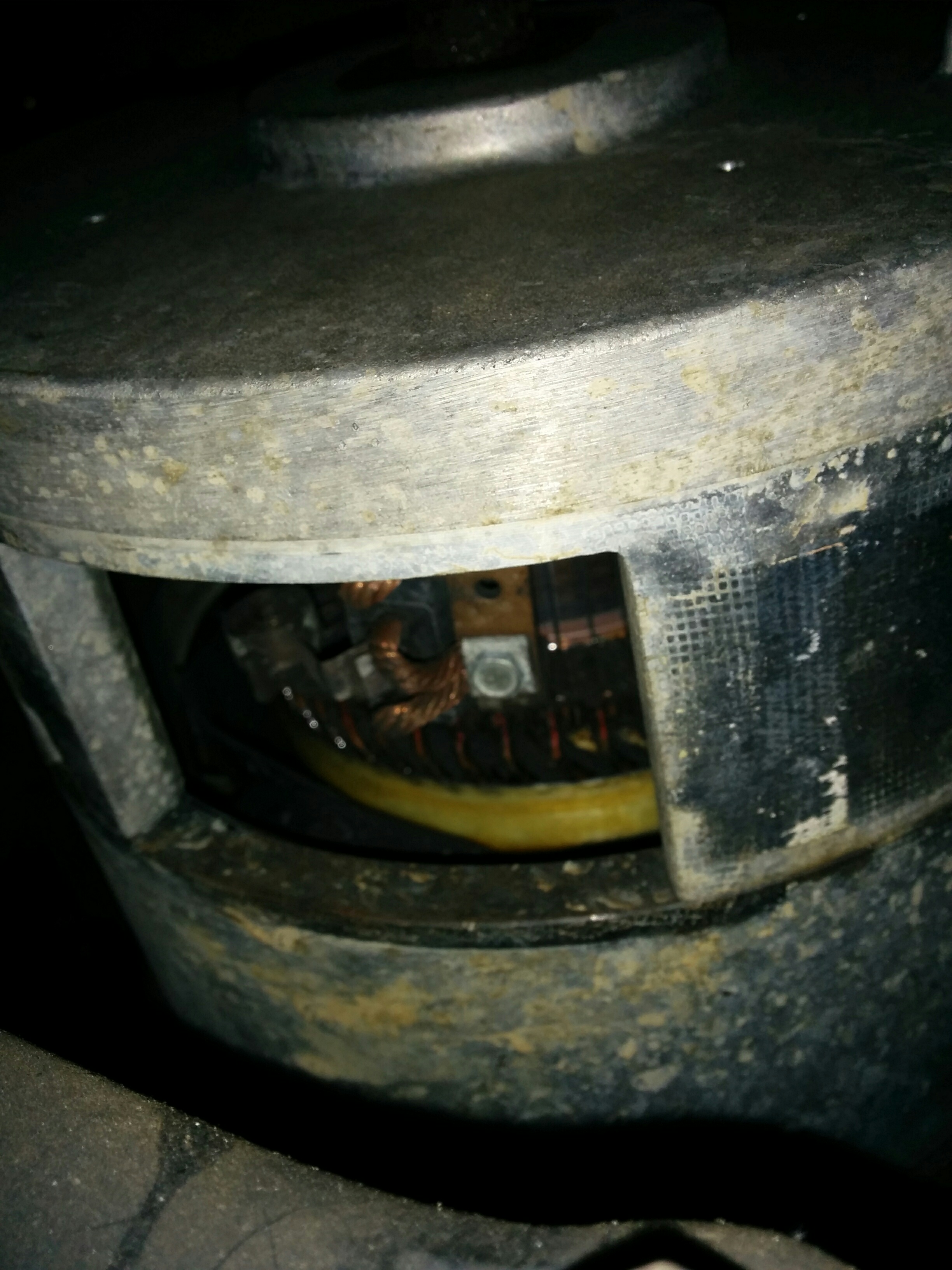
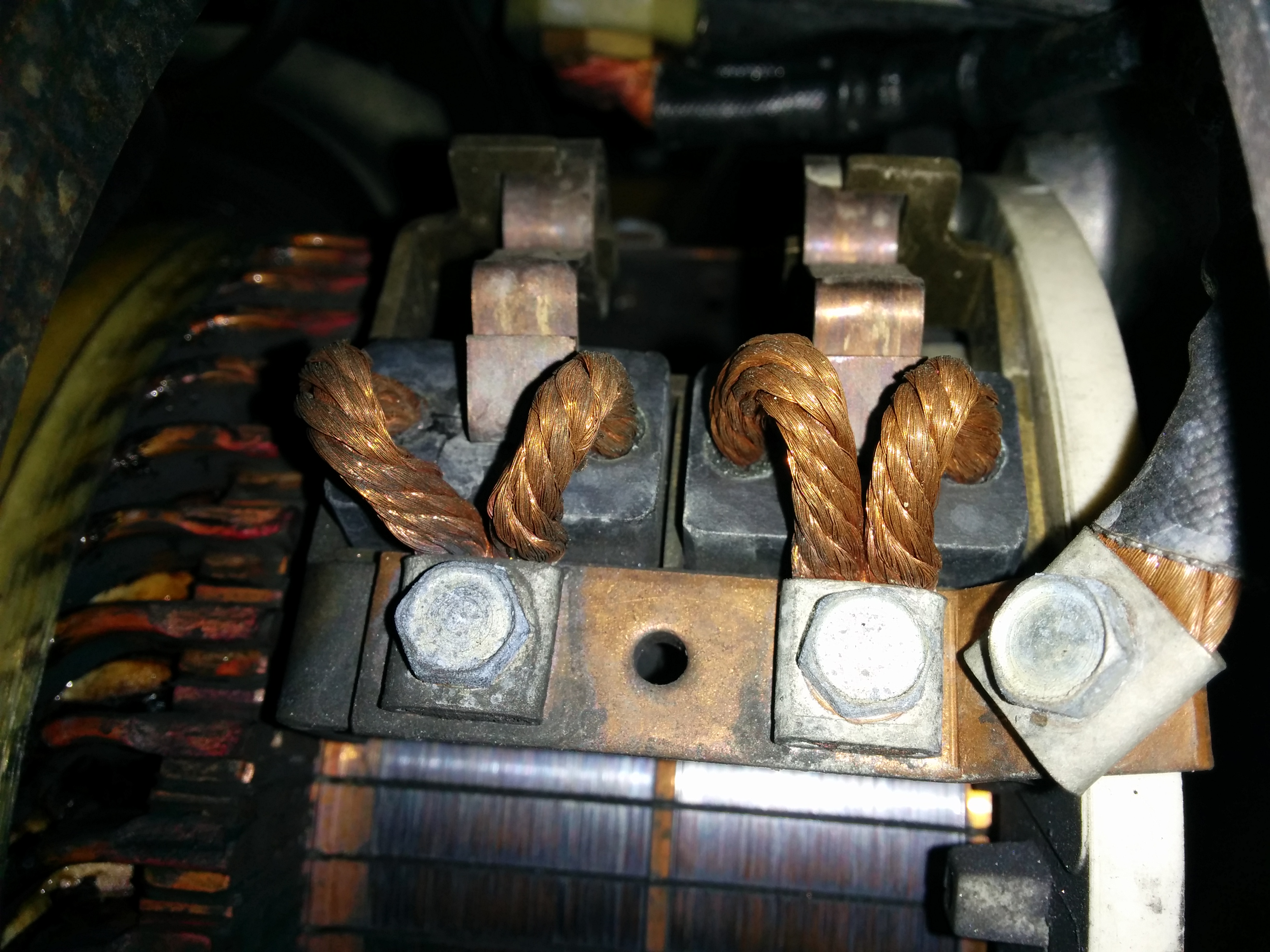
Here are some photos of the brushes installed on my DC FB1-4001A series wound motor, rated at 72-144 VDC, (19kW) 25HP continuous ( 100 ft/lb of torque / 48hp @ 500 amps ) which is   9.1″ in diameter.

My motor has a curved protective metal sheet that wraps around the front of the motor (the aluminum with diamond cutouts that has a cutout for the A2 post in this photo). It has a spring catch that releases it (not shown) on the other side of the motor.

I use the metal sheet to hold down fiberglass screen material underneath the diamond cutouts to provide extra protection from road debris. The brushes are accessed after removing the sheet.

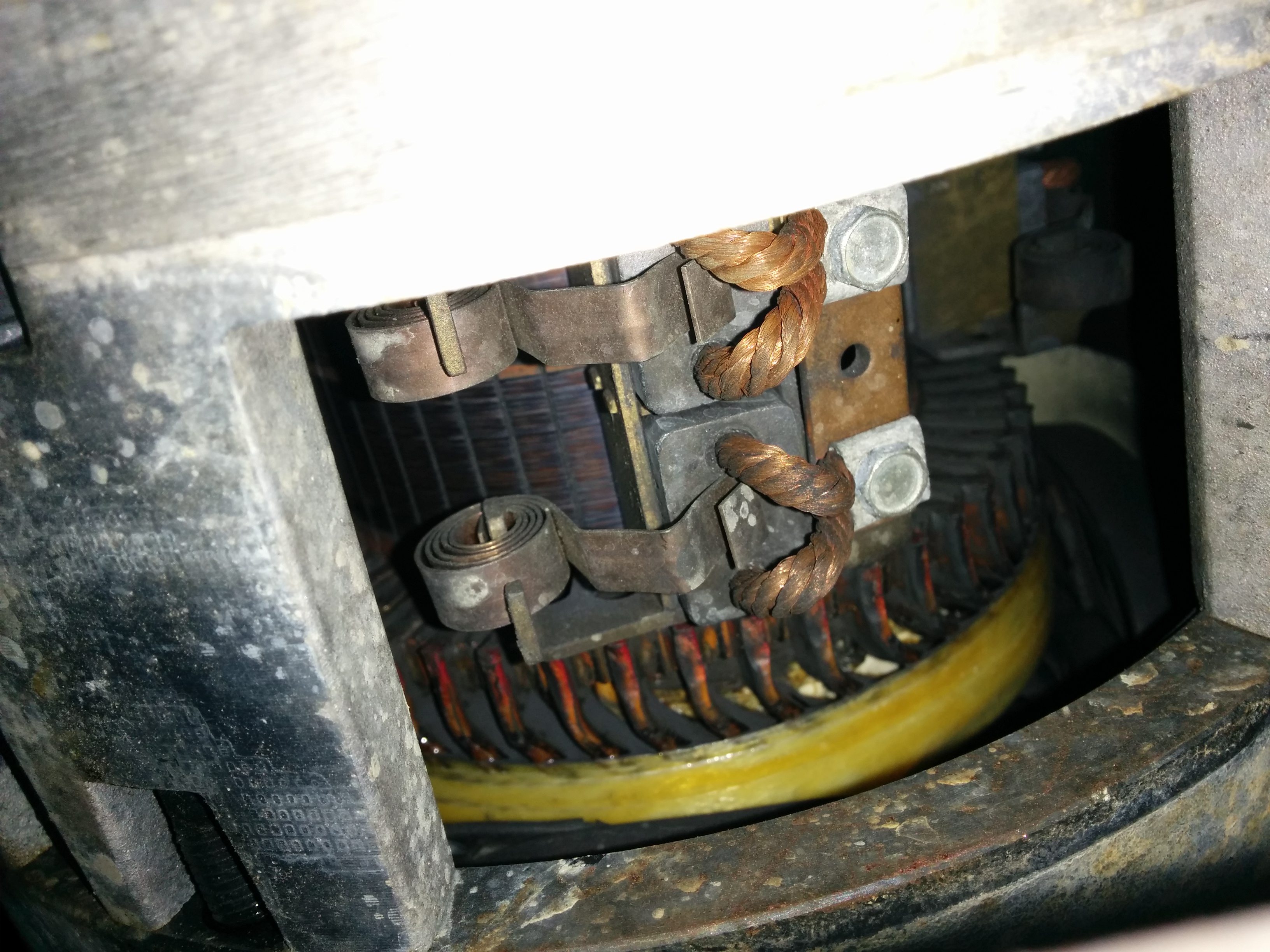
The brushes are mounted in pairs, and each brush is held against the commutator by a metal spring and has two copper pigtails to transfer the current.

Here is a closeup of two brushes where you can see the commutator which rotates under them.


Howto: Trim pegboard to exactly match a framed opening

I have this window in the wall I’m putting pegboard up on. Because of the holes, pegboard does let some air and light in, but I decided to cut out the window opening so that I could operate it.

You could carefully measure the opening, cut a big section out of your pegboard panel, and then install it. But, because this opening would make my pegboard panel into a giant “C” shape, it would make installing it by myself excessively difficult. (Also, you have to measure and cut very accurately.)

I found it much easier to just install the full panel and then cut out the opening. I’m using a trim router with a following bit. After I cut out along the top, I hung it up with wire so that the panel I was cutting out wouldn’t fall down later on.

And then I cut out the other two sides. The downside of this technique is of course the copious amounts of hardboard sawdust, which does require a shopvac to clean up.
And of course, depending upon how you install the pegboard your cutouts may go through a series of holes. But, the edges are very close to the edge of your framing members.

Garage Door Insulation — Part 2 (Reflectix radiant heat barrier)

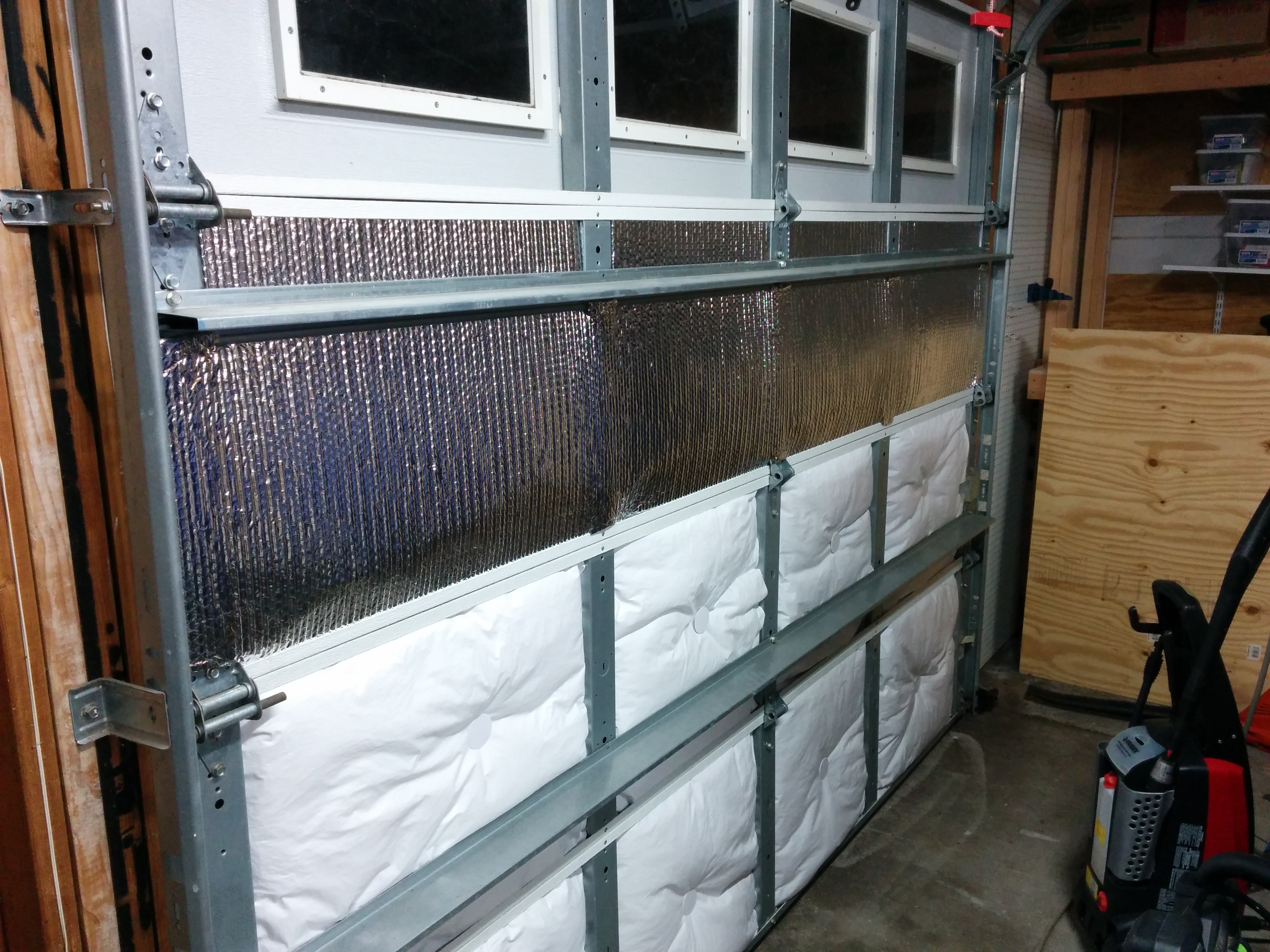
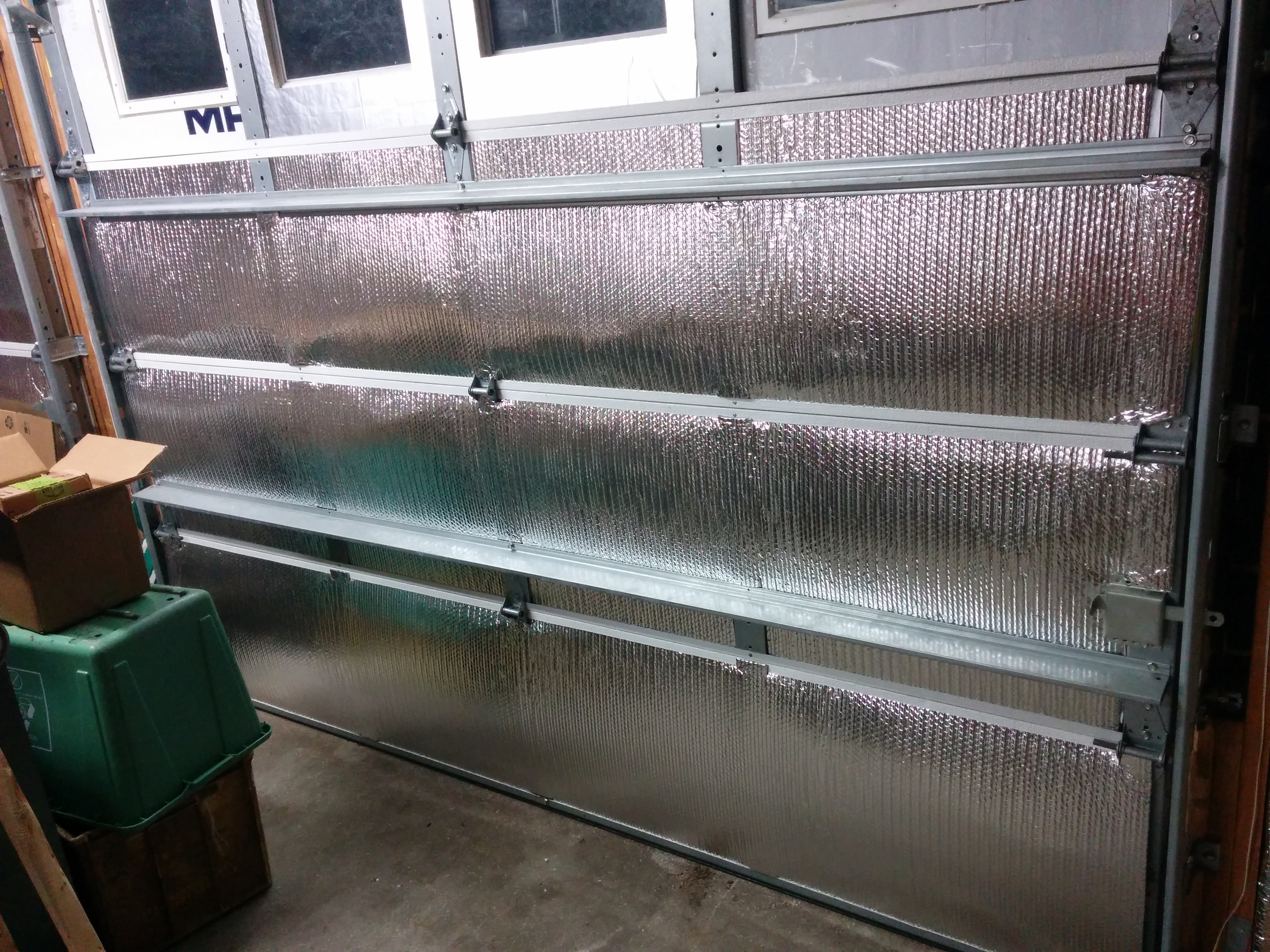
After installing the R-8 fiberglass batt with white vinyl backing, my garage doors were relatively well insulated, but I decided to add a layer of reflectix as a radiant heat barrier.

In this situation, with one side facing the open air of the garage, it adds about a 3 to the R factor. I also like the aesthetics of the silver bubblewrap more than the white puffy vinyl.

Unfortunately, unlike the Dow Corning fiberglass batt which is designed for garage doors and comes pre-cut at the factory to the correct height, I had to measure and cut the reflectix down from a 24 inch roll.

If you don’t have support bars, it’s relatively easy to install. Just make a few cuts to go around the upright bars and tuck the top and bottom inside the lips of the door panels. I was going to move the white plastic clips that hold the fiberglass in to outside the reflectix, but so far, a pure friction fit is holding it just fine.

The panels with support bars require more work. I guess it would be possible to remove the support bars and then re-install them on top of the reflectix, but I chose to measure and mark each bar location by cutting the edge of the reflectix, then taking it down and cutting the proper length. I installed the reflectix panel under the horizontal support bar, and made sure that the top lined up just under the height of the panel. Then I notched around the vertical bars so that I could get the top in place.

So far, they all stay in place with nothing more than a friction fit. The bottom panels that don’t have a horizontal support bar holding the reflectix bow the most when overhead and may pose a problem as they age, but if I run into issues, I’ll just take the plastic clips that hold the fiberglass on and move them to the outside of the reflectix to help hold it in place as well.

Next, I’m going to cut aluminum faced polyiso foam insulation for the spaces around the windows in the top panels.

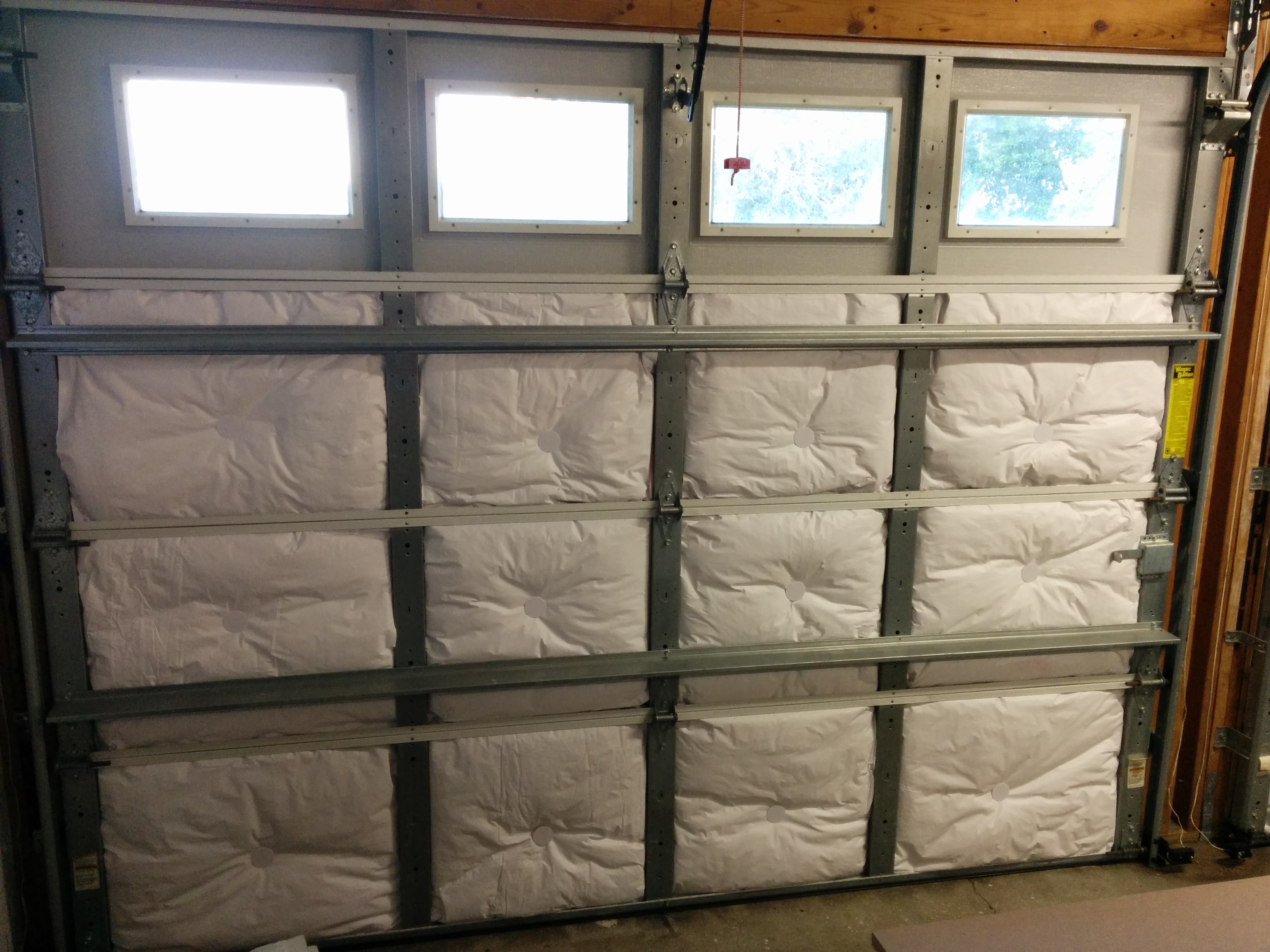
Garage Door Insulation – Part 1 (Fiberglass door insulation)


My two car garage has four single wide doors. Two in the front, and two in the back, and they had no insulation. If you ever buy a new garage door, pay extra to get the insulated panels, otherwise, somebody may have to retrofit insulation later on.

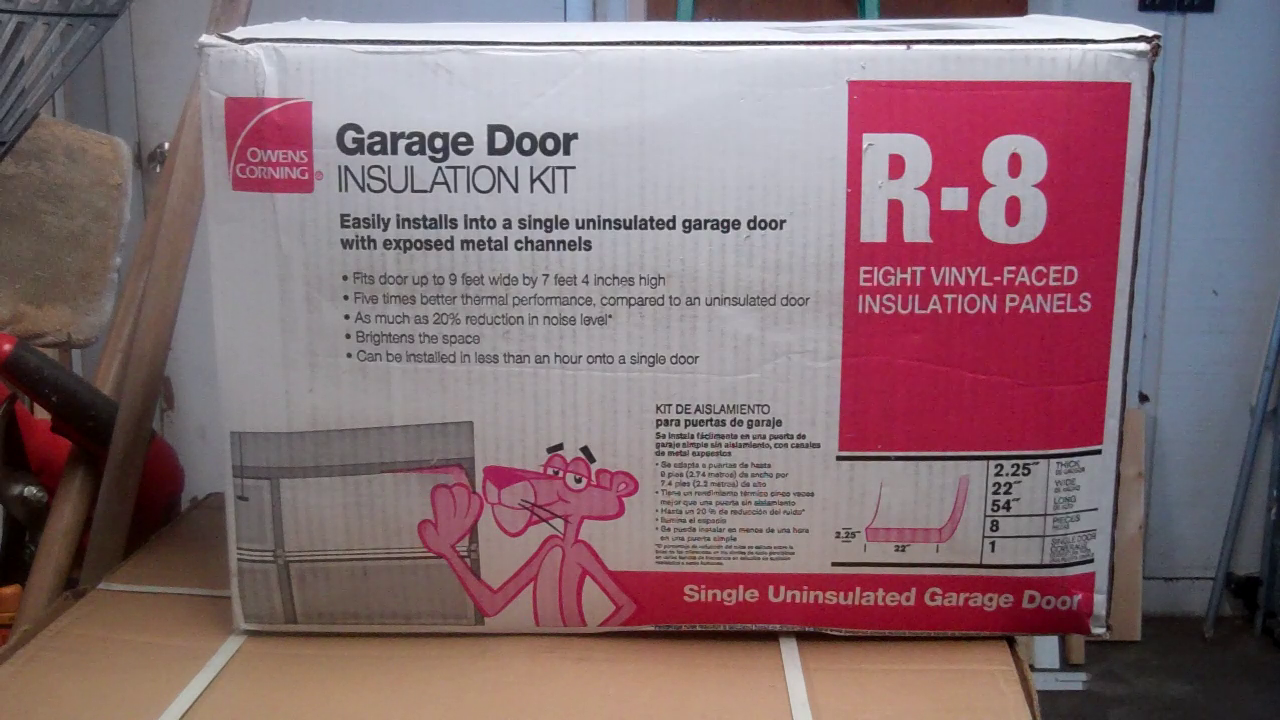
I used 3 kits from Owens Corning that comes with R-8 fiberglass bat and plastic mounting clips. Because I’m only using it on the windowless bottom 3/4 of each door, I was able to   use 3 kits to insulate all 4 doors. I’ll be doing something different around the windows.


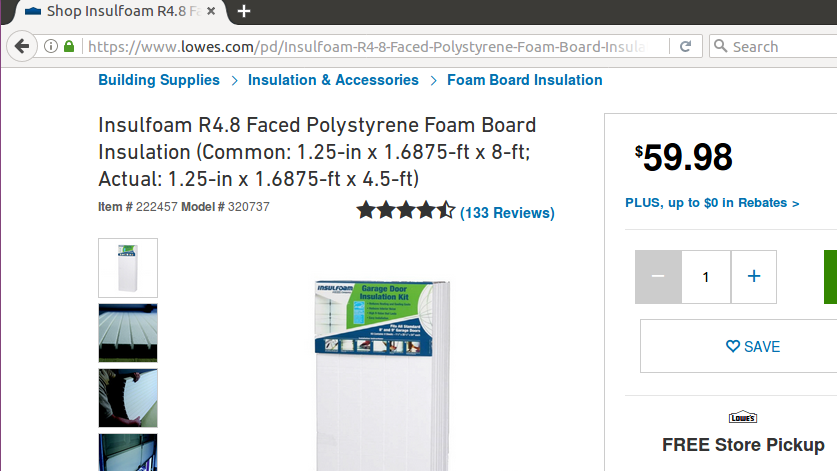
The other option is an R 4.8 Faced Polystyrene foam board kit, which is $20 cheaper per kit, but doesn’t offer as much insulation value, and would have required that I remove some support bars to install. Plus I hate cutting polystyrene as the beads get everywhere.

In addition to a pair of medium gloves, each kit came with two extra pieces of foam tape, 2 pairs of plastic clips, and a piece of vinyl repair tape.

I used acetone to remove the paint where I was going to be putting the foam stickers to mount the back half of the clips. I put up 12 foam squares at a time, and then put up 12 clips. You want to roughly center them in the openings. Where there were support bars, I centered into the remaining opening.

Then it’s just a matter of measuring each opening, and cutting your fiberglass batt’s about 1″ wider. The height comes pre-cut from the factory for standard garage door panels.

The kit includes a pair of medium plastic gloves, and you’ll also want a long sleeve shirt when handling the fiberglass. Then you just push the batt into the opening. After you are happy with how it is centered, you push down to find the end of the plastic clip, cut a small X in the vinyl with a razer knife, and push a mating clip onto it. The finished door is nice and white and puffy.


So far, friction and the plastic clips have held in all the fiberglass batts just fine. I’m probably going to be adding a layer of reflextix as a radiant barrier over the top of the   fiberglass. [I also plan on using foam insulation around the windows.]

There is a definite temperature difference between the insulated and non-insulated (top window) panels. Outside in the shade, the insulated panels were 99 degrees, and the uninsulated panels were 95 degrees, as they were being cooled more by the inside of my garage. (A bad thing…) Inside, the uninsulated panels were 94 degrees (a one degree difference from the outside) while the insulated panels were 88 degrees (an 11 degree difference).

Next up, wall and attic insulation.

Denford Micromill 2000 January 2003 dispatch date – SGR location

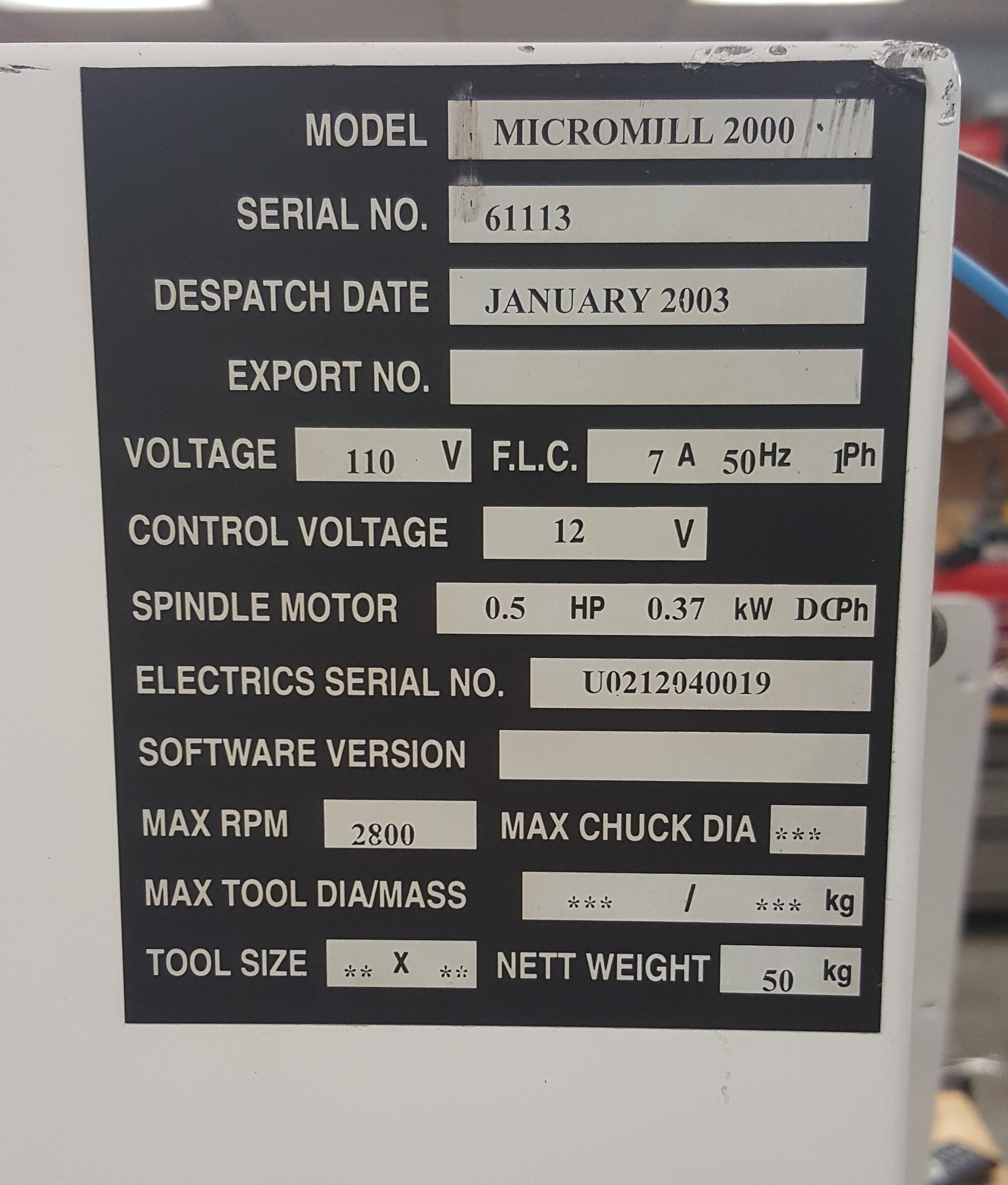
Cliff Burger is part of a makerspace ( http://www.tcmakerspace.com ) which had a Denford Micromill 2000 (January 2003 dispatch date) donated to them. When referring to my four part series( 1, 2, 3, 4)   about how I got mine working under CNC control, they noticed a few differences with their model and wanted to share that information.

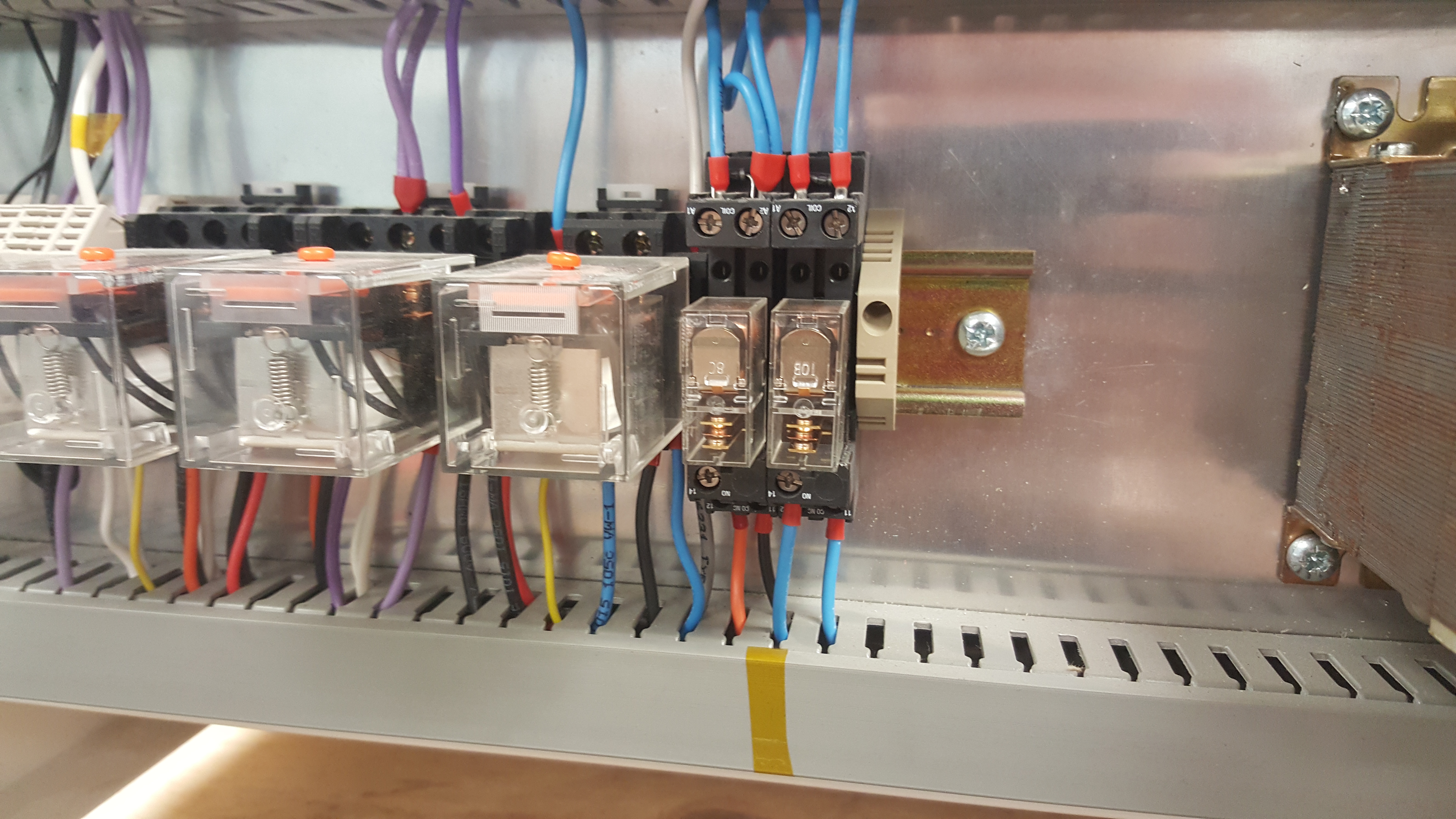
Instead of having a custom made relay & power board, their mill has it’s relays mounted to a DIN rail (bottom left of the case in the image below).   The spindle go relay (SGR) is located in the 2nd from the right position.

A quote from Cliff:

On the DIN rail, the spindle activation relay is the second one in from the right. It’s a 12v relay with the ground for the coil being controlled by the C6 pin. However, currently the relay never sees a 12V signal either. Not sure if it’s something wrong with my board or it’s waiting for another command signal before it sends the 12V out as well. Either way, I’ll likely just get a 5V relay and switch it right off the BOB, but for the time being I’ve moved the orange wire from the “14” position to the “12” position to supply power to the board at all times.


Cliff also sent along his mach3 config file, which you can download here (note, you will have to remove the .txt extension from the file to use it.)   Denford.xml.txt

He has the following caveats:

Things to note about the mach3 config:
1) My limit switch are on different pin numbers due to me chopping 1 wire a bit shorter than I should have (oops!).
2) default units are in inches so the steps per INCH are correct, but may need slight tweaking for each application.
3) backlash settings will need to be measured for each mill, or disabled.
4) I’m running a UC100 UBS adapter board so Mach3 may give an error message the first time you open it with this config file.

Rolling Milk Crate organizer

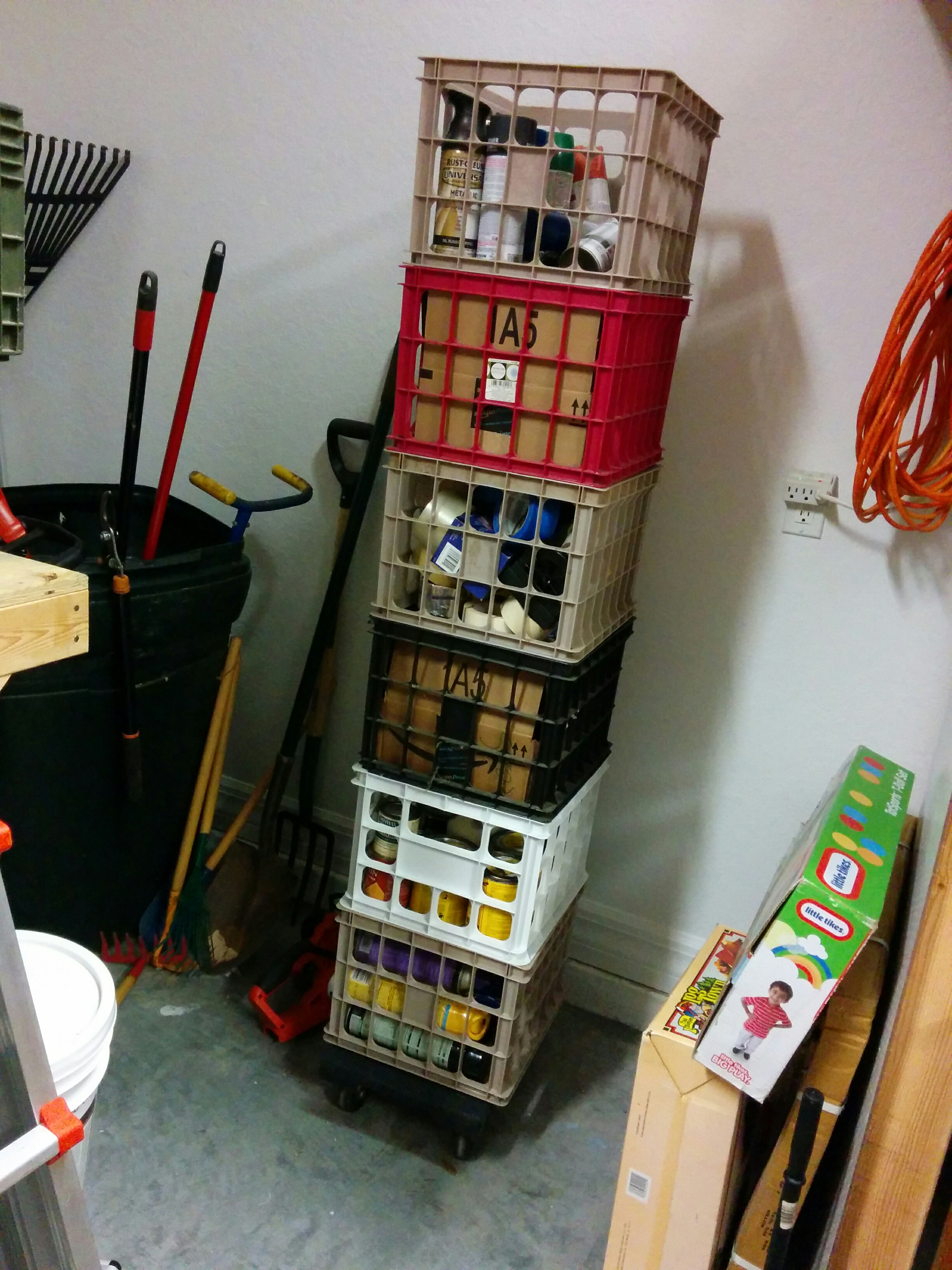
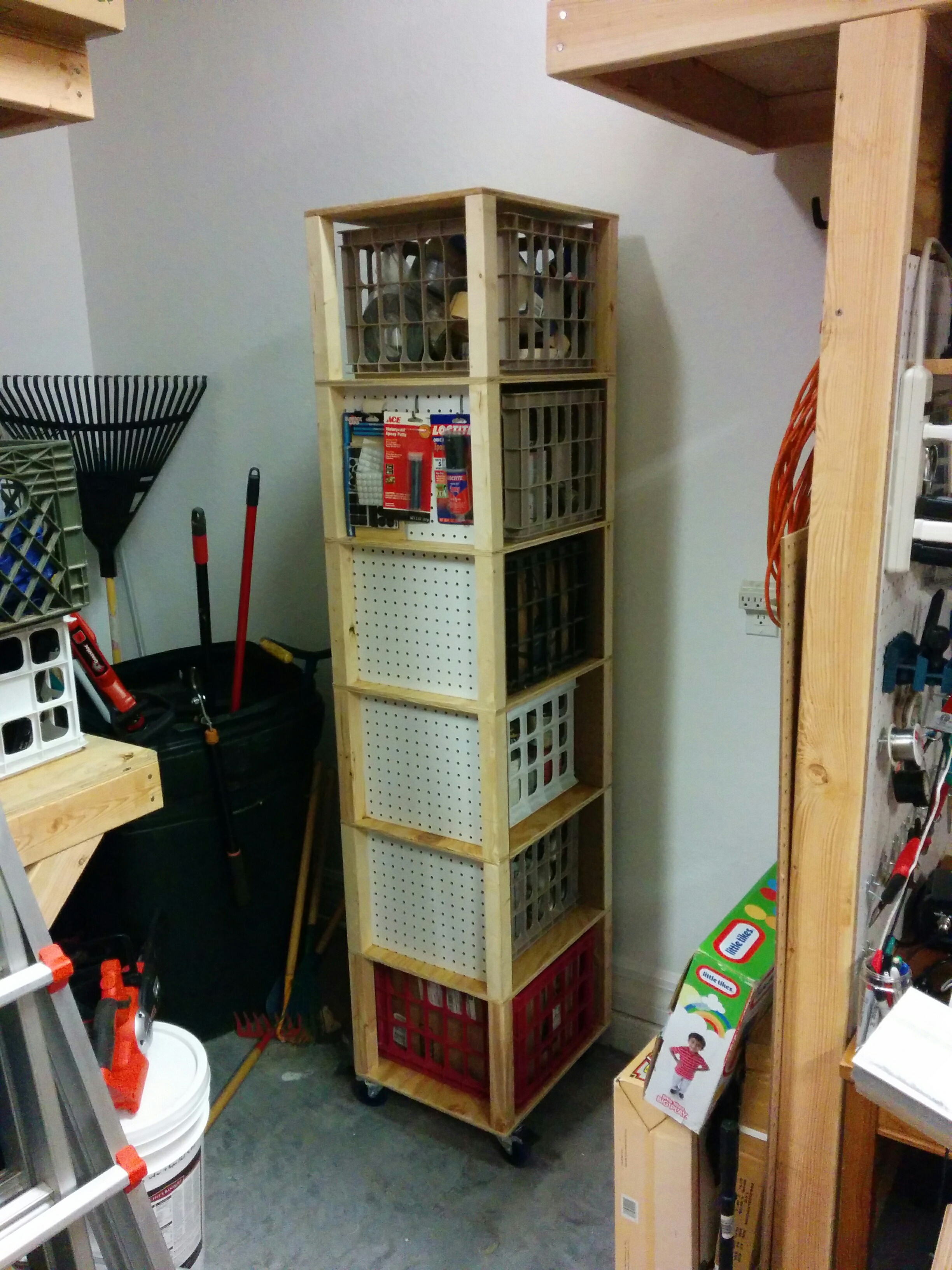
I have a large number of these milk crates for storage. Although they stack well, it makes getting things out of the bottom of the stack unnecessarily complicated, and it also takes a lot of time to move the stack. I put a furniture moving dolly under the stack, which made it extra unsteady.

So I built this rolling organizer that lets me access any crate, move the stack around, and has some extra pegboard for hanging items. The final height rolls just under standard height garage doors.

Continue reading

Dual hose portable AC window adapter & Whynter ARC-14SH review

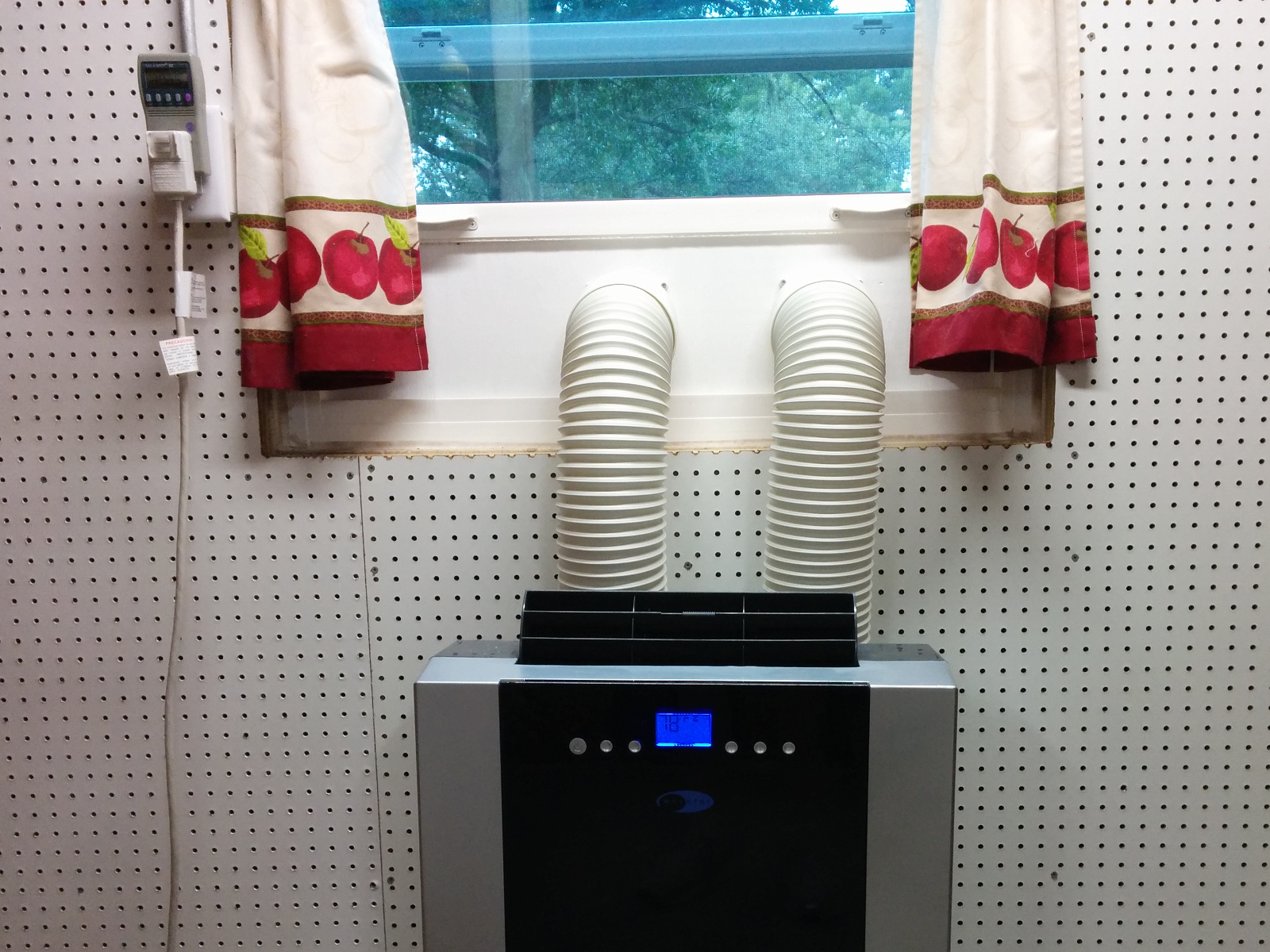
I found a good deal on a used Whynter ARC-14SH dual hose portable air conditioner and have installed it in the storage room off my garage. If I leave the door open it can help cool the rest of the garage, or if I close the door, it can condition the air in just the storage room quite easily.

I wanted something a little more permanent and secure than the included plastic window adapter kit, so I cut a piece of 1/2″ plywood to fit inside some convenient pre-existing slots in my single hung window, attached the hose end-plates to it and painted it with exterior paint.   The board fits into the window just inside the existing screen, so I don’t have to worry about bugs getting into the inside of my AC unit. Here is a video montage of building the window adapter.


I was considering a window mount unit, but this portable unit gives me the flexibility to mount it inside the garage later (venting out the ceiling to the Fascia) or wheel it into the house to use to cool a single room if the main AC goes out.   Obviously, having outside and hot exhaust air cycle through two hoses inside the conditioned space is slightly less efficient than a window unit, but it’s much better than a single hose portable AC unit, which will cause outside air to slip into your building as it exhausts it’s waste heated air. It also presents a cleaner look on the outside of the window. (It does take up more floor space inside the room however….)

The EER rating for this unit is 11.2 according to the Home Depot website.   A comparably priced 14,000 BTU Energy Star window air conditioner from GE has an EER rating of 11.8, so from an efficiency standpoint the portable dual hose model isn’t terrible.

The unit draws a maximum of 10.5 amps, and appears to hover around 1050 watts when the compressor is running and 45-65 watts to just run the fan, depending upon what speed the fan is set to. I usually leave the fan on low if only cooling the storage room, and turn it to high when cooling the rest of the garage. The compressor is at least as noisy as the fan in “high” mode, so don’t expect “low” mode to be quiet AND condition the air at the same time, although you can run the unit in “fan only” mode if you just want to circulate air.   The unit is a bit noisy (56 dBA). This is not bad for a workshop, but could be an issue in a bedroom or media room. (In comparison, a nice mini-split ductless AC unit usually runs closer to 34 dbA.)

In AC mode it uses the collected water to evaporatively cool the hot side, and exhausts the humidity with the rejected heat, so in my experiance doesn’t need to be otherwise drained. (This hot moist exhaust air is another good reason to paint the entire adapter board with exterior paint.)

If you run it in “dehumidifier” mode (where it attempts to remove water vapor without putting too much energy into cooling) you are supposed to vet the exhaust air back into your conditioned space to prevent “cooling” from happening. (Living in Florida, this probably isn’t an issue for me….). But, you also need to remove the collected water. Because this is primarily an AC unit, it doesn’t have a large water reservoir, so to use it effectively as a dehumidifier, you will NEED to rig up a permanent drain hose of some type. And, because the drain is located about 2″ above the floor, you may need a pump system unless have have a conveniently located floor drain nearby.   I haven’t tested the heating mode, but according to the manual it has one that will work with outside air down to 45 °F. It also has some timer modes to turn on or off after a set number of hours which I also haven’t used yet.

Practicalities of On-board solar charging for small EV’s

I’ve been running the numbers on building a small 1-2 person “motorcycle” (3 wheeled) electric vehicle, and was considering adding two 330 watt solar panels to act as the hood and roof/sunshade, which would provide shade for the driver and charging from the sun.

The drive motor I was looking at runs at 96 volts and 95 amps to drive a 325 lb vehicle (with 170lb rider) at 60+ mph. Twelve Nissan leaf modules would provide 96-100 volts at 60 ah for a total storage capacity of 5.7 kWh (giving around a 45 mile range at 60mph, probably close to a 60 mile range at 35mph, an efficiency of   between 83-111 Wh/mile).   This battery pack would weigh 100 lbs, plus BMS/mounting hardware and wiring.

Weight Considerations

Two 330 watt solar panels mounted on the roof/hood would also weigh 100 lbs.This could conceivably be 30% or more of your vehicles weight budget.

With around 6 hours of good solar exposure a day, they would probably provide around 600 watts per hour, or 3.6 kWh of charge (a gain in driving range of between 32-44 per day). They could fully charge my hypothetical 5.7 kWh battery pack in two days.

More batteries?

The alternate way to spend this weight budget is to double the battery pack size. This would give a 11.5 kWh battery pack, giving 90-120 mile range from a single charge. A side benefit is that the extra 100lb of weight could be placed low to the ground, instead of up high on the roof of the vehicle, greatly improving performance on corners.   (Also, the aerodynamic effects upon handling and range of adding a horizontal sail to the top of your vehicle must be considered….)

In my opinion, if you are regularly returning to a home charger, it is more practical to use extra weight allowance for batteries, as opposed to solar panels. Solar panels make the most sense when the vehicle is designed for non-round-trip applications, such as with an RV/Camper or road trip vehicle.

Bigger/Faster charger?

For an “in-town” vehicle, where J1772 (level 2) chargers are readily available, adding a high speed on-board charger (6.6kWh) would allow you to refill a small battery pack in under an hour, and would add less weight than commercial solar panels or extra batteries.   Having an extra 15 lbs of charger instead of an extra 100 lbs of solar panels or batteries would lower your rolling resistance and increase your range and acceleration.

Specialized solar panels

Alternate solar panels (smaller RV style, or thin film flexible solar panels) would weigh slightly less, but the weight savings is not as impressive as you may think. A 330 watt “house style” panel weights 50 lbs, or 0.15 lb per watt. A 100 watt RV panel weights 15 lbs, or the same 0.15 lb per watt. A 72 watt PowerOak flexible panel weights 6.2 lbs, or 0.086 lbs per watt. This is a weight savings of almost 50%, but unfortunately they are much less efficient, so would need more surface area, something in short supply on a motorcycle class EV, plus they cost much more on a per-watt basis.

Custom Alternatives

If you wanted to take the time to fabricate your own solar panels out of individual cells as part of a fiberglass layup, you could conceivably make them weigh less and fit the contour of your vehicle better, possibly integrating them into your vehicles body.   But if they are integrated into the skin of your vehicle you have to worry about solar heat gain. I think it would be better to have them mounted as a “shade” or “2nd skin” just above your vehicles main body with airflow channels between the two.

Cost Considerations

100 lb of 330 watt solar panels (two) cost around $500, while a 100 lb Li-Ion battery pack would cost about $1200-1500 (unless salvaged from a surplus battery pack). So the solar panels could cost less than a larger battery, but would require more work to integrate into the vehicle. A 1.5 to 2kWh charger would be fully adequate for a vehicle with a 5.7 kWh battery pack. You could even have only 110V charging (1kWh) and save the expense and complication of a J1772 inlet, while still being able to recharge a fully used battery pack in six hours. A minimal charger like the ELCON PFC1500 would cost $575.   An Elcon PFC 5000 ( TCCH-84-50 ) could charge at 5 kW, giving a small EV an almost “QuickCharge” charging speeds for around $2000 with J1772 inlet/adapter.

Modular Vehicle

One option would be to mount several solar panels on a trailer (possibly with a 2nd battery pack, and even extra motors) to be used only on longer “road-trips”. It is possible that the trailer could have room to hold 4×8 sheet goods, and/or a sleeping compartment under the solar panels for road trips. If the solar panels could swing up, it could be used for transporting larger furniture or appliances. (Consideration would have to be given to adding a lower gear ratio to the tow vehicle, or including extra motors on the trailer itself for heavier loads.)