Midnight Never Come by Marie Brennan
Book Recommendation: Midnight Never Come by Marie Brennan
Reply
Midnight Never Come by Marie Brennan
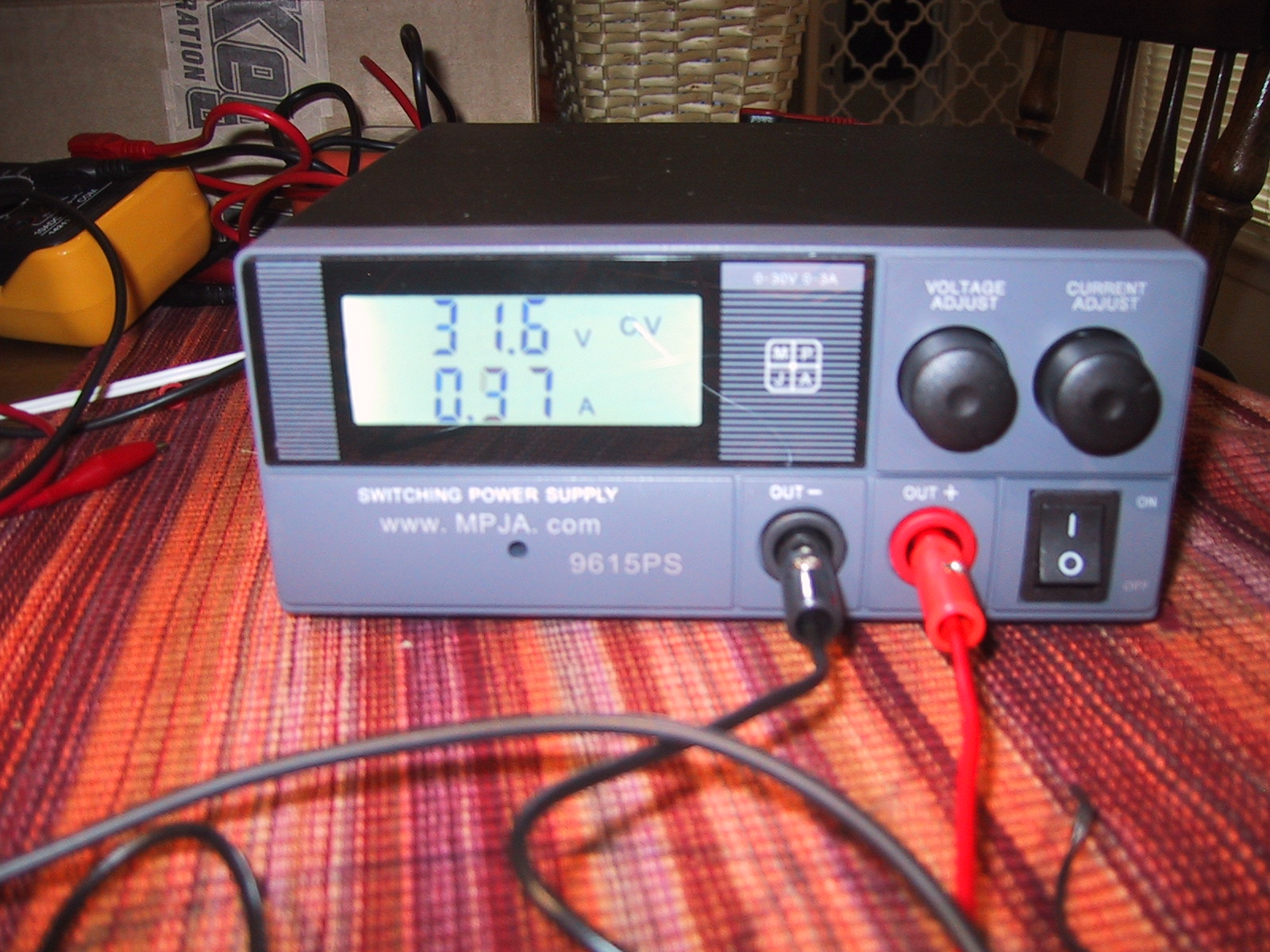
This is the MPJA 9615ps mini-bench power supply. The specs say that it will provide 0-30 volts and 0-3 amps. Mine actually goes up to 31.6 volts (displayed, measured to 31.3 volts on my lowest DMM) and has driven a short at 3.25 amps (verified with my DMM). As the previous sentence alludes to, the voltage display on my unit was 0.3 volts higher than my $50 Chinese DMM, and 0.1 volts higher than my $14 Chinese DMM. Given that my two DMMs don’t quite agree, I’m not willing to say anything other than the fact that I think it’s accurate to at least 0.3 volts. [The amp readings matched those on my DMM’s.]
Pros:
Cons:
All in all, I’m happy with my purchase. This supply does what it’s supposed to and makes it easy to power circuits and monitor their power consumption. It makes a great inexpensive hobbyist bench supply, or a 2nd supply for a professional who just needs to power something.
The Wreck of the River of Stars
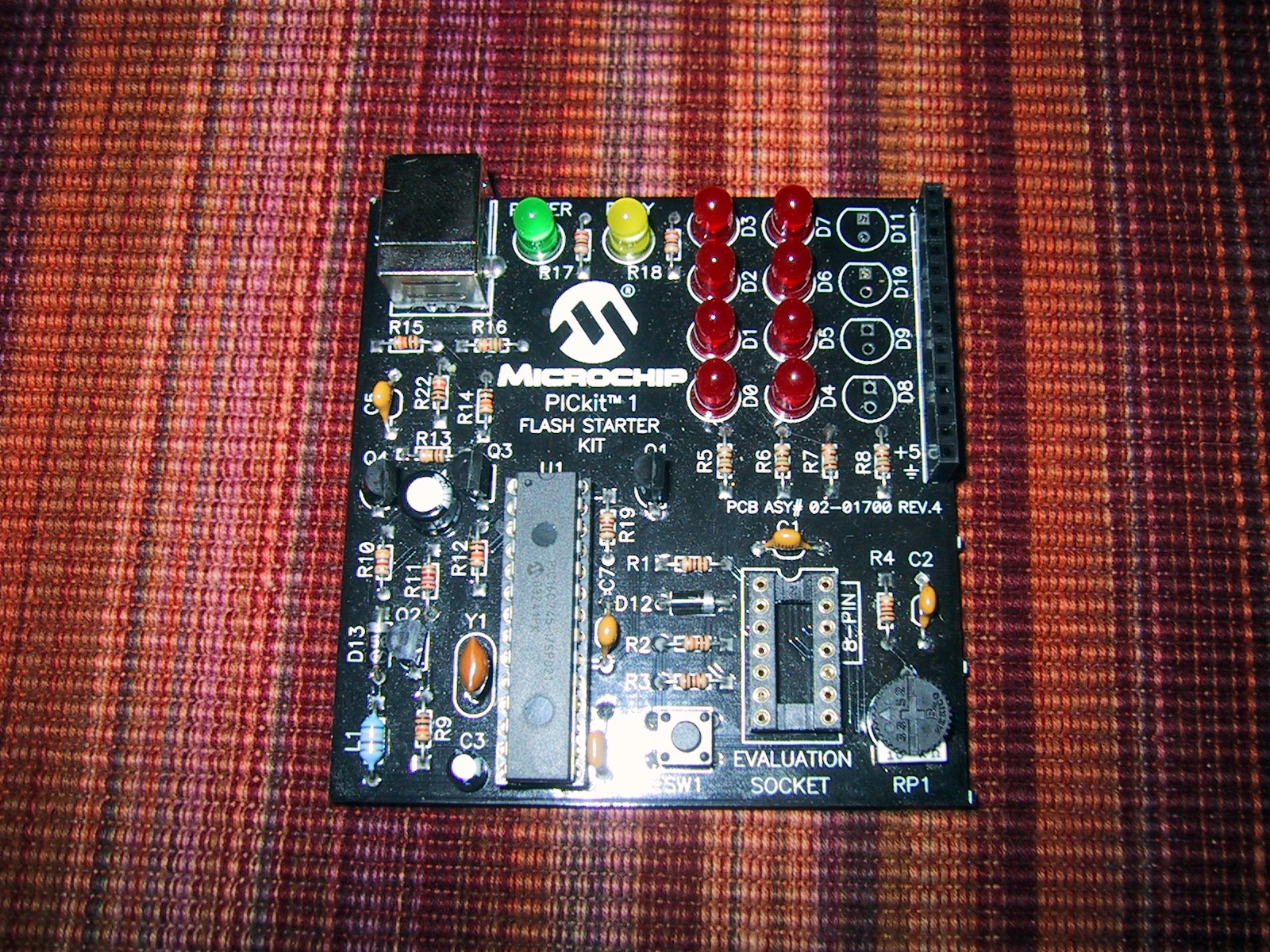
The PICKit 1 is a combination programmer and development board for midrange PIC micro-controllers. In addition to being able to program FLASH pic devices, it also allows them to run and access 8 (charlieplexed) LED’s, a pushbutton switch, and a potentiometer. It’s a great little board for learning the basic of micrcontroller programing, but unfortunately it is not supported by Microchip’s new MPLAB X software (that is written in Java, and supports Linux/Mac in addition to Windows).
You CAN however use the PICKit 1 under linux. The piclab software is supposed to support it (I have not tested this). I use version 1.6 of the PicKit1 flash usb programmer for unix. Even the newest 1.6 version reports checksum errors after writing the hex file, but it does work correctly.
To make it work as an external program in MPLABX I had to select the “format HEX file for download” option under the Linker so that it would not fill all 2048 flash bytes when the program was smaller than that. I am able to manually run the usb_pickit command after building to flash the code, but it’s kind of annoying, as that program has a problem verifying the checksum and reports an error every time (which is interpreted as a build failure) plus, I have to run mplab X with root permissions to be able to access my USB port.
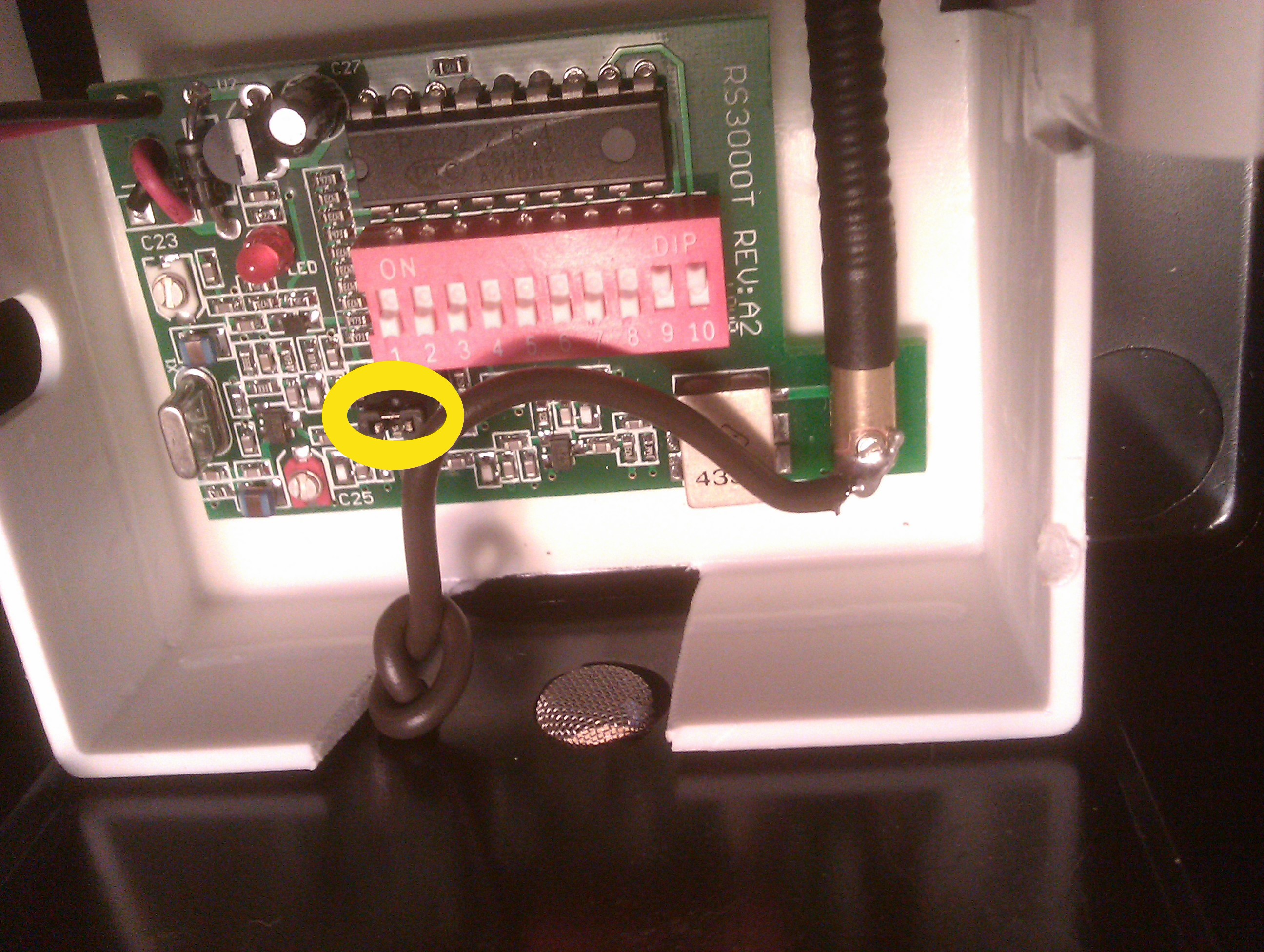
This is a photo of the radio transmitter inside of a Dakota Alert WMT-3000 wireless driveway alarm system. The wire coming through the hole drilled in the bottom of the case and soldered to the base of the antenna extends out to a 27″ wire whip antenna. Note the jumper circled in yellow. This jumper has a “high” and “low” setting. It is set to the “low” setting by the factory, and the “high” pin has been cut off. I found that the range was extended by soldering the “high” (cut off) pin to the center pin.
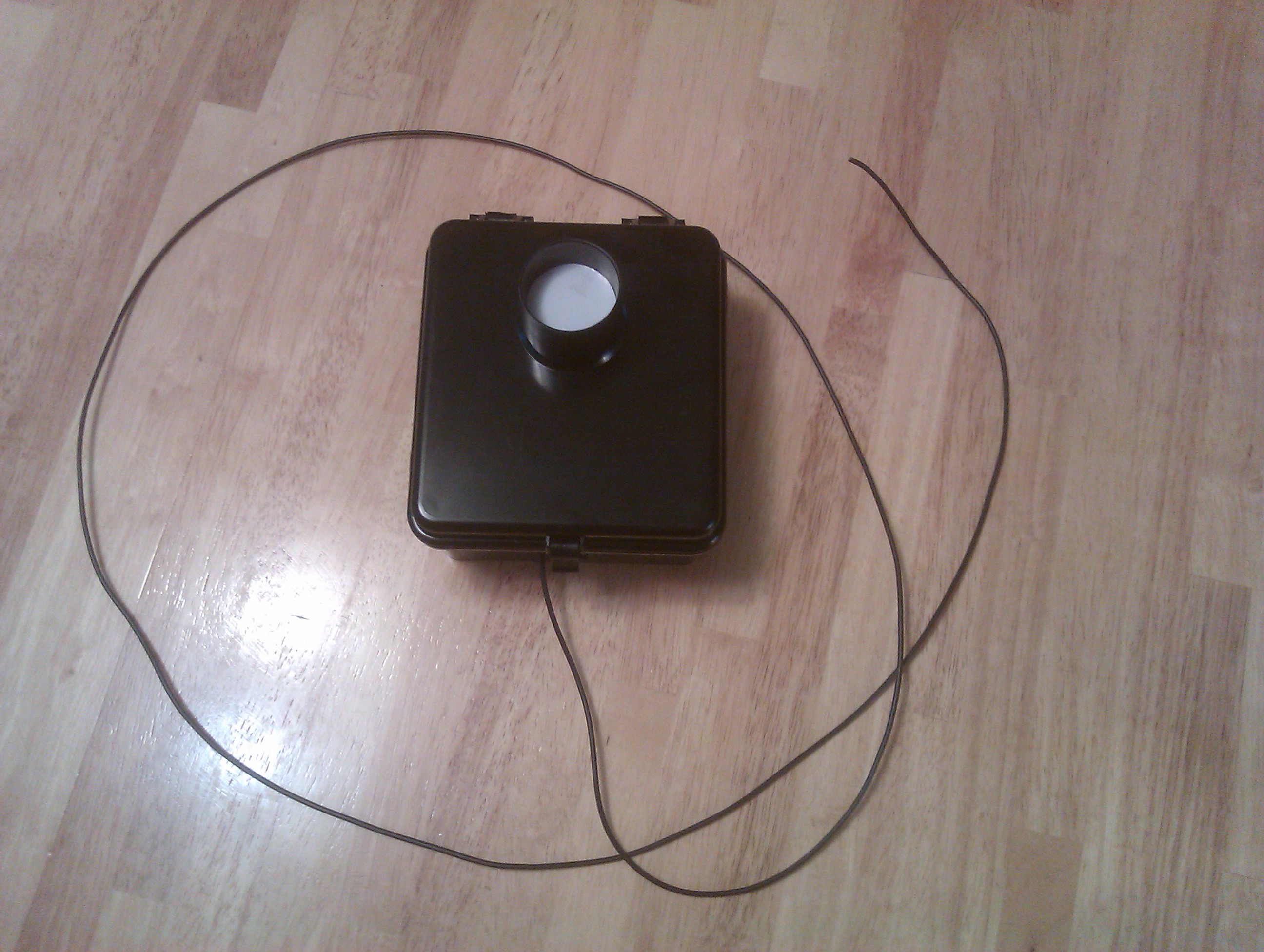
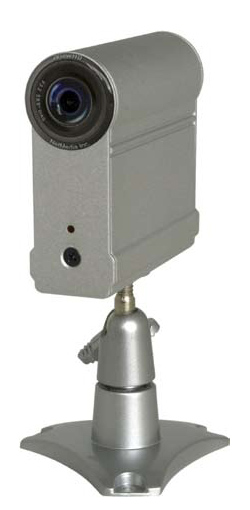
I have recently purchased a NetMedia iViewHD 2M power over Ethernet (POE) camera (retail price $105) for use with ZoneMinder.
This small camera must be hard-wired into a switch that provides power over Ethernet (which will cost another $80-100, but allows you to power up to 4 POE devices). I bought mine used, and don’t plan on buying more. The one I bought would reset to factory defaults (requiring you to upload a new “website”) every few months, and after a year of use it died completely (won’t respond to DHCP address assignments). At used prices the NetMedia iViewHD 2M could be a good deal for daytime shots, despite my nighttime image quality complaints below, if the one you buy lives longer than mine, but I can’t recommend it.
So, if you purchase a few Jameco grab bags of potentiometers, what exactly do you get?
Of course, if you wait a few months, Jameco’s overstock may be completely different and their grab bags may have completely different distribution of potentiometers.
We recently moved to a new house that is far from the central office, and apparently is served by some very old copper. AT&T’s computer system refused to sell us any DSL plans faster than 1.5 Mb/sec, as the lines wouldn’t support any faster speed.
I have tried using three different DSL modems at this house. In order of age and success:
It was worth purchasing a new DSL modem for this house. (Although the Netopia and WireSpeed modems have both worked fine in other locations.)
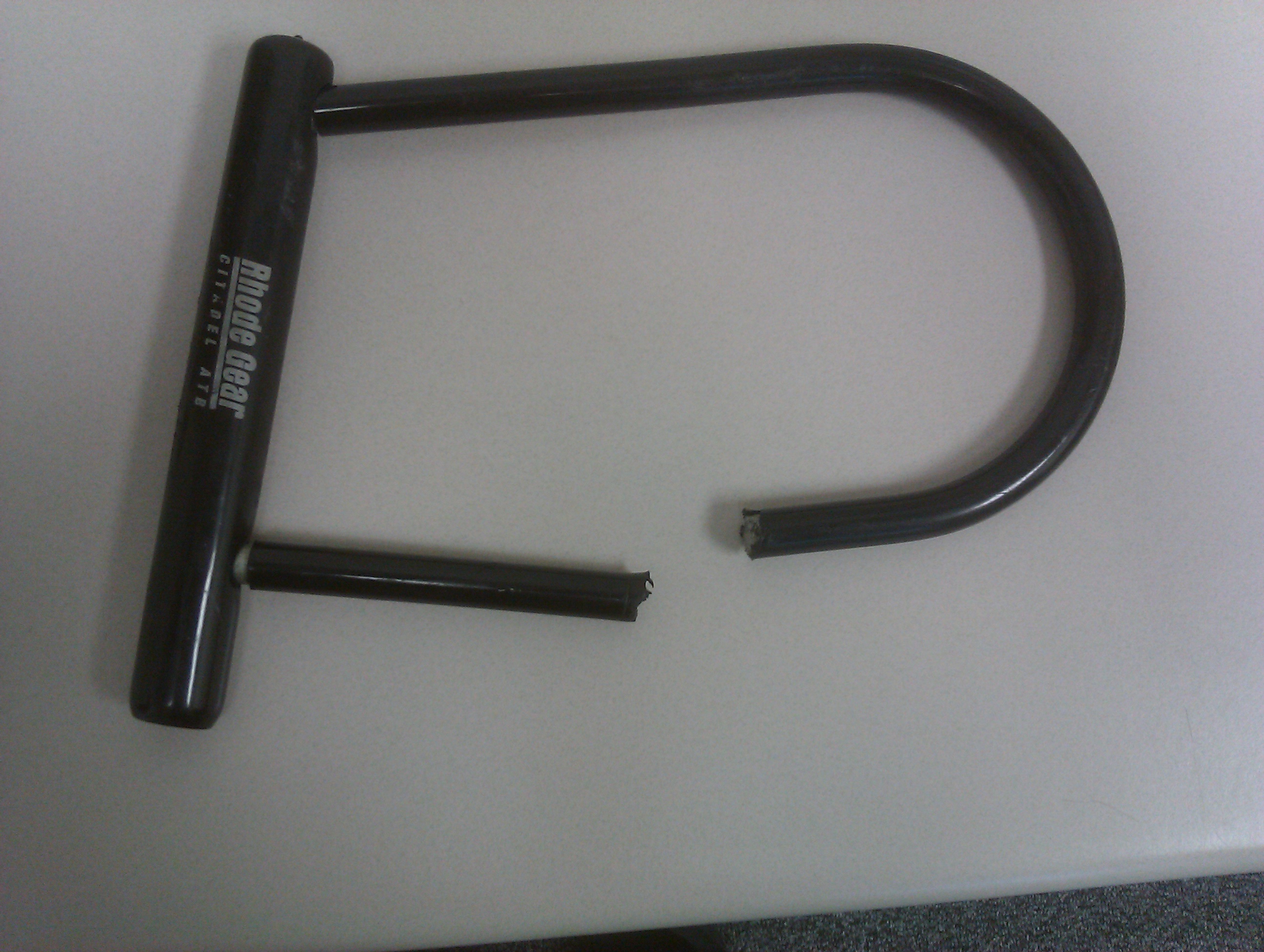
This is a picture of a Rhode Gear Citadel ATB u-Lock that has been cut (and found next to where my bike used to be). I expect a large set of bolt cutters were used.
I have used a Motorola Backflip for a month, and am now trying out an HTC Aria. The Aria is a much smaller phone that lacks a keyboard, but has a newer version of the Android OS (2.1) and has a faster processor. For the rest of my comparisons, keep reading. Continue reading